
Safety and Maintenance
Pre-Winter Gas Fireplace Service: Ideal Timing and Appointment Checklist
Book before you start using the fireplace regularly in cold weather. Follow its maintenance schedule, and arrange help sooner if something has changed.
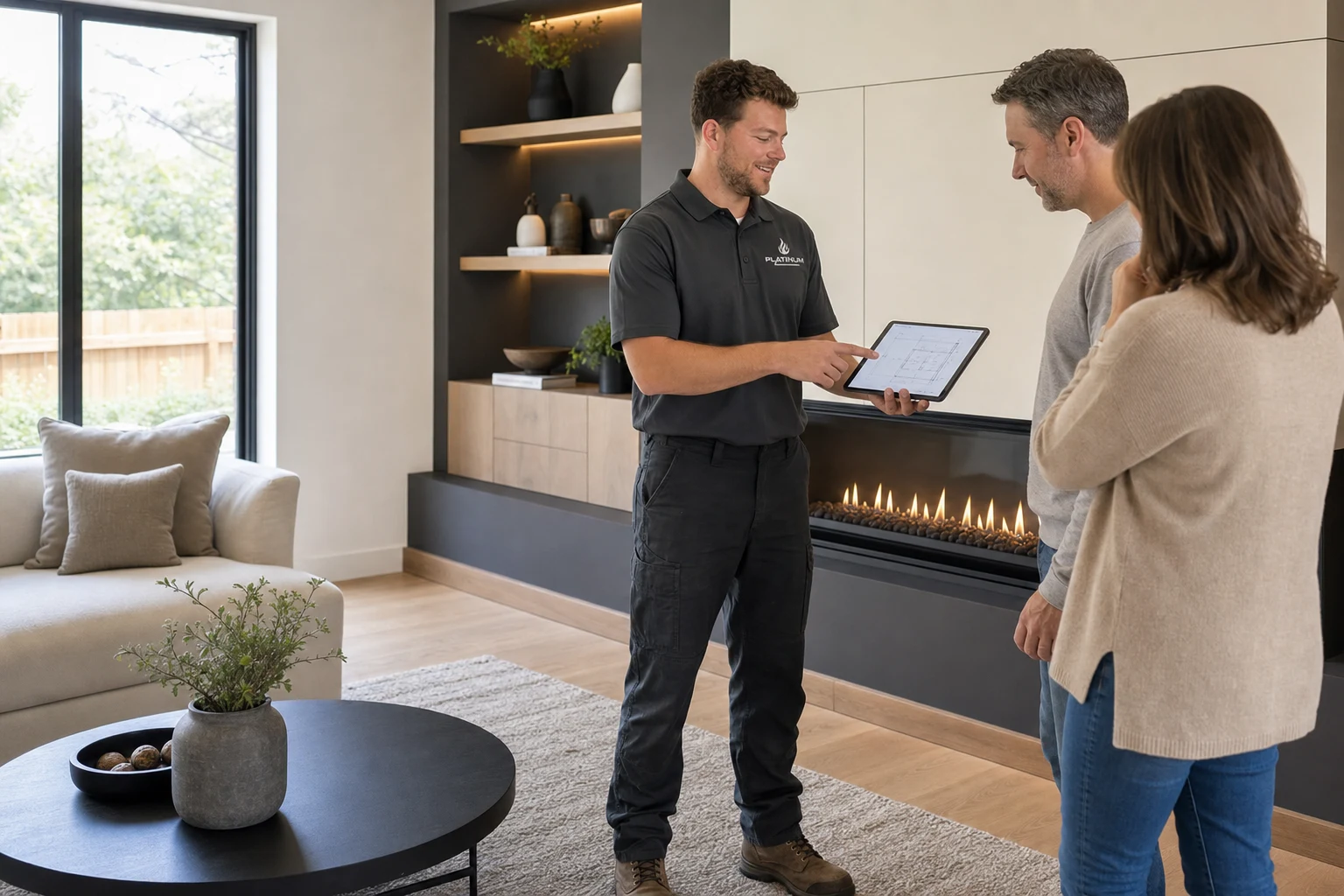
Safe checks
Start with what you can observe
Booking before winter leaves time to address appointments and parts before regular fireplace use. Schedule according to the exact manufacturer maintenance instructions and sooner for changed ignition, flame, sound, odour, soot, glass, controls or shutdown behaviour. Before the visit, gather model and service records, document safe exterior observations, clear normal access and list questions. Do not open or clean internal components.
Follow the manual and how often you use it
Find the exact model manual and service history. Some manufacturers specify periodic professional inspection or cleaning items, but intervals and tasks vary. A fireplace used heavily, exposed to renovation dust or showing a new symptom may need attention sooner than a lightly used unit with no changes.
Booking before frequent operation allows time to diagnose, obtain approved parts and coordinate vent or construction access if necessary. Do not wait for a universal calendar date when the fireplace already shows a warning sign.
- Exact model and manual schedule.
- Hours and pattern of use.
- Recent renovation, dust or service.
- Any changed operation or damage.
Note what you can safely see
With the fireplace off and fully cool, observe the barrier, exterior glass, controls and surrounding area. Note visible damage, soot, obstruction, displaced exterior trim or a change in flame previously seen during normal use. Read codes from owner-facing displays.
Do not remove glass, panels, logs or media to inspect more deeply. Do not clean away evidence that requires opening the appliance. A photograph from normal viewing distance and a written timeline are enough for the service request.
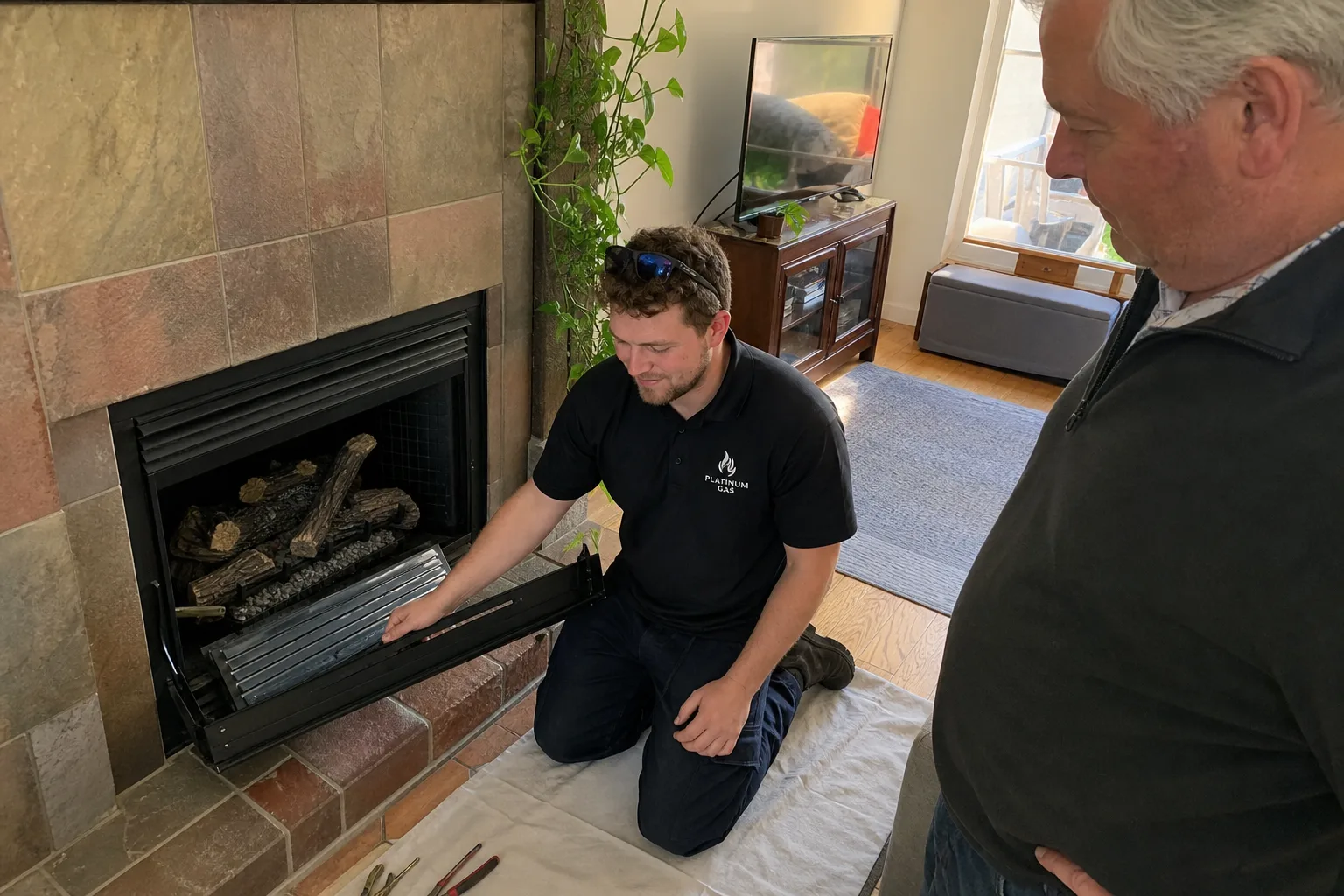
Share the model and what is happening
Gather the make, model, serial if accessible without disassembly, fuel, control type, manual, prior invoices and warranty information. Describe when the issue begins, whether it repeats, the control setting and any code. Mention odour, alarms, delayed ignition or glass damage first.
Explain recent power outages, battery changes, renovations, fuel interruption or other gas-appliance work. These details help the technician understand whether the problem may involve the fireplace, gas supply, controls or recent changes in your home.
- Model, serial and fuel.
- Code and exact symptom timeline.
- Previous service and parts.
- Recent home, power or fuel changes.
Need help with a problem?
Tell us what is happening
Note what you can see, hear or read from the normal controls. Do not remove panels, alter gas fittings or perform regulated tests yourself.
Make the work area accessible
Move ordinary furniture and fragile decor from the normal service approach after confirming safe handling. Keep children and pets away during the appointment. Do not dismantle a mantel, television, surround or fireplace component unless the service company specifically coordinates that work.
Ensure the technician can reach owner-accessible controls and any known shutoff without blocked paths. Exterior termination access may also be relevant, subject to weather and safe work conditions. Tell the company about parking, stairs or restricted access in advance.
Ask what was checked and what needs attention
Professional work should follow the exact manufacturer instructions and the reported condition. Depending on the appliance and symptom, the technician may inspect accessible components, verify ignition and operating sequence, review glass and media, assess controls and vent or fuel conditions, and complete permitted cleaning or adjustment.
Ask what was found, what was done, which parts were used, whether more work is needed and whether the fireplace is safe to use. Ask what the service includes for your fireplace, rather than relying on a general "tune-up" label. Keep the invoice and recommendations with the manual.
- Observed condition and root issue.
- Work and parts completed.
- Operating verification.
- Any follow-up or work another contractor needs to do.
Finish with a winter operating routine
Review owner cleaning, remote or battery care, normal flame and shutdown, hot-glass boundaries, outage behaviour and emergency response. Test smoke and carbon-monoxide alarms according to their instructions and Ontario requirements. Store the manual and service contact where adults can find them.
Continue observing throughout the season. New delayed ignition, unusual sound, soot, persistent odour, damaged glass or repeated shutdown deserves service even after a recent visit. Maintenance reduces uncertainty but does not make later warning signs normal.
Plan any repairs before regular winter use
If service identifies an approved part, vent concern, supply issue or construction dependency, ask what must remain off and which work can proceed independently. Do not source an apparently similar component from an unrelated model. Fireplace valves, glass, media, controls and vent parts must match the listed appliance and manufacturer direction.
Record the part number, diagnosis and expected follow-up rather than relying on memory. When another trade is needed, share only the relevant documented findings. Complete the recommended verification before returning the unit to routine winter use, and retain the final service record with the first appointment notes. Ask for realistic timing rather than operating while a critical item remains unresolved.
Questions we hear
Frequently asked questions
There is no universal month. Book before regular cold-weather use when possible, follow the exact manual and schedule sooner for any warning sign.
Do not recreate a concerning condition. If there is no safety concern, report normal-use observations. For gas odour, alarms, delayed ignition or damage, leave it off and follow emergency guidance.
No. Owner cleaning boundaries vary, and burner, pilot, media, glass and internal components require model-specific procedures. Preserve evidence and leave internal work to service.
Keep the manual, model and serial, invoices, parts, findings, dates and outstanding recommendations. These records improve future diagnosis and warranty support.
References
Sources and further reading
Ask about your project
Tell us about the property and equipment
Send the service address, timing, appliance model and safe photos that show the work area.