
Pool Heating
Best Time to Service a Pool Heater in Ontario
Follow your pool heater's maintenance schedule, plan around the swimming season and arrange service sooner if something changes.
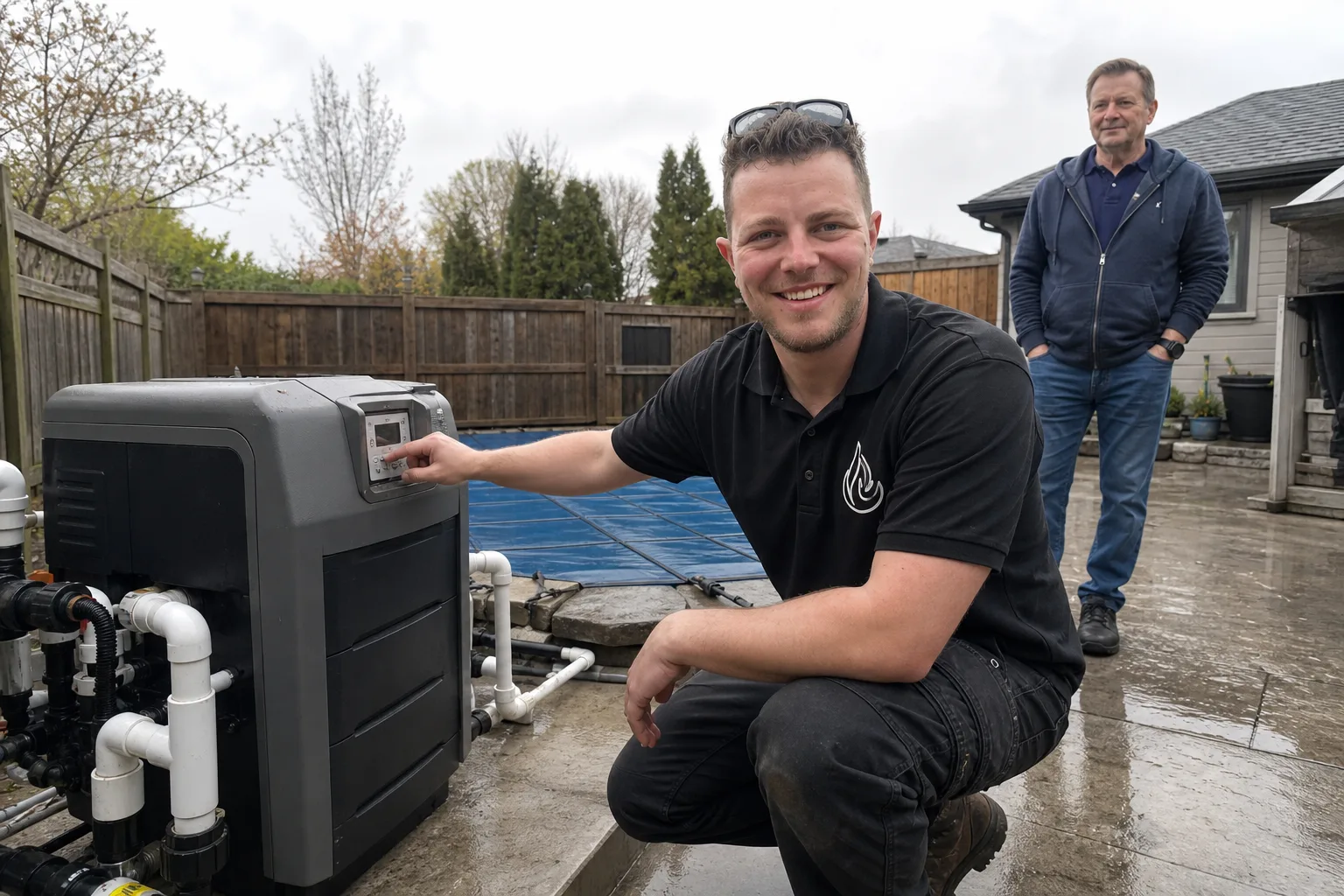
Safe checks
Start with what you can observe
Have a pool heater assessed before the main swim season when the manufacturer maintenance schedule calls for it, after winter storage before return to service where the manual requires professional checks, and promptly whenever ignition, flame, odour, noise, cycling, leakage or performance changes appear. The exact interval varies by model and conditions. A clean visual check by the owner can support scheduling, but opening the appliance or testing gas and electrical systems belongs to qualified service.
Use the manual as the maintenance calendar
Pool heaters do not share one universal service interval. The current manual for the exact make and model identifies owner care, professional inspection items and seasonal procedures. Climate, debris, animals, salt exposure, water chemistry and hours of operation can change what the equipment experiences. A heater beside a windblown hedge may need attention for different reasons than one in a clean, protected pad.
Record the model and serial number, installation date if known and previous service. Review the manual before opening and closing season, then schedule qualified work at the intervals and conditions it specifies. A general annual appointment can be a reliable reminder for many seasonal systems, but it should not replace the manufacturer instruction.
- Locate the exact current manual.
- Keep model, serial and service records.
- Note site debris, weather and operating hours.
- Follow model-specific seasonal instructions.
Schedule before peak demand when possible
A pre-season appointment leaves time to address parts, utility or circulation issues before the first cool weekend. It also allows the heater to be considered with the pump, filter, valves and automation rather than after an urgent no-heat complaint. The ideal booking window depends on how and when the pool is opened.
Do not start the heater solely to test it if winterization has not been reversed according to the manual or the circulation system is not ready. Water flow, freeze protection and drain components vary by model. Make sure your pool professional and gas technician know what each will do and whether the heater will be ready to use afterward.
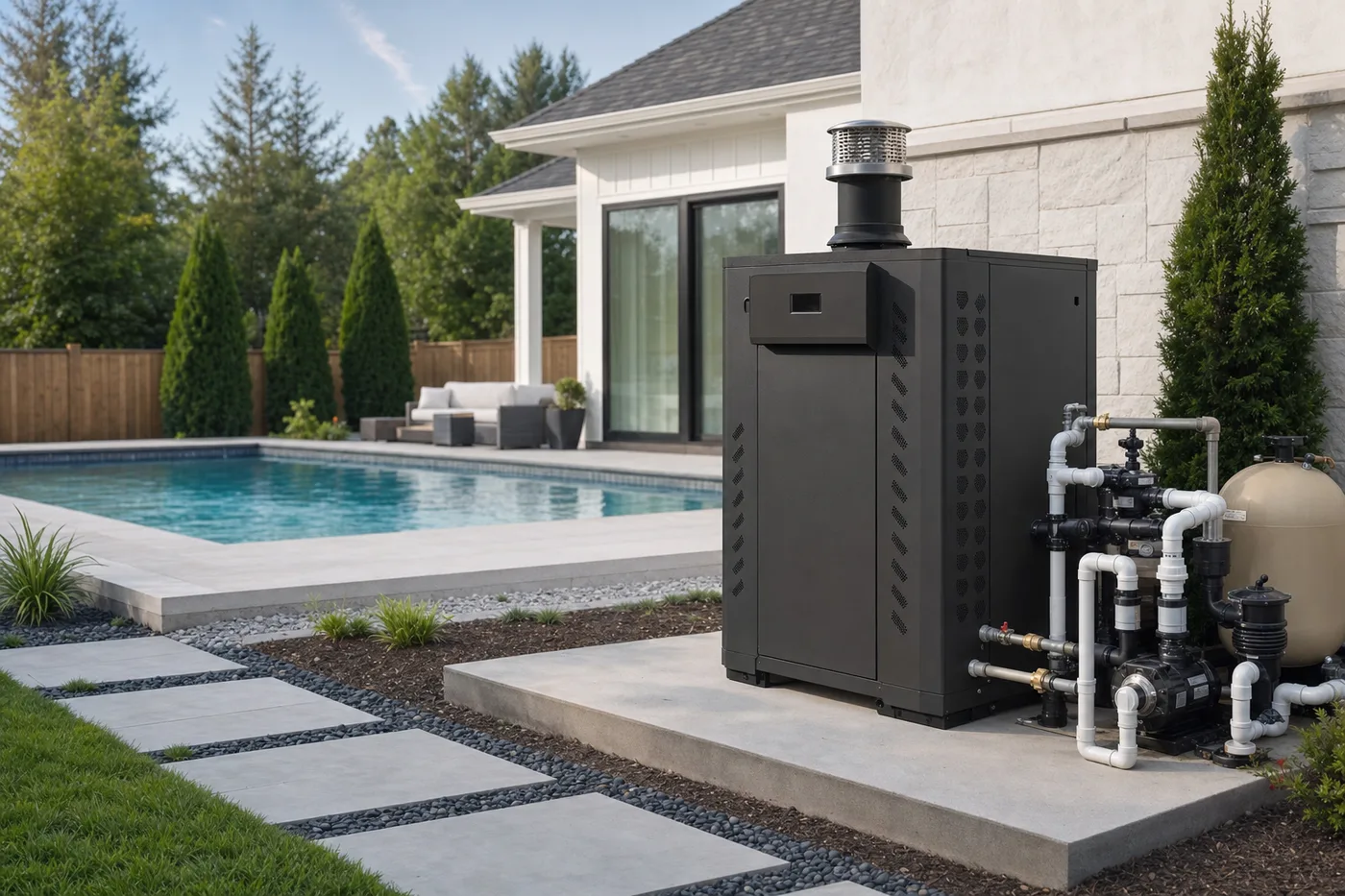
Book service when something changes
Repeated ignition attempts, delayed starts, failure to remain lit, unusual burner sound, rumbling, soot, scorching, persistent odour, new vibration, leaking, error codes or unexplained shutdowns deserve assessment. Reduced heating performance can also reflect water flow, filter condition, bypass settings, scale, utility supply or a control issue. The symptom alone does not identify a part.
Stop operating equipment when the manual or an emergency condition says to stop. Capture the displayed code, when it occurred, water temperature, weather and what other pool equipment was running. Do not repeatedly reset the unit, because that can erase useful information or continue an unsafe condition.
- Photograph the code without removing panels.
- Record timing, weather and circulation status.
- Note new odour, sound, leakage or discolouration.
- Avoid repeated resets and improvised bypasses.
Need help with a problem?
Tell us what is happening
Note what you can see, hear or read from the normal controls. Do not remove panels, alter gas fittings or perform regulated tests yourself.
Note what you can see; leave testing to a technician
Owners can keep the area clear to the distances in the manual, observe the exterior, read accessible displays, maintain pool water as directed and report changes. They should not remove combustion panels, probe electrical circuits, adjust regulators, clean burners, test pressure, alter venting or defeat switches. Those actions can create hazards and compromise the diagnostic evidence.
A useful service request describes the symptom and site rather than prescribing a repair. Include the exact model, code, recent changes to the pool system, previous service and wide photos of the pad. This helps the technician bring appropriate documentation and determine whether another trade should also be involved.
Know what to ask after the visit
The work needed depends on the problem and the manufacturer's instructions. It can include inspection of the appliance and accessible connections, verification of operating sequence and controls, review of water flow and temperatures, assessment of venting or combustion-air conditions where applicable, and cleaning or adjustment permitted by the exact manual. Findings should be tied to the model rather than a generic tune-up list.
Ask what was found, what was fixed, which parts were used, whether more work is needed and whether the heater is safe to use. If water chemistry, circulation, gas capacity or electrical supply contributes to the problem, the report should distinguish that from an appliance failure so the correct party can respond.
Build a simple seasonal record
Keep opening and closing dates, service notes, error codes, winterization responsibility and significant water-chemistry events with the manual. Record whether the heater was drained or protected according to its instructions and who returned it to service. This prevents uncertainty when trades arrive in spring.
A short record also reveals trends. A recurring flow warning after filter work suggests a different investigation from an isolated ignition code after a storm. The record is not a DIY diagnostic tool; it is context that makes professional assessment more efficient and helps the homeowner plan service before the pool season is interrupted.
- Model, serial and manual revision.
- Opening, closing and service dates.
- Codes, symptoms and related pool-system changes.
- Work completed and outstanding recommendations.
Questions we hear
Frequently asked questions
Use the exact manufacturer schedule rather than a universal rule. Seasonal operation, site exposure and symptoms can justify a pre-season assessment, but the required tasks and intervals vary by model.
Only after the circulation system and heater have been returned from winterized condition according to their manuals. Running without correct flow or preparation can damage equipment.
Restricted water flow can contribute to heater warnings or shutdowns, but an error should not be assumed to have one cause. Record the circulation condition and have persistent issues assessed.
Provide the make, model, serial, displayed code, symptom timing, opening status, recent pool-system work and wide photos of the equipment pad. Mention odour or gas concerns immediately.
References
Sources and further reading
Ask about your project
Tell us about the property and equipment
Send the service address, timing, appliance model and safe photos that show the work area.