
Pool Heating
How to Winterize a Pool Heater Safely in Ontario
Get your pool heater ready before freezing weather arrives. Find the model and manual, clear access and arrange the right winterization service for your pool and heater.
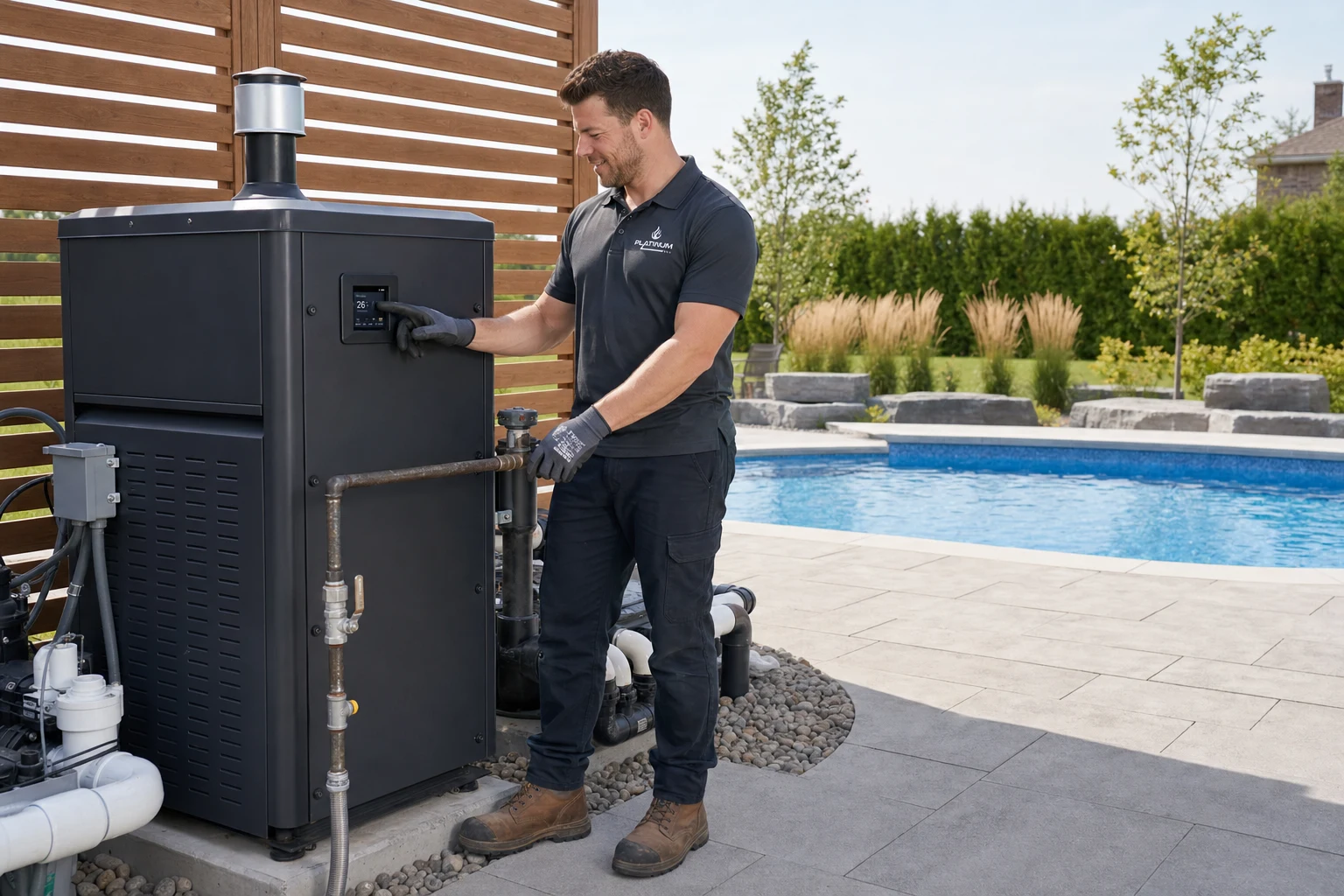
Safe checks
Start with what you can observe
Winterize a pool heater only according to the current manual for the exact model and the way it is installed. Trapped water can freeze and damage a heat exchanger, manifold, fittings or connected plumbing, while the wrong valve position, gas procedure, electrical isolation, drain point, air pressure or chemical can create another hazard. In Ontario, plan before freezing conditions, identify the heater and pool-system configuration, and have the appropriate qualified professionals complete or verify the model-specific work. Do not follow a generic sequence for removing plugs, closing gas valves or blowing out the heater.
Plan before the first freeze risk
Pool-heater winterization should be scheduled before the site faces freezing conditions, not after water has already frozen in equipment. A current Pentair MasterTemp manual, for example, states that water trapped in the heat exchanger can cause freeze damage and directs winterization when air temperatures are expected below 32 F or 0 C. That statement belongs to that product family; another heater may specify different conditions or a different procedure. Weather forecasts can create urgency, but they do not make unfamiliar gas, electrical or drainage work safe to improvise. If different people handle the pool closing and gas heater, book both early so each part is ready before freezing weather.
Identify the exact heater and installation
Record the manufacturer, model, serial information and fuel only when the rating plate is safely accessible. Find the current installation and user manual from the manufacturer, and confirm that its revision covers the installed unit. Photograph the whole equipment pad and note whether the heater sits above or below pool-water level, how it connects to automation, and whether there are bypass or isolation components. Do not operate valves merely to label them. A replacement heater may be connected differently from the original design, and a manual for a similar-looking model may place drain points or winter requirements elsewhere. The service provider should check that the manual matches your heater and how it is connected before starting.
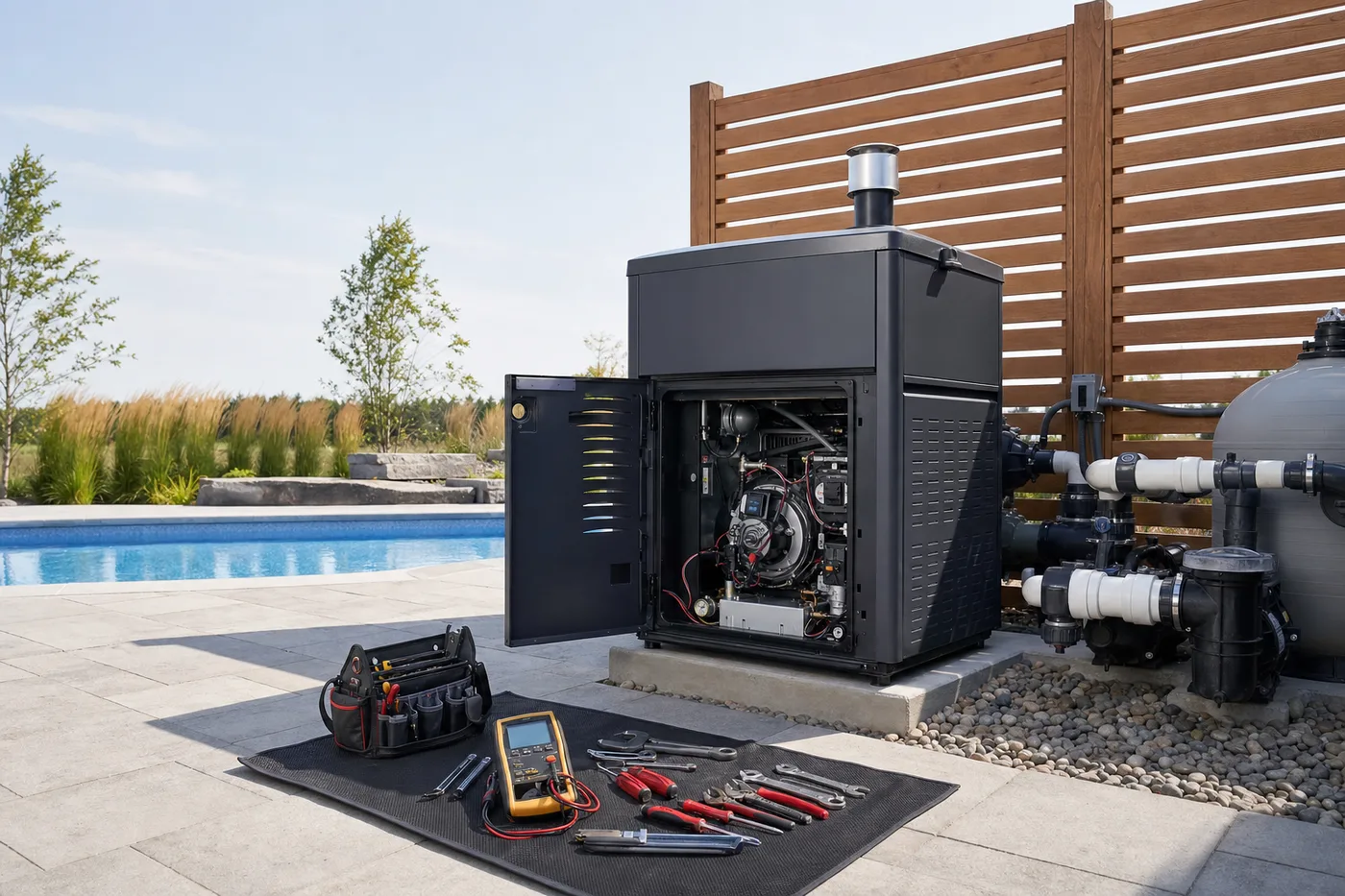
A safe homeowner planning checklist
Homeowners can gather information without performing the technical procedure. Confirm the planned pool closing date, locate manuals and prior service records, clear ordinary stored items away from the pad, provide unobstructed access and list any known leaks, error messages or recent repairs. Ask who is responsible for the circulation system, heater water circuit, gas system, electrical system, automation and spring return to service. Request a record of what was completed and any parts removed for protected storage. If the heater has already shown a gas odour, visible damage or an alarm condition, address that through the appropriate emergency or service path rather than treating seasonal closing as the repair.
- Exact make, model, manual revision and fuel
- Wide equipment-pad photos and known system changes
- Named responsibility for pool, gas, electrical and automation work
- A written closing record for the spring service provider
Need help with a problem?
Tell us what is happening
Note what you can see, hear or read from the normal controls. Do not remove panels, alter gas fittings or perform regulated tests yourself.
Why drainage instructions cannot be generalized
A heater can retain water in its heat exchanger, headers, manifolds, fittings and connected piping. The correct way to remove that water depends on model design, drain locations, plumbing elevation, bypass arrangement and whether the equipment is below the pool surface. Manufacturer instructions may call for access to specific components and may warn about pool drainage or trapped sections. Removing the wrong fitting can damage a part, create a leak or leave another low point full. Closing a valve in the wrong sequence can also isolate water instead of releasing it. For those reasons, this guide does not list drain-plug or valve steps. The exact manual and the installed plumbing must be evaluated together.
Who handles the gas, electrical and pool work?
Manufacturer winterization instructions can include fuel and electrical isolation, but that does not turn them into universal homeowner tasks. Gas valves, appliance controls, disconnects and automation may be arranged differently from one site to another. Ask Platinum Gas which gas-heater work we can help with for your model. Electrical work and pool plumbing may need separate qualified contractors. The closing plan should say who completes each part and how completion is communicated. Do not remove panels, alter a regulator, disconnect a gas fitting, defeat a switch or assume an unlabeled breaker controls only the heater. Each part needs to be closed down correctly; do not guess at valve or switch positions.
Compressed air and antifreeze are not generic solutions
Some exact equipment manuals discuss limited air purging with strict pressure and equipment requirements, while also warning that compressed air can cause components to rupture. That is specialist information, not permission to connect a household compressor and experiment. Pool-closing practices for underground lines do not automatically apply inside a heater. Antifreeze is equally model- and system-specific: introducing a product into an appliance where the manufacturer does not permit it can affect materials, water chemistry, seals or later startup. Do not use either method unless the current heater and pool-system documentation expressly supports it and the person doing the work understands every isolated section and hazard.
Covers, airflow and winter exposure
A cover should not be treated as a substitute for removing freeze risk. Improvised tarps or wrapping can trap moisture, obstruct combustion-air or exhaust openings, load the cabinet with snow, or invite debris and animals into a space that must remain serviceable. Use only a manufacturer-supported accessory or protection method for the exact state of the equipment. Keep ordinary storage, leaves and combustible material away from the heater. During winter, observe the pad from outside the equipment for storm damage, displaced components or unusual accumulation, but do not open the cabinet or attempt to restart the unit. Any protection must preserve the manual's ventilation, clearance and access requirements.
Check the heater before reopening the pool
A heater that was safely closed is not automatically ready when the pool opens. The spring provider should review the winterization record, confirm that removed or protected components are restored correctly, inspect for visible freeze or weather damage, and establish the required pool-water circulation before heater operation. Pentair warns not to turn on a drained heater until the system is circulating water. Fuel, electrical and automation status must be returned according to the exact manual, with each contractor handling their part; this article deliberately does not supply a relighting sequence. If the equipment leaks, produces an error, makes an unusual sound or fails to operate normally, discontinue the startup attempt and arrange diagnosis instead of bypassing a control.
Signs that need inspection before operation
Visible cracks, split plastic, displaced fittings, water beneath the heater after circulation begins, corrosion that has progressed, damaged wiring, animal nesting, cabinet distortion or an unexplained error all justify inspection. Freeze damage can be internal and may not appear until water returns, so a dry exterior is not proof that the heater survived. A gas odour at any stage remains an emergency: leave immediately and call 911 and Enbridge Gas at 1-866-763-5427 from a safe distance. Do not re-enter until cleared. For non-emergency physical damage, keep the heater out of operation and provide model details and photos without removing protective panels.
What to request from winterization service
Ask the provider to identify the manual used, the systems included, visible pre-existing concerns, work assigned to other trades, any components removed or stored, and the spring return-to-service requirements. A useful record can include model and serial information, dated equipment-pad photos and notes about valve or automation configuration without exposing sensitive property details. Tell Platinum Gas which heater you have and where it is installed so we can confirm how we can help. Pool plumbing, electrical and refrigeration work may need other qualified contractors. Clear documentation reduces the chance that a different spring contractor reverses an unknown closing procedure or mistakes a missing component for equipment failure.
Questions we hear
Frequently asked questions
No. Drain points, plumbing, valves, controls and gas or electrical steps differ between heaters. Use the current manual for your model and a qualified professional for work beyond the owner instructions.
A cover does not remove trapped water or replace the manufacturer winterization procedure. Improvised wrapping can also block openings or trap moisture. Use only a manufacturer-supported protection method.
Do not apply a generic compressed-air method. Some manuals contain strict equipment-specific directions and serious pressure warnings. Have a qualified provider follow the exact documentation for the installed system.
Review the closing record and exact manual, inspect for visible damage, restore model-specific components correctly, establish required water circulation and coordinate fuel, electrical and automation work before operation.
References
Sources and further reading
Ask about your project
Tell us about the property and equipment
Send the service address, timing, appliance model and safe photos that show the work area.