
Pool Heating
Pool Heater Sizing Guide: BTUs, Heat-Up Time and Real-World Factors
What size pool heater do you need? Start with your pool size, preferred water temperature and how quickly you want to swim. Wind, cover use and your gas or electrical supply matter too.
Before you plan
Start with the appliance and site details
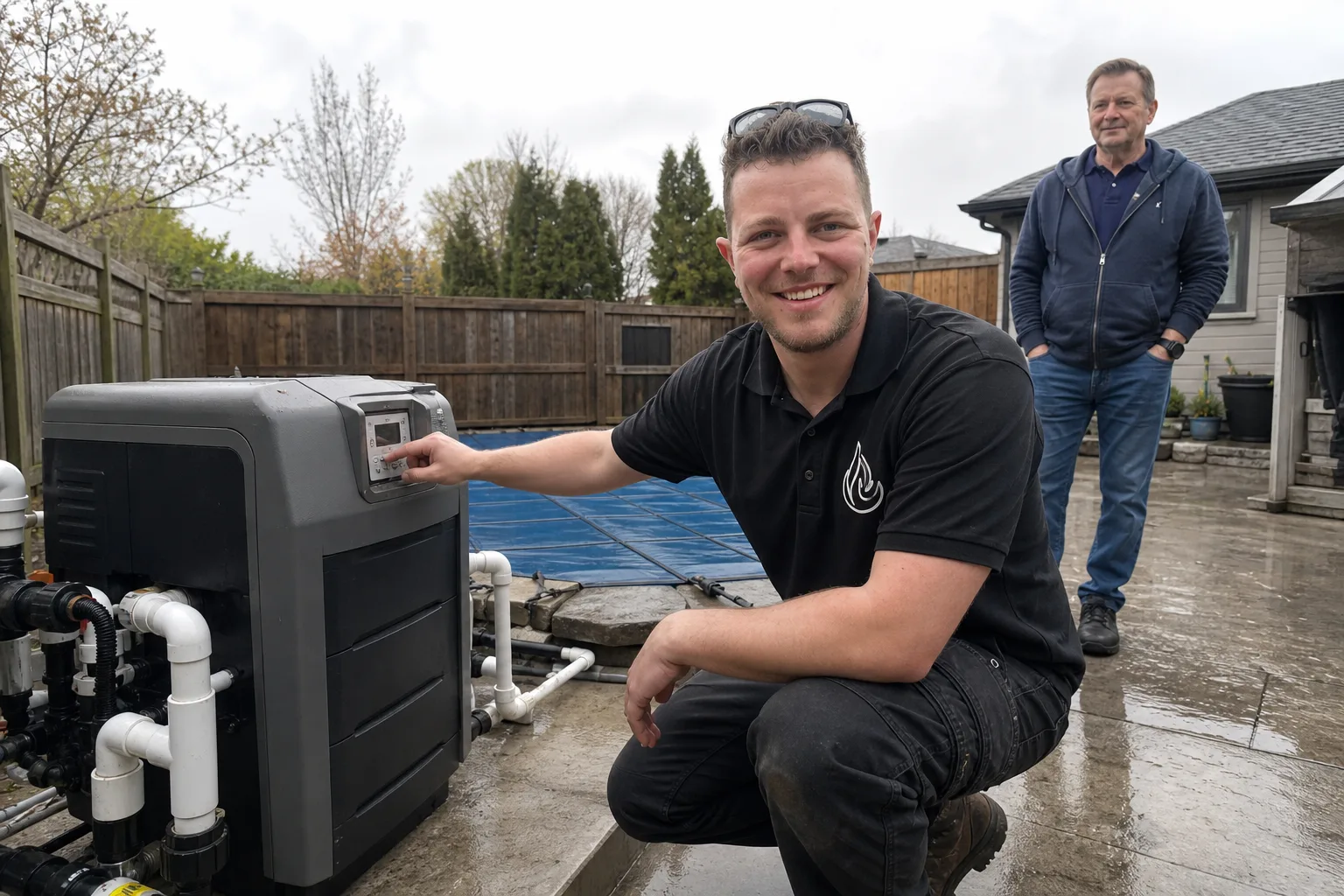
A pool heater is sized around more than gallons. Surface area, desired water temperature, expected air conditions, wind, humidity, night use, cover habits and acceptable heat-up time all affect the load. The equipment pad must also support the selected heater through adequate water flow, fuel or electrical capacity, clearances and controls. Online formulas are useful for comparing assumptions, but final selection should use current manufacturer data and an on-site assessment rather than treating one calculated BTU number as a finished design.
Step
What pool-heater sizing actually decides
Sizing connects a homeowner goal to a heater output under stated conditions. That goal might be maintaining a stable temperature throughout a regular swim season, warming a pool for selected weekends, extending use into cooler weeks, or recovering a spa quickly. Those are different loads and operating patterns. A model label may show input, output or nominal capacity, and heat-pump output changes with ambient conditions. The useful question is not simply how large the pool is. It is how much heat must reach the water, how quickly, in what conditions, and what losses will occur while the heater runs. Final equipment selection also has to fit the circulation system and available utilities.
Step
What to know before choosing a pool heater
Record pool length, width, average depth and surface area; current and desired water temperatures; the months and time of day the pool is used; whether a fitted cover is used consistently; exposure to wind; shade and surrounding structures; and the desired recovery window. Note whether the site has natural gas, propane and suitable electrical service, along with the existing heater model if one is being replaced. Photos should show the entire equipment pad, pool-to-pad context and routes that may affect gas, electrical or water work. These inputs let a professional separate a heating-load question from an equipment-pad, circulation or utility constraint.
- Pool surface dimensions and estimated water volume
- Target temperature and realistic starting condition
- Cover use, wind exposure, shade and overnight operation
- Fuel, electrical, circulation and equipment-pad information
- Desired heat-up time and actual use pattern
Step
Allow for both warm-up time and heat loss
A water-mass calculation estimates ideal heat added to the pool: U.S. gallons multiplied by about 8.34 pounds per gallon and the desired rise in degrees F. Dividing that energy by hours gives ideal delivered BTU/h before evaporation, radiation, wind and equipment efficiency. A separate loss screen considers pool surface area, the difference between desired water and outdoor temperature, wind, humidity, cover use and exposure. Neither screen alone selects a heater. Current manufacturer data and site conditions must connect the heating goal to a compatible model, and appliance input should not be confused with heat delivered to the pool.
Step
Worked Ontario planning example
Consider an 18-by-36-foot outdoor-pool planning example. Its surface area is 648 square feet, so wind, cover use and a 14 F difference between an 82 F water target and 68 F air condition can materially affect heat loss. If the same pool is estimated at 20,000 U.S. gallons and the owner wants a 10 F water rise, the ideal water-only energy is about 1,668,000 BTU. Spreading that over 12 hours is about 139,000 delivered BTU/h before losses. That figure answers only the water-mass question. Surface exposure, cool nights, actual equipment output and the site utilities can increase the required output significantly.
What to include with your request
What would you like to install, fix or improve?
Tell us what you need and where the job is. Add the appliance model, fuel type and a photo if you have them.
Step
Why surface area, wind and covers matter
An outdoor pool loses substantial heat at the water surface, especially through evaporation. Two pools with similar gallons can therefore behave differently if one has a larger exposed surface, more wind or less consistent cover use. A fitted cover can reduce exposure when the pool is not in use, but the sizing conversation should use the owner's real habits rather than assume the cover will always be in place. Nearby fencing, buildings and landscaping can change wind without eliminating it. A professional should record these conditions, then use a manufacturer sizing method or performance tool with assumptions that are visible. A result based on calm, warm test conditions should not be presented as equal performance on a cooler, windy evening.
Step
Heat-up time versus temperature maintenance
A homeowner who heats only before occasional use may prioritize recovery time. Another who keeps a covered pool near a set temperature may prioritize efficient maintenance through the regular season. A spa places a different demand again. Faster recovery generally requires more delivered output, but the result still depends on starting temperature and ongoing losses. Ask what happens in real life: how much notice is available before swimming, whether the pool cools between uses, whether evening use is important, and whether the owner accepts a longer warm-up. Sizing to an undefined promise such as heats fast creates disappointment; sizing to a stated temperature change, weather scenario and time window creates a comparison that can be checked.
Step
Will the heater work with your existing setup?
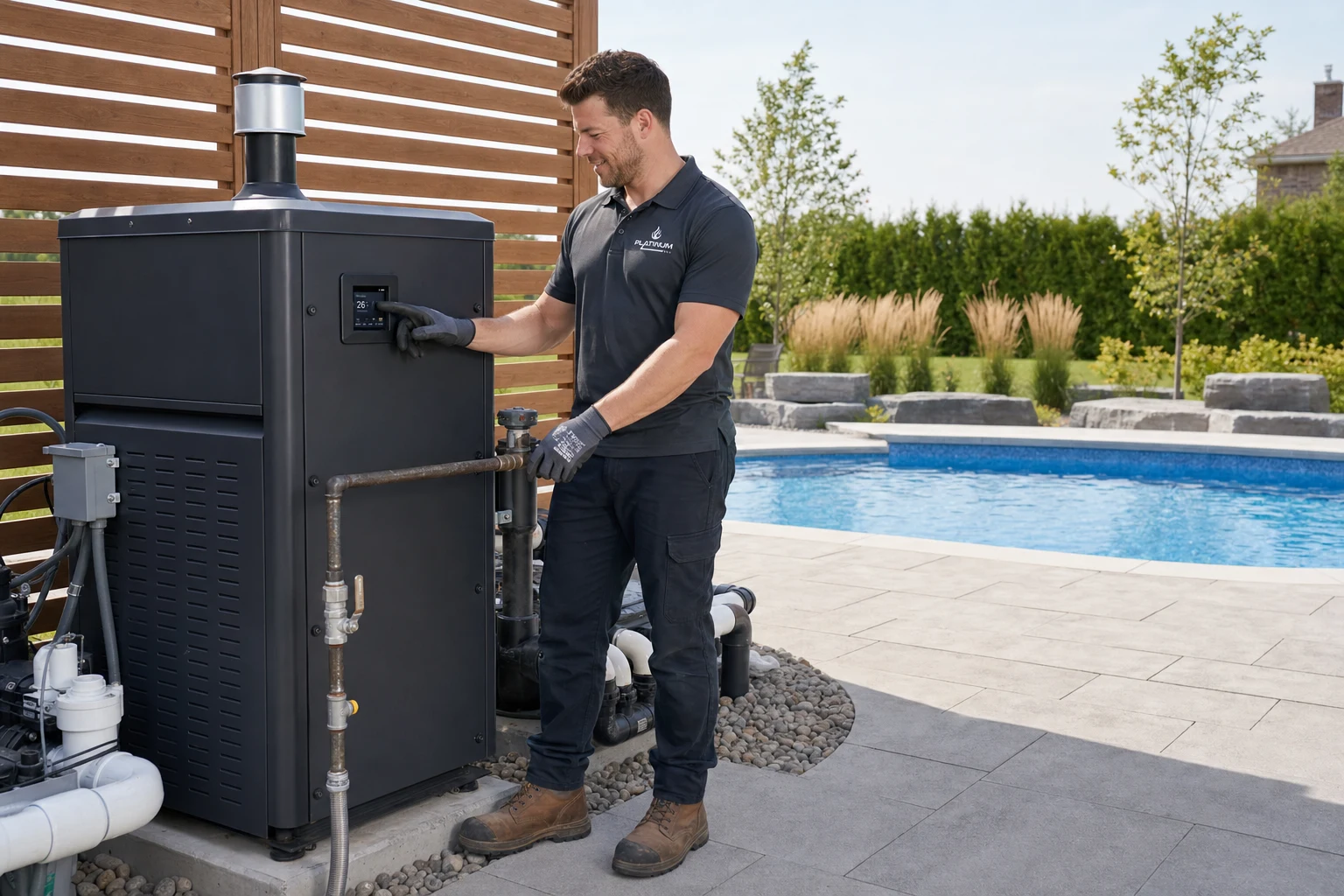
A calculated heating load does not confirm that a property can support the corresponding appliance. A gas heater adds demand to the house system, so the meter, regulator, line route, pipe sizing and other connected appliances must be considered. Pentair engineering guidance, for example, tells installers to account for adequate gas supply and coordinate utility review where applicable. A heat pump needs model-specific electrical supply, airflow space and condensate planning. Either technology must align with water-flow requirements, automation and the physical pad. Existing plumbing connections can influence labour but should not force selection of an unsuitable capacity or model. The assessment should identify utility and related-trade work separately from the heater itself.
Step
What happens if the pool heater is too small or too large?
An undersized unit may take longer than the owner expects, struggle under the selected seasonal conditions or encourage continuous operation without reaching the intended result. A larger nameplate is not automatically better. It can require gas, electrical, water-flow or pad changes, cost more to install, and still fail to solve heat loss caused by an uncovered, exposed pool. Some equipment may cycle differently when the load is small, while manufacturer minimum-flow and control requirements remain important. The appropriate range comes from the use case and current performance tables, followed by checking the site can support each candidate. Compare complete systems, not just the largest number in a product line.
Step
What the sizing recommendation should show
A transparent recommendation states the pool measurements, target and starting assumptions, season and cover pattern, wind or exposure notes, expected recovery window, candidate model data and utility constraints. It should distinguish appliance input from delivered output and name the manufacturer conditions behind heat-pump ratings. It should also explain dependencies such as meter review, electrical work, plumbing changes or pad preparation. Platinum Gas can use this information to assess the gas-heater and gas-supply portion of a project, with the web calculation treated as a planning estimate. When several capacities are reasonable, the quote should explain the tradeoff in expected operation and supporting work rather than presenting one number without context.
Questions we hear
Frequently asked questions
No. Gallons help estimate the energy needed for a water-temperature change, but surface area, wind, cover use, weather, desired recovery time, equipment performance and site utilities also affect selection.
No. It is an educational starting point with stated assumptions. Final sizing should use current manufacturer data and a site assessment for the actual pool, conditions, circulation and utilities.
More delivered capacity can shorten an ideal recovery calculation, but only when the site, fuel or electrical service, water flow and controls support the model. Heat loss and operating conditions still matter.
Send dimensions, estimated volume, temperature goal, use pattern, cover habits, current equipment details and wide photos of the pool and equipment pad. Include the existing model and utilities if known.
References
Sources and further reading
Ask about your project
Tell us about the property and equipment
Send the service address, timing, appliance model and safe photos that show the work area.