
Pool Heating
Gas Pool Heater vs Heat Pump: Which Fits Your Pool?
Want a quicker warm-up for weekend swimming, or a steady temperature all season? Compare how gas pool heaters and heat pumps fit your pool, budget and routine.
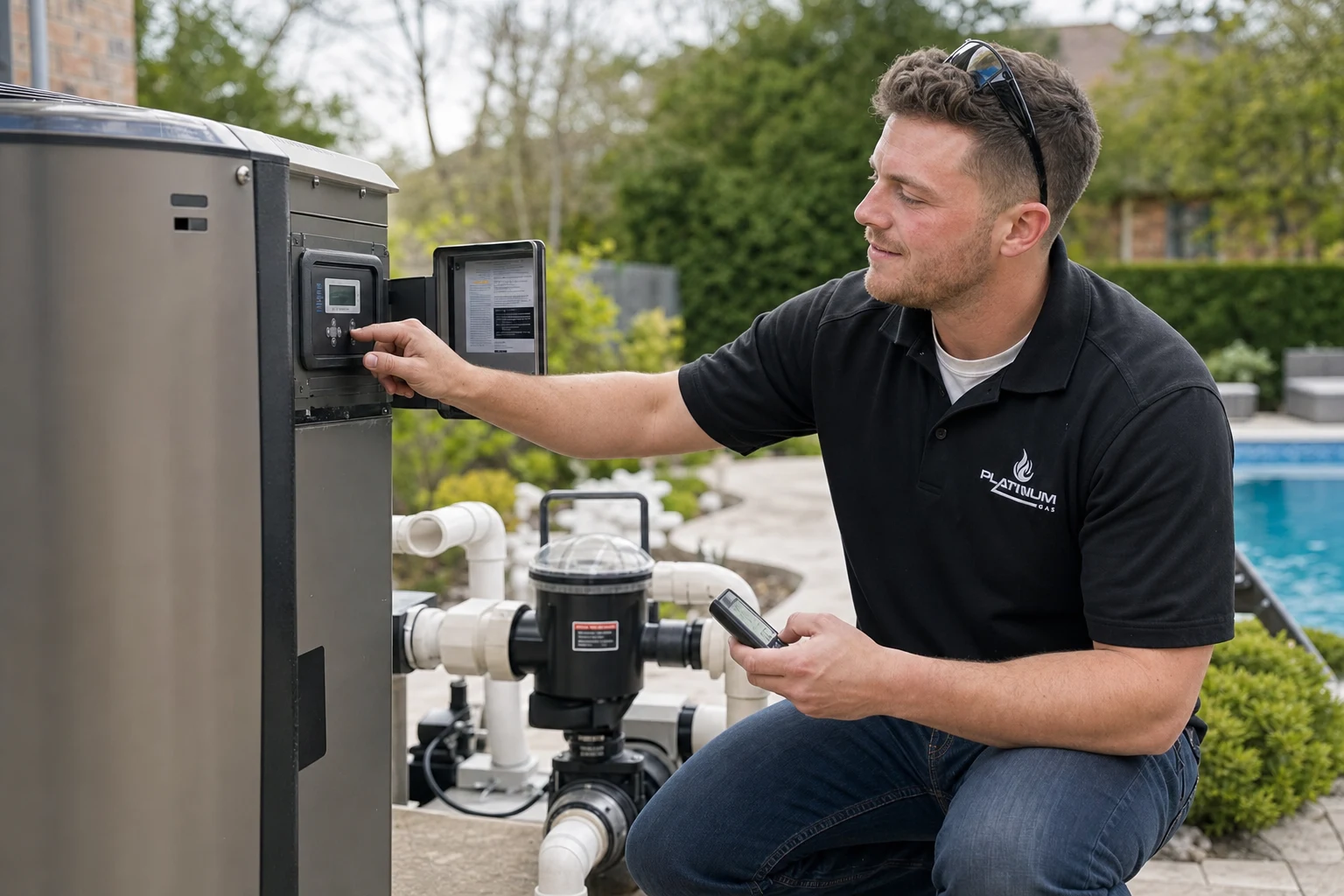
Before you compare
Start with the property and equipment
A gas pool heater often fits owners who prioritize higher on-demand output, faster recovery or operation during cooler outdoor conditions. An air-source pool heat pump often fits steady temperature maintenance when ambient conditions are favourable and the property has suitable electrical service and airflow space. Neither technology is universally better. Ontario homeowners should compare the intended season, cover habits, heat-up expectations, current gas and electrical infrastructure, equipment-pad constraints, manufacturer output at stated conditions and service support before selecting a model.
Before you choose
Check these details against the property
| Compare | What to assess |
|---|---|
| Use pattern | Short recovery windows and intermittent use versus steady temperature maintenance. |
| Site services | Available gas capacity versus electrical supply, with airflow, clearances, and water flow considered for either path. |
| Total cost and upkeep | Installation work, current local energy rates, pool-cover use, your preferred water temperature, and access to local repairs and maintenance. |
What is being compared
A gas-fired pool heater burns natural gas or propane and transfers combustion heat through a heat exchanger to circulating pool water. An air-source heat pump uses electricity to move heat from outdoor air into the water through a refrigerant circuit. Both depend on the pool circulation system, but their capacity ratings and response to outdoor conditions differ. Gas model families commonly include higher nominal BTU/h outputs, while heat-pump output and coefficient of performance are published at specific air, humidity and water conditions. Compare the heat reaching the water under relevant conditions, not the fuel name alone. The selected unit must also be available and approved for the Canadian installation.
When do you want to use your pool?
Ontario pool use can include warm midsummer days, cool nights and shoulder-season periods, but a municipality name does not provide a complete design condition. Ask when the household actually swims and how it manages temperature. Heat pumps draw energy from ambient air, so output and efficiency vary with air temperature and humidity; current manufacturer tables should be read at conditions relevant to the intended season. Gas-heater output is less directly tied to outdoor heat availability, which can suit intermittent or cooler-weather recovery, while fuel capacity and venting conditions still govern the installation. A covered pool maintained steadily creates a different comparison than an uncovered pool heated from cold before occasional weekends.
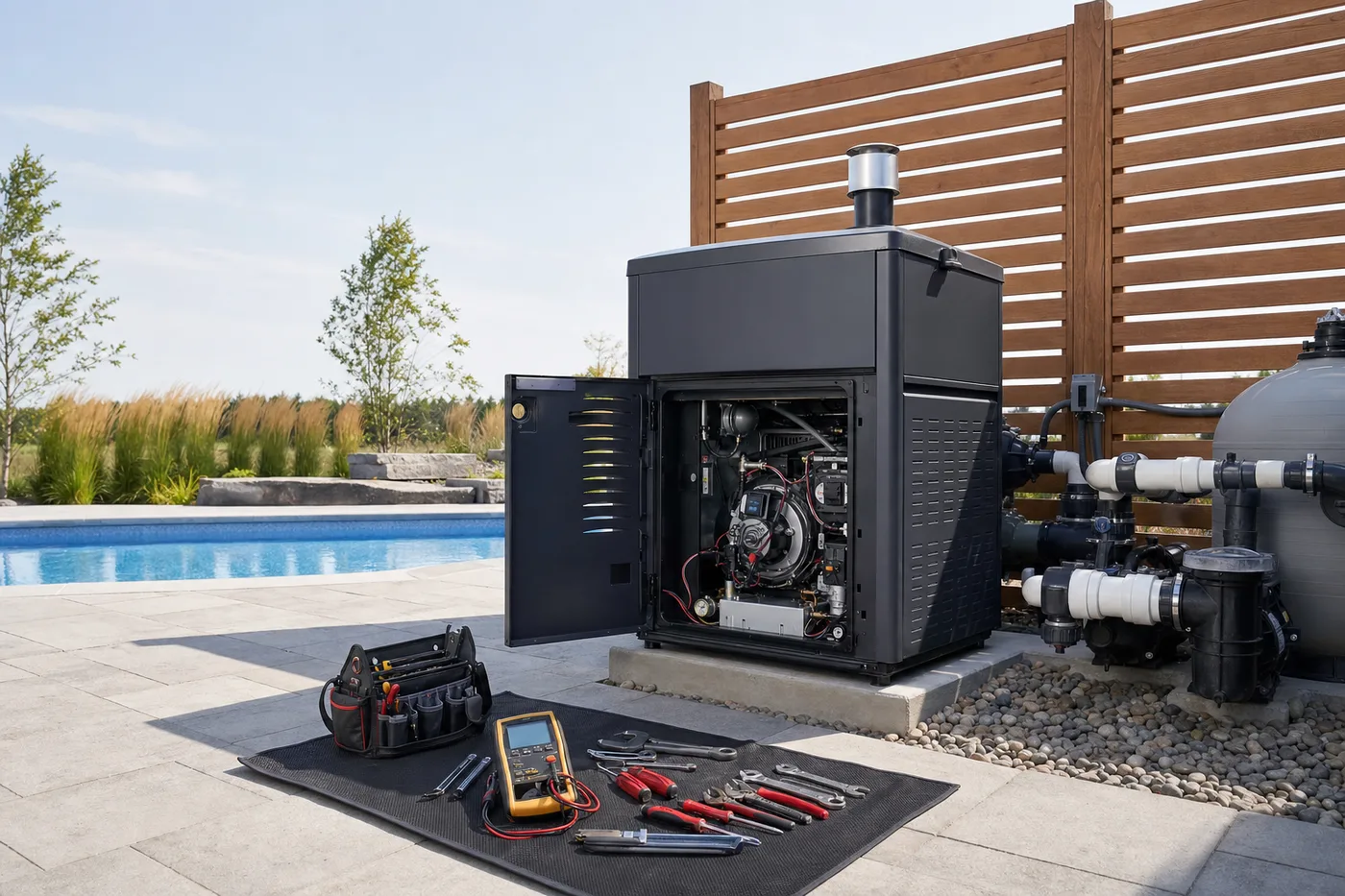
Fast heat-up versus steady maintenance
A homeowner who wants to decide on Friday whether to swim on Saturday may value high recovery output. A household that keeps the pool covered and near one temperature for regular use may accept gradual heating and prioritize seasonal operation. Pentair describes heat pumps as suited to temperature maintenance rather than rapid warm-up, while its gas-heater line emphasizes faster heating. Those are broad technology patterns, not promises for a particular pool. Estimate the actual water rise, losses and time window, then compare candidate outputs under stated conditions. The pool-heater sizing guide explains why surface area, wind and cover use must stay in the calculation instead of reducing the decision to one marketing phrase.
Before you choose equipment
Find the right fit for your home
Tell us which models you like and where you want the appliance. We can help check the fuel supply, venting, space and access before you buy.
Utilities and site requirements
A gas option requires the correct fuel, meter or propane supply, regulator context, line capacity and route, as well as appliance clearances and any manufacturer venting requirements. A heat pump requires model-specific electrical service, a circuit and disconnect arrangement completed by the appropriate trade, open airflow around the unit and management of condensate. Fan discharge and sound affect placement. Both technologies need compatible pool-water flow, plumbing, controls, service access and a stable pad. An existing gas line or electrical circuit should be verified rather than assumed adequate. The quote should include any extra installation work and say who handles it, so a low heater price does not hide a costly gas-line or electrical upgrade.
How to read performance data fairly
Heat-pump capacity and coefficient of performance can change substantially between warm, humid test air and cooler conditions. The current Pentair UltraTemp manual, for example, separates technical conditions by air temperature, relative humidity and water temperature. Gas heaters publish input and thermal-efficiency information, but input is not identical to heat delivered to the pool. Compare model data at the same target and clearly state every assumption. Do not apply a warm-climate heat-pump rating to an Ontario shoulder-season plan or compare gas input directly with heat-pump output. Manufacturer calculators can support discussion, but the final recommendation should preserve the source date, model and test conditions so the result can be audited later.
A cover can change either option
Evaporation at the pool surface is a major source of heat loss. A correctly used cover can reduce exposure when the pool is idle, allowing either heater to spend less time replacing lost heat. Cover behaviour belongs in the comparison because the result changes if the owner plans to leave the pool open overnight or cannot use the cover consistently. Windbreaks and sheltered placement may help at the water surface, but they do not replace heater clearances or airflow. Rather than promise a fixed saving, compare the same pool and target with documented covered and uncovered assumptions. That shows whether the owner is choosing technology for the real operating pattern or for an ideal routine that will not be followed.
Installation and operating cost factors
Total project cost can include the appliance, gas line or meter work, propane infrastructure, electrical upgrades, plumbing changes, pad changes, controls, permits or coordination, startup checks and removal of old equipment. Operating cost depends on current local utility rates, equipment performance under actual conditions, target temperature, losses, cover use and hours of operation. Rates change, so a cost comparison should include its date and source instead of repeating a generic annual figure. Gas may avoid long maintenance runs in an occasional-use plan, while a heat pump may suit steady operation in favourable conditions. The numbers need to be calculated for the household, not borrowed from a different climate, pool or currency.
How much room does it need, and how loud is it?
A heat pump uses a fan and needs substantial free airflow, so fences, walls, shrubs and overhead structures must be checked against the exact manual. Sound character and discharge direction matter near seating areas and neighbours. A gas heater also has required clearances, combustion and exhaust considerations, but a different airflow pattern. Both need room for service panels and future replacement. Condensate from a heat pump must not be mistaken automatically for a pool-water leak, yet drainage should still be planned. Evaluate a wide equipment-pad photo and measurements rather than relying on the old heater footprint. Matching plumbing connections can be convenient, but long-term access and compliant placement are more important.
Repairs, maintenance and local service
Both systems depend on clean, correctly balanced pool water and adequate circulation. Gas heaters add combustion, ignition, fuel and venting systems; heat pumps add a refrigerant circuit, coil and fan system. Homeowner care should remain within the exact manual, while fuel, electrical, refrigerant and internal safety work belongs to qualified service. Before choosing a brand or model, ask who supports it locally, how diagnostics are accessed, whether parts and manuals are available, and what warranty conditions apply in Canada. When you request a quote, we will identify which work Platinum Gas can complete and which work may need another qualified contractor. A recommendation is stronger when the future service path is known before purchase.
Compare both options against the same pool plan
Choose the comparison criteria before choosing the technology. For intermittent use and a short recovery window, compare higher-output gas candidates and confirm fuel capacity. For steady covered-pool maintenance in suitable ambient conditions, compare heat-pump output at cooler test points and confirm electrical and airflow requirements. For a tight pad, measure clearances and service access for both rather than assuming one fits. For cost, price the full installation and run a dated scenario using local rates. For shoulder-season swimming, model the target air and water conditions. For every path, include water flow, controls, warranty and local serviceability. The result may favour one option, or show that the project goals need adjustment.
When hybrid equipment belongs in the comparison
Manufacturers offer some products that combine gas and heat-pump operation, allowing different modes for maintenance and recovery. That can be relevant when a household values both patterns, but it adds equipment, utility, control, space and service questions. The existence of a hybrid product does not establish that it fits the site or that Platinum Gas supplies both parts of the work. Treat it as another model family requiring current Canadian documentation and a complete assessment. A dual-system strategy using separate equipment also needs manufacturer-supported controls and coordination; it should not be improvised from independent appliances that were not designed to operate as one system.
Questions we hear
Frequently asked questions
Gas model families often offer higher nominal outputs, but actual recovery depends on pool load, model output, water flow and site conditions. Compare current specifications rather than using the technology name as a promise.
Some models operate in cooler conditions, but output and efficiency vary with ambient temperature and humidity. Use the exact manufacturer performance table at relevant conditions and confirm the intended season.
It depends on current local gas and electricity rates, the model, weather, water temperature and how often you use a cover. Compare running costs for your own pool and routine rather than a general annual estimate.
Ask us about the model before buying. Platinum Gas handles gas-heater and gas-supply requests. Electrical, refrigerant or pool-plumbing work, and some manufacturer-specific repairs, may need another qualified contractor.
References
Sources and further reading
Ask about your project
Tell us about the property and equipment
Send the service address, timing, appliance model and safe photos that show the work area.