
Pool Heating
Pool Heater Troubleshooting: Why It Stops or Will Not Ignite
Pool heater not starting or shutting off? Learn what the display and timing can tell you, what you can safely check and when to book a repair.
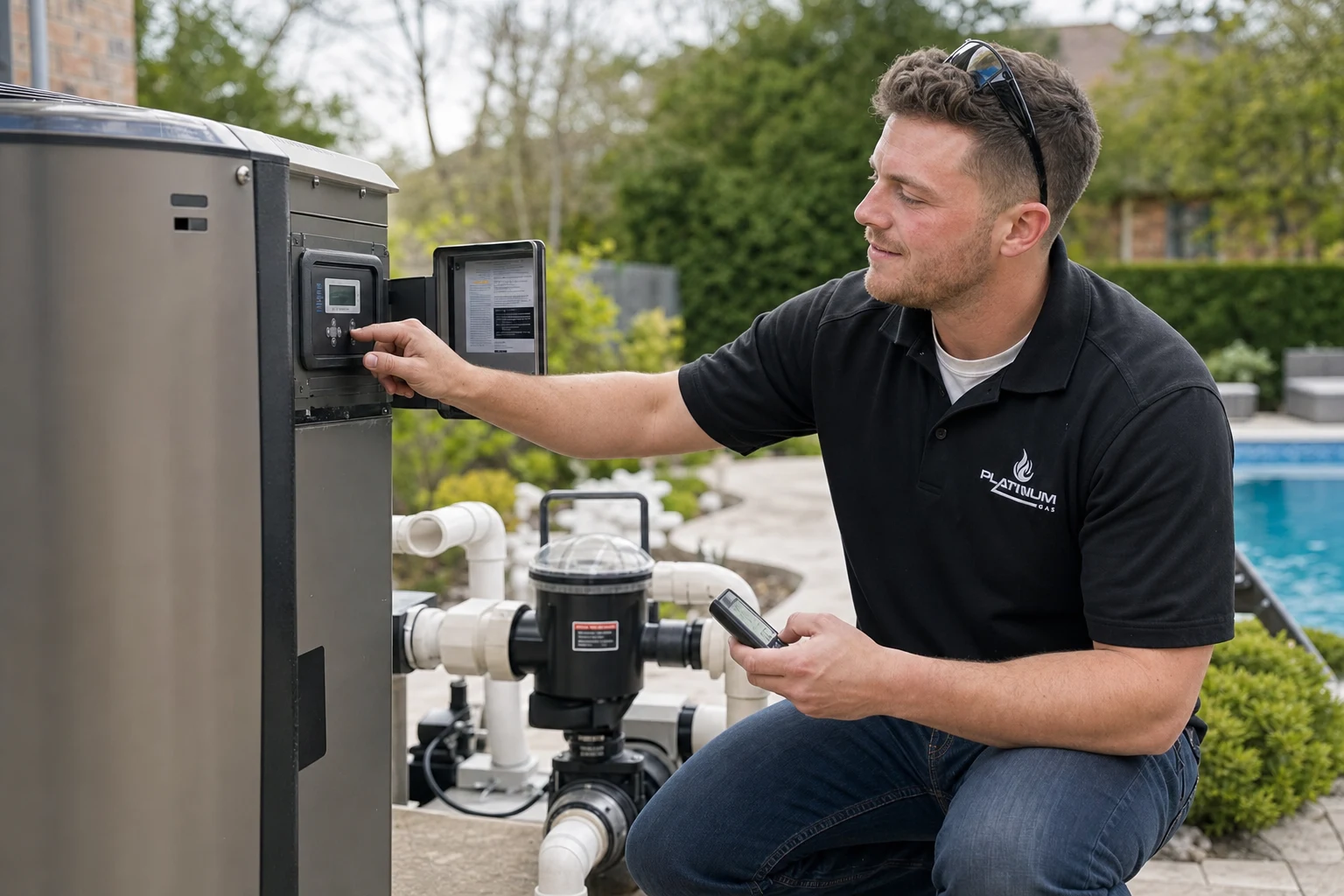
Safe checks
Start with what you can observe
A pool heater that stops, cycles or will not ignite may be responding to water-flow conditions, temperature demand, an ignition or flame-proving fault, fuel supply, venting or airflow, a high-limit condition, a sensor, a control issue or freeze or scale damage. The timing, display message and wider pool-system conditions help narrow the possibilities, but they do not prove a repair. Gas, combustion and electrical diagnosis belongs to qualified service personnel working from the exact model manual.
Start with the symptom and the moment it occurs
The phrase "heater is not working" can describe several different sequences. A unit that never starts is different from one that starts, runs for a few seconds and locks out. A heater that runs normally until another pool device changes state suggests a different context from one that stops after a long heat call. Record what happens before, during and after the fault rather than guessing which component failed. Note whether the circulation pump was already running, whether the automation was asking for heat, whether the displayed water temperature seemed plausible and whether any recent maintenance, power interruption, gas work or plumbing change came first. A clear timeline gives the technician evidence that a single error-code photograph cannot provide.
- Never starts: record the display state, requested temperature and whether pool circulation is operating normally.
- Starts then stops: record the elapsed time, visible code and whether the symptom repeats under the same conditions.
- Cycles during heating: note changes in pump speed, valve position, filter pressure, wind and other equipment.
- Fails after weather or service: note freezing conditions, flooding, storms, maintenance and recent equipment changes.
When to stop using the pool heater
Troubleshooting should never compete with emergency guidance. A rotten-egg or sulphur odour, hissing associated with gas, a damaged connection, visible flame outside its intended area, soot, melted wiring or an activated carbon monoxide alarm is not a cue to continue testing. Move people away and follow the appropriate emergency instructions. Even without an obvious emergency, leave covers and sealed combustion areas closed. Manufacturer guides identify safety switches and lockouts because conditions such as inadequate flow, excessive temperature or unsuitable airflow can damage equipment or create a hazard. Defeating a switch, holding a contact closed or repeatedly clearing a fault removes information and may allow the heater to operate under the condition that stopped it. A homeowner can document; a technician diagnoses.
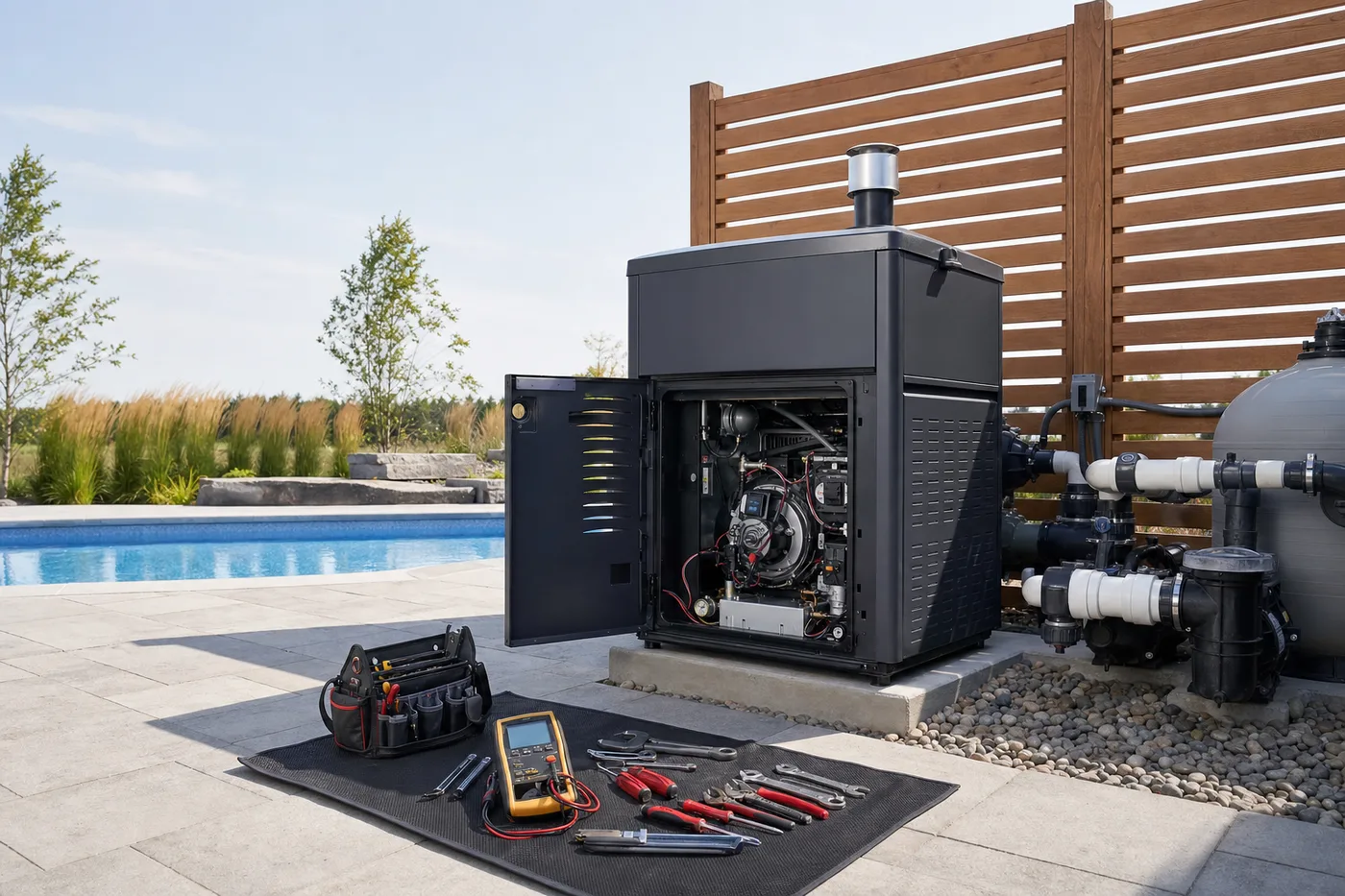
Safe observations you can make without opening the heater
Begin with the owner-facing controls and the pool equipment visible during normal use. Photograph the full display before changing anything. Write down the exact code, including letters, numbers and punctuation, because similar-looking codes can have different meanings. Confirm only that the heater mode and requested temperature match your intention. Observe whether the pool pump appears to be operating and whether water is returning to the pool as it normally does; do not place hands near moving equipment or open pressurized components. Check for obvious leaves, storage items, snow or debris around accessible exterior air openings while keeping clear of hot surfaces. Use the owner section of the exact make, model and revision manual. Generic internet code lists are not a substitute for that document.
Need help with a problem?
Tell us what is happening
Note what you can see, hear or read from the normal controls. Do not remove panels, alter gas fittings or perform regulated tests yourself.
Water flow is part of the heating system
A gas pool heater transfers heat into moving pool water, so its controls must establish that acceptable circulation exists before and during firing. A dirty filter, a changed valve position, a variable-speed pump schedule, a closed return, air in the circulation system or a plumbing change can alter the conditions the heater sees. These observations do not authorize bypassing a flow or pressure safety, changing an internal bypass, opening a pressurized filter or adjusting a switch. Record filter-pressure behaviour only if you already understand the pool equipment and can read it without touching anything. If a symptom appeared after filter service, automation programming, pump replacement or plumbing work, include that fact in the service request. The heater and the circulation system need to be assessed as connected equipment rather than isolated boxes.
Why the heater may not light or stay lit
Modern gas pool heaters use a controlled sequence. Depending on the model, the controls confirm operating conditions, establish airflow, energize an ignition system, open the gas valve and verify flame. A shutdown during that sequence can involve more than the igniter itself. Fuel pressure, a valve, grounding, flame sensing, combustion air, venting, wiring and the control board can all affect the result. Do not try to watch ignition through an opened cabinet, manually light a heater not designed for that action, reposition an electrode, clean a burner, probe live circuits or adjust gas components. Record the sound and timing from a normal standing position, the exact displayed message and whether other gas appliances show a separate supply problem. Those details help service personnel choose the correct manual and test path.
Fuel concerns are not a do-it-yourself test
A heater cannot be judged by the mere presence of natural gas or propane elsewhere on the property. The appliance rating, fuel type, connected demand, regulator or meter context, supply conditions and installation all matter. A recent appliance addition, fuel conversion, meter change, propane delivery issue or work on another gas line is relevant history. It is not safe to loosen a fitting, manipulate a regulator, use a flame to look for a leak, measure gas pressure without the proper training or alter an orifice. If gas is suspected to be escaping, stop treating the issue as a service diagnosis and follow emergency instructions. If there is no emergency indication, provide the fuel type and recent system history when booking service so the technician can prepare for an appropriate assessment.
Venting, combustion air and the equipment area matter
The exact installation manual defines where a particular heater may be installed and what space, venting or air provisions it requires. Fences, privacy screens, covers, stored chemicals, leaves, construction dust, snow and newly built structures can change the environment after installation. Wind may also coincide with a symptom, but coincidence does not establish the cause. From a safe distance, photograph the heater and the wider equipment area so a technician can see nearby walls, overhangs and stored materials. Do not remove a vent, improvise a wind shield, close an opening, relocate a termination or operate a heater under a makeshift enclosure. Heavy soot, discolouration, unusual exhaust behaviour or heat damage is a reason to stop use and arrange professional evaluation.
High-limit, scale and water-chemistry clues
High-temperature protection can operate when heat is not being carried away as intended. Restricted circulation is one possible context; scale or damage within the heat exchanger can also affect heat transfer, and water chemistry can influence equipment condition over time. A high-limit message does not tell a homeowner which condition exists and should not be defeated or treated by increasing flow blindly. Gather recent water-test records, note whether the pool was newly filled, report chemical-treatment events and mention visible leaks or unusual residue outside the cabinet. Never add chemicals through the heater, mix products or open internal water connections as a troubleshooting experiment. Pool-water and heater specialists may both need to contribute when water balance, circulation and combustion equipment overlap.
Sensors, electrical supply and automation can mimic other faults
A temperature reading that jumps, a blank display, a communication alert or a heater that starts only from one controller can point toward sensing, power, wiring or automation context. It can also reflect another upstream condition. Document whether the heater is controlled locally, by a pool automation system or by an app, and whether the issue appears in every control mode. Note storms, breaker trips, electrical work and software or schedule changes. Do not open electrical compartments, bridge terminals, apply external voltage or replace a fuse simply because a forum associates it with a code. Pool equipment combines water, electricity, fuel and hot surfaces; electrical and control testing should be performed by people qualified for the work and guided by current manufacturer documentation.
Why repeated resets erase diagnostic clues
One owner-manual instruction may permit a normal control action after a temporary interruption. That is different from repeatedly clearing a safety lockout until the heater stays on. A lockout preserves a record of the point at which the control sequence stopped. Repeated attempts can erase timing details, stress components or expose the heater to a condition that has not been corrected. Do not disconnect power as a default cure, bypass an interlock, hold a button sequence found for another model or change installer settings. If the manual gives a safe owner action for the exact displayed condition, follow it once as written and document the result. If the condition returns, stop and provide that result to the technician.
Record symptoms, codes and operating conditions
A well-prepared service request reduces guesswork without promising a diagnosis before the heater is tested. Photograph the rating plate without removing a secured panel, the full display, the equipment area and any visible external damage. Record make, model, serial number if accessible, fuel type, pool or spa mode, set point, displayed water temperature, exact error message, pump state and symptom timing. Add recent filter work, plumbing changes, electrical events, gas work, freeze exposure, flooding, water-chemistry concerns and prior repairs. State whether the problem is constant or intermittent and whether operation has stopped for safety. Avoid naming a presumed failed part; describe what the system actually did. These details help us plan the service visit and let you know if another contractor is needed.
Questions we hear
Frequently asked questions
No. Follow only a safe owner action stated in the exact model manual, and do it once as directed. If the fault returns, stop. Repeated resets can hide the sequence that helps diagnose the problem and may keep exposing the heater to the condition that triggered a safety response.
Usually not by itself. A code identifies the condition or stage detected by that model control. Flow, fuel, airflow, wiring, sensors, controls and the circumstances around the fault can produce related symptoms. Record the exact code and model rather than ordering a part from a generic code list.
Send the make, model, accessible rating-plate photo, exact display message, symptom timeline, fuel type, control method and notes about circulation, weather and recent pool, gas or electrical work. Include wide photos of the equipment area, but do not remove panels to take them.
Treat suspected escaping gas, fire, scorching, heavy soot, damaged venting or a carbon monoxide alarm as a safety issue rather than routine troubleshooting. Move away and follow emergency guidance. For natural gas in Ontario, call 911 and Enbridge Gas from a safe distance.
References
Sources and further reading
Ask about your project
Tell us about the property and equipment
Send the service address, timing, appliance model and safe photos that show the work area.