
Safety and Maintenance
Gas Fireplace Maintenance Checklist: What You Can Check and When to Call
Keep your gas fireplace ready for the colder months. Learn what you can check at home, when to book maintenance and which repairs need a qualified technician.
Safe checks
Start with what you can observe
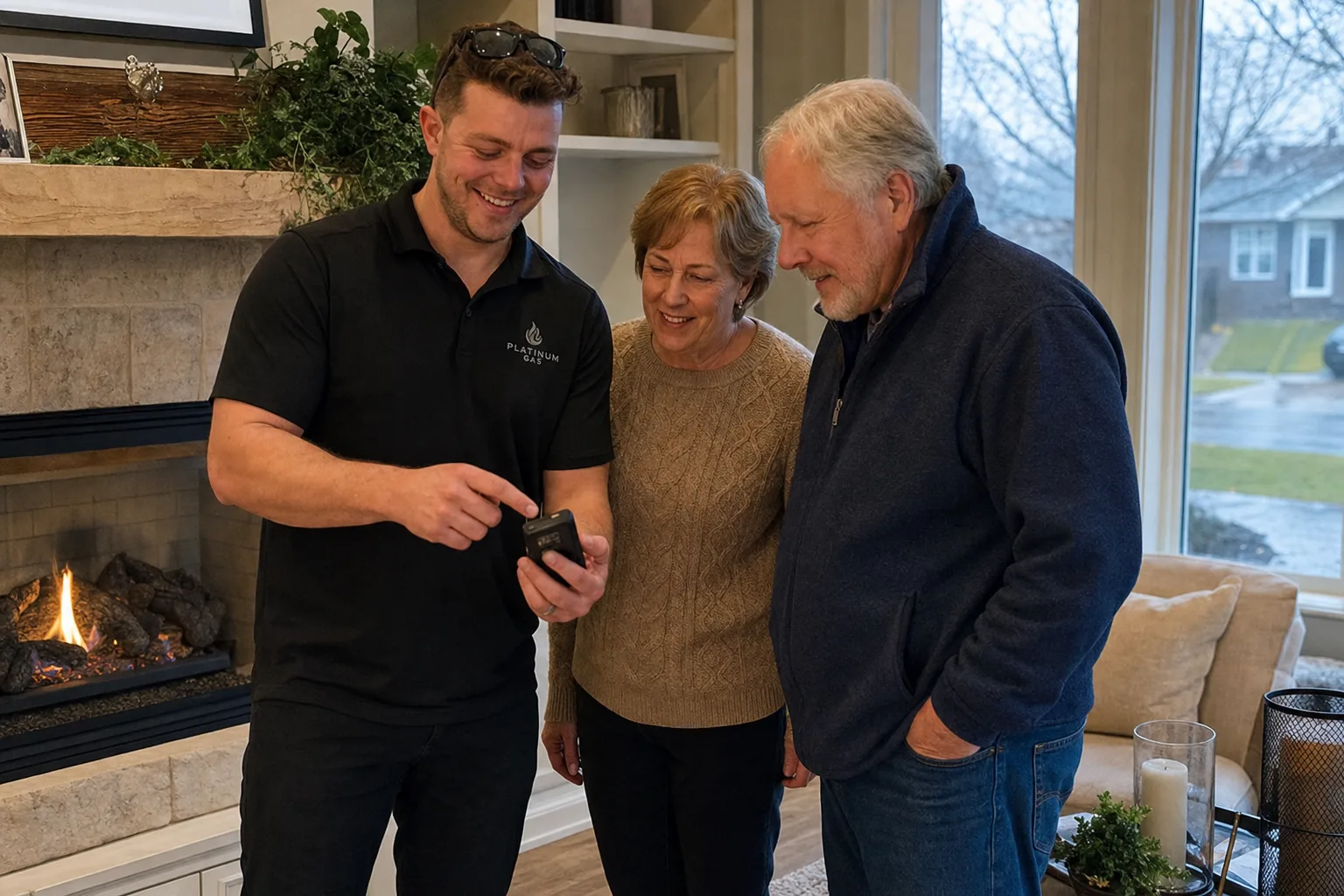
Owners can observe normal operation, keep accessible exterior areas clear, maintain smoke and carbon-monoxide alarms, protect required clearances, and follow the cleaning directions in the exact owner manual. Gas supply, burner, pilot, ignition, combustion, regulator, vent, sealed-glass, gasket, electrical and safety-control work belongs to qualified service. A recurring fault, soot, damaged glass or venting, unusual persistent odour, or alarm activation is a reason to stop and call.
Before the first seasonal use
Find the exact owner manual using the model and serial information, then review its lighting, normal-operation, cleaning and warning sections. Do this before the room is rearranged for winter. Confirm that furniture, drapery, decorations, firewood, children's items and electronics have not moved into spaces the manual requires to remain clear. Look at the glass, screen and visible appliance front without removing them. Damage, a loose barrier or an altered opening needs attention before operation.
From outdoors and from a safe standing position, visually confirm that the accessible termination is not covered by leaves, storage, new landscaping or obvious snow accumulation. Do not climb, dismantle a cap, insert tools or add a homemade shield. Check that planned renovation work has not enclosed service access or placed new materials near the appliance or vent. If the system has not been inspected within the interval recommended by the manufacturer or your service provider, arrange service before heavy seasonal use.
- Locate the correct owner manual and keep the model and serial information accessible.
- Check the required clear area around the fireplace and visible screen or glass condition.
- Observe the exterior termination from a safe location without taking it apart.
- Test household alarms under their manufacturer instructions.
What to watch for when your fireplace is running
Use the normal controls exactly as the manual describes. Observe whether ignition occurs in the expected sequence, the flame settles into its normal appearance, controls respond, and the fan behaves as the manual explains. Some sounds and odours can be normal during an initial cure or after a long idle period, but the model manual is the reference. Record what happens, when it begins, whether an error code appears and what else in the home was operating.
Stop using the fireplace for visible soot, persistent unusual odour, repeated failed ignition, delayed or abnormal flame behaviour, damaged glass, a loose or missing safety barrier, scorching or discolouration nearby, a recurring fault code, or a carbon monoxide alarm. Do not repeatedly reset it to force operation. Do not reach into the firebox, move logs or media, adjust air settings, clean a burner, relight contrary to the manual, or bypass a switch or sensor.
Looking after the glass, screen and logs
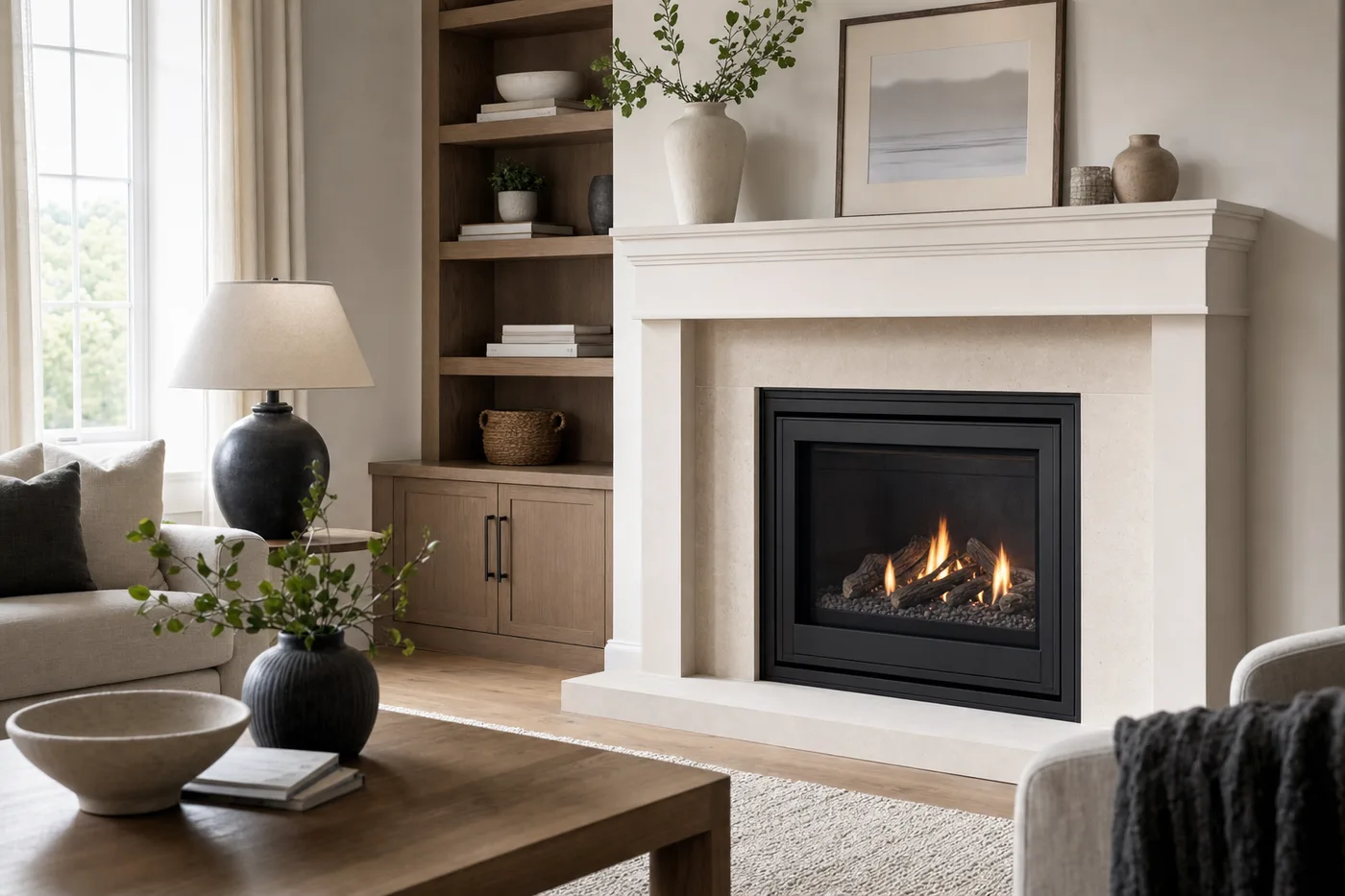
Fireplace glass becomes extremely hot, and the protective barrier supplied with the appliance must remain installed. Keep children and vulnerable occupants away from the hot surface. Cleaning instructions vary by glass type, coating, appliance and soil. Use only the method and products approved in the owner manual, and only when the appliance is fully cool. Household abrasive, ammonia-based or improvised cleaners can damage some glass or finishes.
Do not remove sealed glass unless the owner manual explicitly assigns that action to the owner and you can follow it exactly; when in doubt, leave it to service. A gasket, latch or glass assembly is a combustion-safety component, not cosmetic trim. Logs, glass, stones and other media have precise approved placement on many models. Moving them to change the flame picture can obstruct ports, create soot or affect operation. Take a photo of an apparent shift and ask a technician rather than rearranging the media.
Need help with a problem?
Tell us what is happening
Note what you can see, hear or read from the normal controls. Do not remove panels, alter gas fittings or perform regulated tests yourself.
Carbon monoxide and smoke alarms
Carbon monoxide is colourless and odourless, and a CO alarm is different from a natural-gas leak detector. Ontario's current Fire Code requirements apply to homes with a fuel-burning appliance or fireplace. Provincial guidance says alarms are required adjacent to each sleeping area and on every storey of a house under the rules in effect from January 1, 2026. Follow the current Ontario guidance and each alarm manufacturer's placement, testing, battery and replacement instructions.
Test alarms regularly as directed, check expiry or replacement dates, and never disable one because of a recurring signal. If a CO alarm sounds and anyone has headache, dizziness, nausea, confusion, drowsiness or other possible symptoms, get everyone outside immediately and call 911 from outside. Enbridge notes that a CO alarm does not detect a natural-gas leak. If gas is smelled, use the natural-gas emergency steps in the notice at the top of this guide.
Check the outside vent from a safe spot
Enbridge advises keeping appliance venting systems outdoors and free from cracks, corrosion and blockage. From ground level or another safe normal-access point, look for obvious damage, separation, staining, debris, vegetation, snow or stored objects around the fireplace termination. Compare its appearance with prior photos if available. A change after roofing, siding, deck or landscaping work deserves attention because later construction can crowd an originally acceptable area.
Observation is the owner boundary. Do not remove a cap, probe a pipe, melt snow with a torch, add mesh, seal a joint or improvise a wind guard. Do not climb where fall protection would be needed. A blocked, damaged, corroded or altered vent is a stop-use condition for professional assessment. If exhaust appears to enter the home or an alarm activates, move occupants to safety and follow emergency guidance rather than investigating the termination.
Signs that professional service is due
Arrange service for ignition failures, repeated shutdowns, a changed flame pattern, soot, unusual staining, persistent odour, new noise, fan or control problems, damaged glass or barrier, visible gasket concern, vent damage, water entry, an expired inspection interval, or any uncertainty after renovation work. Provide the exact model, serial number, fuel, symptom, displayed code, timing and recent changes. A short video taken from a safe distance can help describe an intermittent symptom, but do not keep running an unsafe appliance to capture it.
A dusty smell during first seasonal operation can have a different cause from fuel odour or combustion spillage, yet a homeowner should not diagnose by smell alone. The separate guide Why Does My Gas Fireplace Smell? leads with the emergency distinction. For a non-emergency concern, use the fireplace repair and maintenance service and describe observations rather than attempted repairs.
What a service visit may cover
The exact checklist follows the appliance manual, symptom and technician findings. Professional service may include inspection of the appliance, burner and pilot or ignition system; combustion and flame evaluation; glass, barrier and gasket condition; controls and safety devices; approved media placement; accessible gas connections; venting and termination; fan operation; cleaning specified by the manufacturer; and operational testing. The technician can explain which findings are normal, which need correction and which parts or further work are recommended.
Not every part needs to be taken apart at every visit. Ask what the service includes for your model and keep a record of the work. Ontario's TSSA registry distinguishes registered fuels contractors from individual certified technicians, and TSSA says registered businesses are the ones legally authorized to do fuels-related work. You can check a business in the public registry, but a listing is not an endorsement.
How often to arrange maintenance
Use the current owner manual and service history for the exact interval. Enbridge recommends an annual service visit for a natural-gas fireplace and annual inspection of fuel-burning appliances by a registered contractor. Conditions such as heavy use, pet hair, renovation dust, known vent exposure, prior faults or a manufacturer-specific schedule may justify attention sooner. A recent visit does not make a new safety symptom safe to ignore.
Create a simple record with installation date, model and serial, manuals, service dates, reported symptoms, work performed and parts used. Add dated photos of the normal flame and exterior termination where they can be taken safely. This gives the next technician useful context and helps the household notice change. Never use a calendar reminder as a substitute for responding to an alarm, gas smell, soot, damage or abnormal operation.
Getting ready for fireplace service
Clear normal walking access to the fireplace and, if safe, to the exterior termination. Move fragile decor without dismantling appliance parts. Have the manual, model and serial information, prior invoices, fault codes and a symptom timeline ready. Tell the scheduler about gas odour, CO alarm history, visible soot, damaged glass, water entry, recent construction and whether anyone has experienced symptoms; those details affect triage.
Do not operate the fireplace immediately before the visit if the company asks for a cool appliance, and never operate a unit already identified as unsafe. Keep pets and children away from the work area. Ask the technician to explain normal operation, owner cleaning boundaries, the next recommended interval and any follow-up work. For non-emergency service, use the quote form. For gas odour or an active alarm, use emergency services first, not a website form.
Questions we hear
Frequently asked questions
Only perform cleaning explicitly assigned to the owner in the exact manual, using its approved method and only when the appliance is fully cool. Do not move media, clean burners, disturb gaskets, open gas components or remove sealed glass when the manual does not direct owner removal. When uncertain, leave internal work to service.
Follow the exact manufacturer manual and service history. Enbridge recommends annual service by a TSSA-registered contractor. Heavy use, renovation dust, vent exposure or a new symptom may require earlier attention. Gas smell, an alarm, soot, damage or abnormal operation should never wait for the next routine date.
Dust on hot exterior surfaces can produce an odour, but do not assume every smell is dust. If the odour resembles natural gas, is persistent, is accompanied by soot, unusual flame, symptoms or an alarm, stop and follow the relevant emergency guidance. The exact manual may also describe curing odours after installation.
Record the model and serial number, fuel, displayed code, what the fireplace was doing, when the symptom starts, whether it repeats, other equipment operating at the time and recent renovations or outages. Photos or a short video from a safe distance can help, but do not run an unsafe appliance to collect evidence.
Ask about your project
Tell us about the property and equipment
Send the service address, timing, appliance model and safe photos that show the work area.