
Pool Heating
Pool Heater After Heavy Rain or Flooding: What Durham Homeowners Should Do
Pool heater not working after a storm? Ordinary rain and flooding need different responses. If water entered the heater, leave it off and arrange professional help.
What to do first
Start with the immediate safety steps
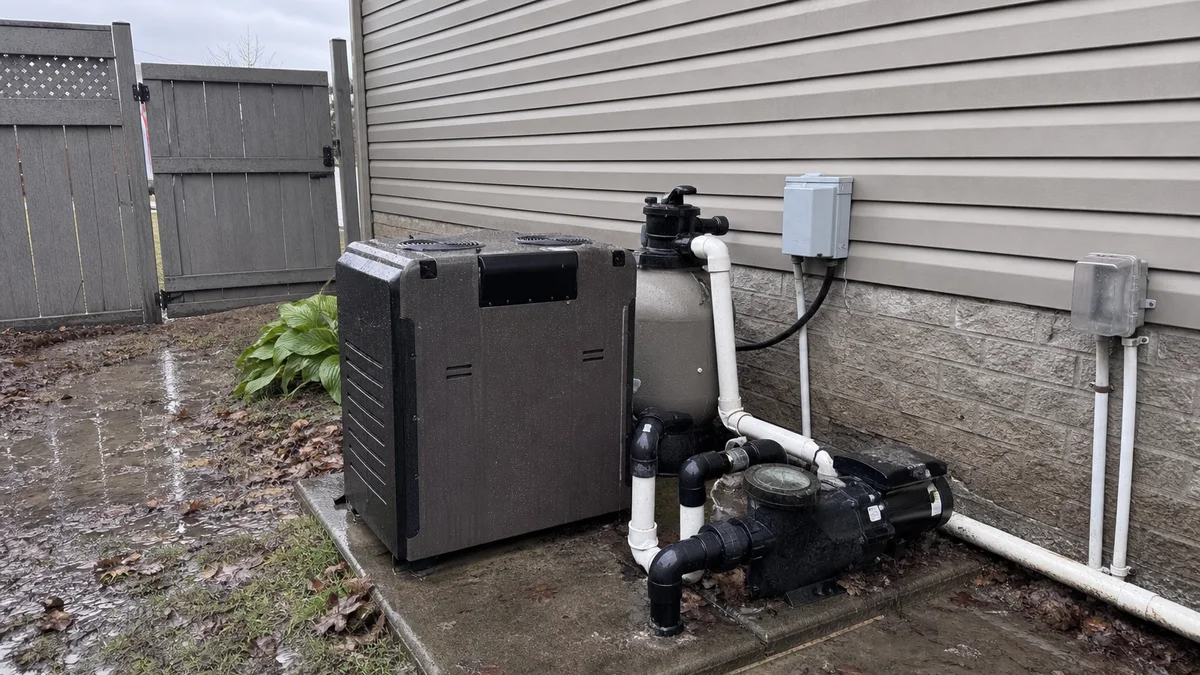
If floodwater reached, entered or submerged any part of a gas pool heater, leave it off and do not attempt to relight, reset, dry out or test it. Enbridge Gas tells customers not to relight natural-gas appliances after flooding; restoration and inspection belong to the utility and qualified gas professionals as applicable. If the heater was exposed only to normal rain, do not assume an error code means water damage. Check the area from a safe distance for standing water, blocked drainage, displaced panels, debris, damaged venting, electrical exposure or gas odour, then follow the exact manufacturer instructions. A heater that will not start, repeatedly locks out or shows signs of water entry should remain off until assessed.
Was it normal rain, or did floodwater reach the heater?
Pool heaters are installed outdoors and their manuals account for weather exposure when correctly placed and maintained. Rain falling on an intact outdoor-rated heater is different from water rising around the base, flowing through the cabinet, entering gas or electrical components, or carrying debris into openings. The second situation is a flood exposure even when the water has receded before anyone sees it.
Look at the evidence without opening the heater. High-water marks, mud, silt, leaves inside visible openings, displaced panels, pooled water around the pad or a washed-out base are reasons to leave it off. So are a tipped appliance, damaged gas line, submerged electrical equipment or a control display behaving abnormally after the event. Do not use a dry exterior as proof that internal components were never wet.
If water entered the home or Enbridge shut off service in the affected area, follow the emergency process rather than treating the pool heater as an isolated appliance. Enbridge advises customers not to relight their own natural-gas appliances after a flood. The property may require coordinated restoration and appliance assessment.
After emergency crews say it is safe
Send the appliance or gas-line details for service
Do not use this form during an emergency. After emergency responders or the fuel supplier say it is safe to return, send the appliance or gas-line details, the symptom and any recent service history.
Do not use repeated resets as a water test
An error code after a storm does not authorize trial-and-error operation. Pool-heater safety circuits monitor conditions such as water flow, ignition and other system states. Repeatedly clearing a lockout, cycling power or asking the heater to fire can obscure the original symptom and may energize wet or damaged components. Record the code and the circumstances, then leave the unit in the state directed by the manual.
Do not remove access panels, aim a space heater into the cabinet, use compressed air, spray electrical cleaner or attempt to dry a control board. Do not relight a pilot or burner. A flooded appliance may need more than surface drying because controls, valves, motors, wiring, insulation and safety devices can be affected in ways that are not visible.
If the heater stayed above the water and the problem is limited to ordinary rain, the cause may still be unrelated to gas: low water flow, a pump issue, clogged filtration, a displaced cover or another pool-system condition. Use only the owner checks in the exact manual and do not bypass switches to prove a theory. A qualified assessment should distinguish water exposure from a coincidental operational fault.
- Leave a flooded or possibly submerged heater off.
- Record the display or code without repeatedly resetting it.
- Do not open panels or apply external heat to internal parts.
- Keep people away from standing water and wet electrical equipment.
- Follow Enbridge and municipal emergency directions for the property.
Check the pad, drainage and surrounding equipment from a safe distance
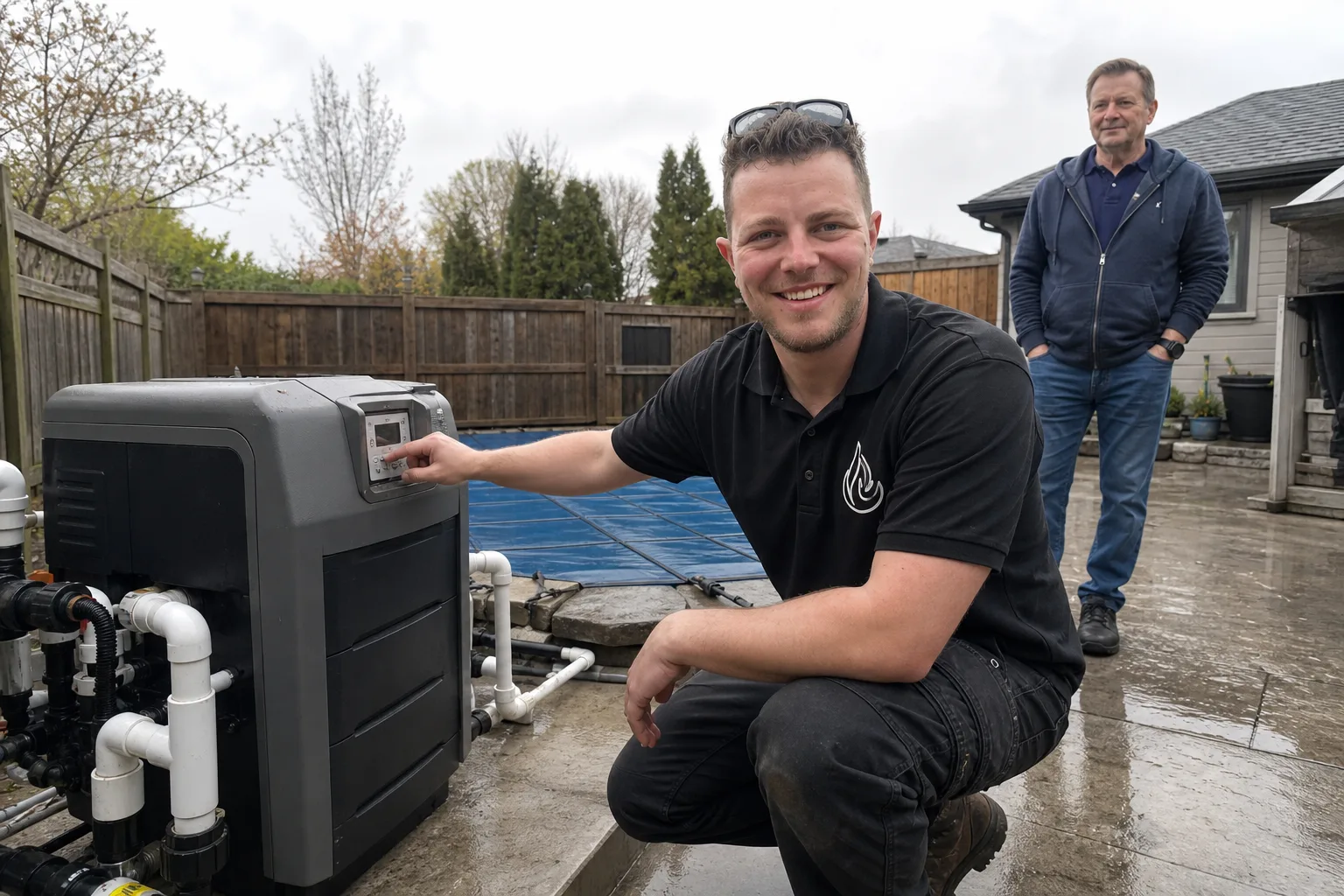
Once the area is safe to approach, look at the whole equipment pad. Water should drain away rather than collect around the heater. Soil erosion can undermine a pad even when the cabinet stayed dry. Mulch, leaves and pool covers can block openings or be driven against equipment. A fence panel, branch or stored item may have struck the vent, gas line or electrical conduit during the storm.
Also look at the pool circulation side. If the pump lost prime, a skimmer filled with debris or the water level changed, the heater may not receive the flow it expects. Do not open pressurized equipment or reach into a running system. Use the pool-equipment instructions and involve the appropriate pool professional where the issue is circulation rather than gas combustion.
Drainage improvements should not direct roof runoff, downspouts or landscape swales toward the heater. Preserve the manufacturer-required clearances and combustion-air openings when adding screens, walls or weather protection. A makeshift cover can trap exhaust or restrict airflow, creating a new problem while trying to solve rain exposure.
What to photograph before requesting service
From a safe, dry location, take wide photographs of the entire pool-equipment area from several directions. Capture the heater, pad, grade, nearby drains, downspouts, retaining walls and the path water appears to have taken. Photograph any high-water line, mud or debris before cleaning the area, as long as doing so does not require entering water or approaching damaged utilities.
Add clear images of the heater model and serial label where it is externally accessible, the control display, error code, vent area, gas line approach and visible shutoff. Include the pump, filter and valves in one wider frame so the relationship between circulation equipment and heater is clear. Note when the rain began, the highest estimated water level, whether power or gas service was interrupted and what the heater was doing before the storm.
Never move into standing water or near a suspected gas leak to document damage. Emergency safety and utility instructions come first. Photographs are useful only when they can be taken without increasing risk.
- Wide views of the pad, grade and water route.
- High-water marks, silt, erosion and displaced debris.
- Externally accessible model label and control display.
- Visible gas, vent and electrical approaches without opening panels.
- Timeline, service interruptions and previous operating condition.
What a technician checks after rain or flooding
The first question is the extent of exposure: normal rain, splash, runoff around the pad, water entering the cabinet or submersion. The answer shapes the service path. A technician also needs the exact model, manufacturer instructions, visible condition, fuel and electrical context, gas-supply status and the state of the pool circulation system.
For flood exposure, components affected by water may require replacement or broader action rather than a simple “dry and light” visit. The qualified gas technician should determine what the manufacturer permits and whether the appliance can be safely returned to service. Enbridge controls restoration where utility service has been shut off; the gas contractor does not substitute for the utility's process.
Prepare the yard for the next severe-weather day
Keep drainage paths open, maintain the equipment pad and avoid storing covers, chemicals or loose yard items against the heater. Review downspouts and landscape changes after construction. Preserve access around the gas shutoff, equipment labels and service panels. If the property has experienced pooling before, address grading and drainage before relying on a new appliance location.
Keep digital copies of the heater manual, model and serial information, installation invoice and service records. Photograph the normal equipment area during dry weather; that reference helps show what changed after a storm. Know where household emergency contacts and the Enbridge emergency number are stored without placing yourself beside the equipment to find them.
Questions we hear
Frequently asked questions
No. Enbridge tells customers not to relight natural-gas appliances after flooding. Leave the heater off and follow utility and qualified-service instructions for inspection and restoration.
Not by itself. Outdoor heaters are designed for approved outdoor installation, but standing water, cabinet entry, submersion, erosion, impact or abnormal operation changes the assessment. The exact exposure and manufacturer guidance matter.
Record the code and follow only the exact owner instructions in the manual. Do not repeatedly reset, bypass a safety switch or test a heater that may have been flooded or damaged.
References
Sources and further reading
Ask about your project
Tell us about the property and equipment
Send the service address, timing, appliance model and safe photos that show the work area.