
Pool Heating
Pool Heater Failure Symptoms: When to Stop and Call for Service
Know when to stop using your pool heater and what to tell the technician. You do not need to diagnose the fault yourself.
Safe checks
Start with what you can observe
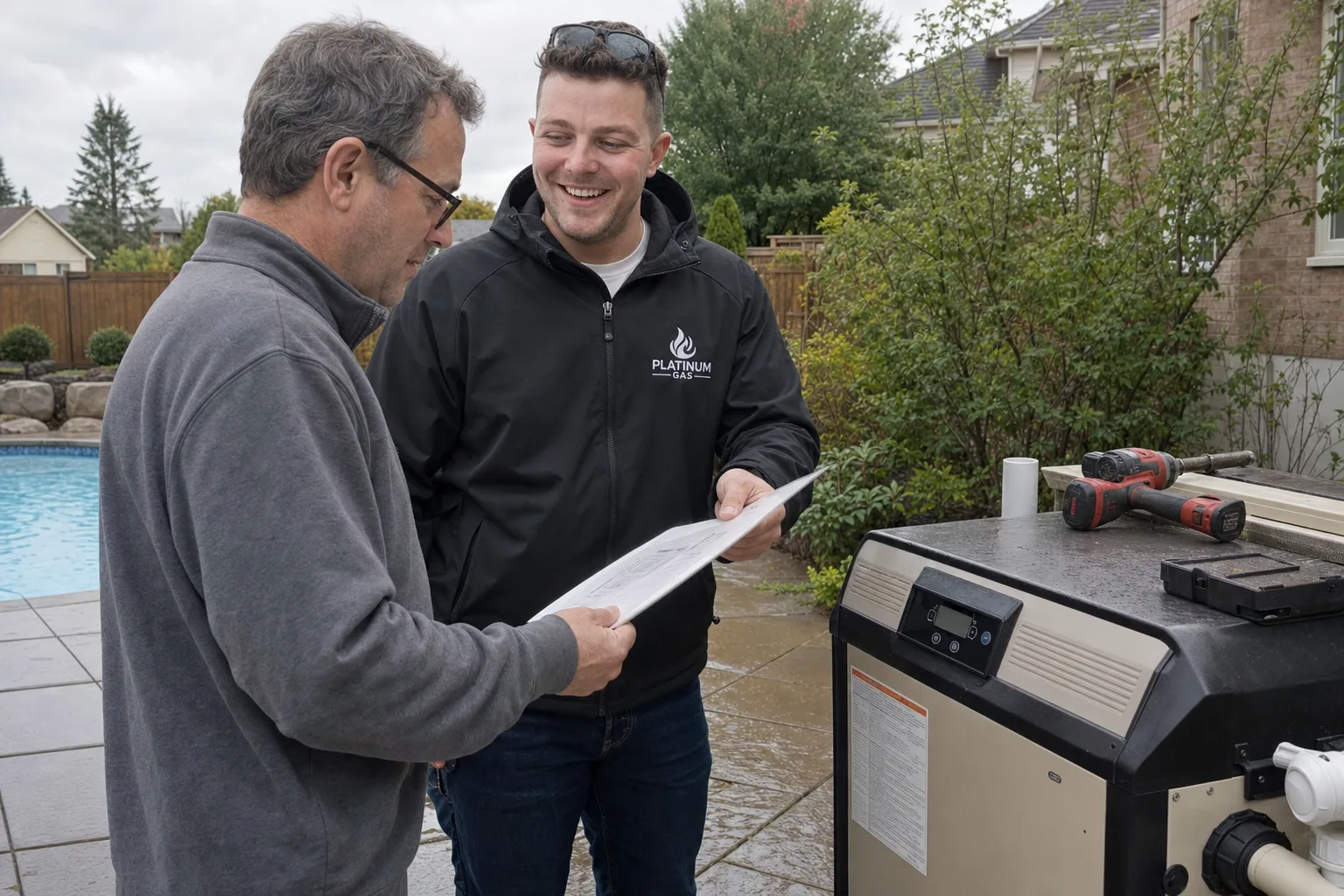
Stop using a pool heater and arrange appropriate help for gas odour, soot, abnormal flame, damaged wiring or cabinet, water leaking through the heater, flooding or impact, persistent ignition failure, repeated safety shutdowns, unusual combustion noise or a fault that returns after one normal owner-level reset allowed by the manual. Record the displayed code, timing, circulation context and recent changes from a safe position. Do not open panels, bypass switches, adjust gas components or repeatedly reset the unit.
Stop immediately for fuel or combustion warning signs
A rotten-egg or sulphur odour, sound of escaping gas, soot, scorching, abnormal flame outside its intended area or unusual combustion noise requires a conservative response. For suspected natural gas, leave the area and call 911 and Enbridge from a safe distance. For propane, evacuate and contact 911 and the propane supplier's emergency number from safety. Do not investigate, operate controls or move nearby equipment.
Soot and flame changes can indicate combustion, venting, fuel or maintenance problems. They are not owner adjustments. Keep the heater off until qualified service has assessed it. Never remove a panel to photograph the burner or alter vents and air openings.
- Gas odour or escaping-gas sound: evacuate and call.
- Soot, scorching or abnormal flame: stop operation.
- Damaged cabinet, vent, wiring or controls: keep power and operation off as directed safely.
- Flooding or impact: do not restart before assessment.
Treat water leaks and freeze damage as equipment concerns
Water beneath the pad can come from pool plumbing, condensation under limited conditions, rain or a heater component. Location, timing and water volume help a technician, but the homeowner should not open the cabinet to find the source. A leak through the heater, visible split fitting or rapid water loss means stop operation and coordinate the gas and pool professionals.
After freezing weather, warning signs can include leaks, cracked components, flow faults or unusual startup behaviour. Do not repeatedly attempt ignition or apply improvised heat. Winterization and spring restart are model- and plumbing-specific. Photograph visible exterior conditions and keep the unit off pending assessment.
Record shutdown timing without bypassing protections
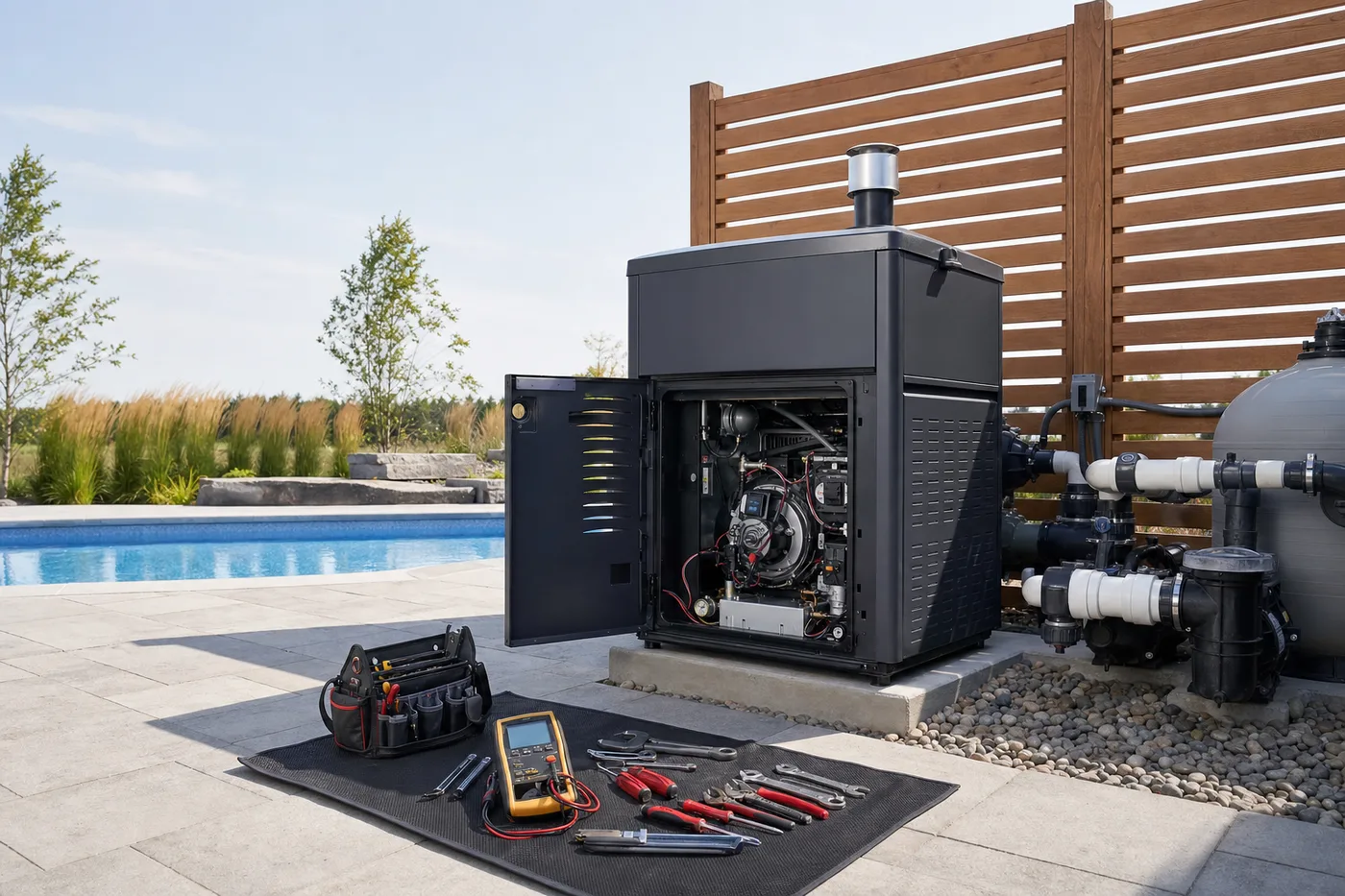
A heater that starts and stops quickly, runs for a predictable interval or fails only with another pool mode provides useful diagnostic context. Note the displayed code, water temperature, whether the pump was already running, recent filter service, automation mode and weather. A code identifies a monitored condition; it does not prove which part should be replaced.
Do not jump switches, hold a contact closed, change regulator settings or run the heater with panels removed. Safety devices protect against conditions involving flow, ignition, flame proving, limits and airflow. Repeated resets can erase useful timing and continue operation under an unresolved condition.
Need help with a problem?
Tell us what is happening
Note what you can see, hear or read from the normal controls. Do not remove panels, alter gas fittings or perform regulated tests yourself.
Separate safe owner checks from technical diagnosis
When the situation is safe and the exact owner manual permits it, record the display, confirm the pool system is in its normal scheduled operating mode, look for obvious exterior obstruction from a distance and check that user temperature demand exists. Do not remove covers, open electrical equipment, manipulate internal valves or dismantle plumbing. The manual, not a general troubleshooting video, defines owner actions.
Provide the manufacturer, model, serial number, code, symptom timing and recent work when booking. Mention winter events, outages, landscaping, pool-service changes and automation updates. Clear access to the pad, gas-supply area, electrical panel and pool controls without altering them.
Get help even when the problem comes and goes
Intermittent faults can disappear by appointment time, so write down the sequence while it is fresh. A short video of the exterior display and normal sounds can help if recording is safe and there is no suspected gas leak. Do not keep operating solely to reproduce a dangerous symptom. Keep chemistry and circulation records available because water conditions can affect heater life and performance.
For pool-heater service in Bowmanville, send the address, heater details and whether the pool is open, closing or recently restarted. The repair may also need help from your pool contractor or electrician. Finding the cause first helps identify the right repair before parts are ordered.
After repair, ask what symptom should be resolved, what normal operation should look like and whether another pool-system or electrical condition still needs attention. Keep the invoice, code history and replaced-part information with the manual. If the same code returns, report the timing rather than assuming the same component failed again.
- Exact code and time in the operating sequence.
- Pool mode, circulation context and recent service.
- Weather, outage, freeze or construction history.
- Model, serial and clear exterior photos.
Questions we hear
Frequently asked questions
Follow only the normal owner action in the exact manual. Do not reset repeatedly. If the code returns, record it and arrange diagnosis rather than bypassing a protection.
Possible categories include circulation, demand, ignition, flame proving, fuel, airflow, limits, sensors, controls, scale or freeze damage. Timing and codes help, but technical diagnosis belongs to qualified service.
No. Several sources are possible, but visible water through the heater or recurring leakage deserves assessment. Do not open the cabinet to identify it yourself.
Pool-use safety depends on the wider pool and electrical conditions, not this article. If fuel, electrical, flooding or equipment damage is suspected, follow the responsible professionals' instructions for the whole area.
References
Sources and further reading
Ask about your project
Tell us about the property and equipment
Send the service address, timing, appliance model and safe photos that show the work area.