
Safety and Maintenance
Gas Fireplace Remote Not Working After Summer? Safe First Checks
A remote that worked last spring can appear completely dead on the first cool evening of fall. Start with the control system, batteries and settings before assuming the fireplace itself has failed.
Safe checks
Start with what you can observe
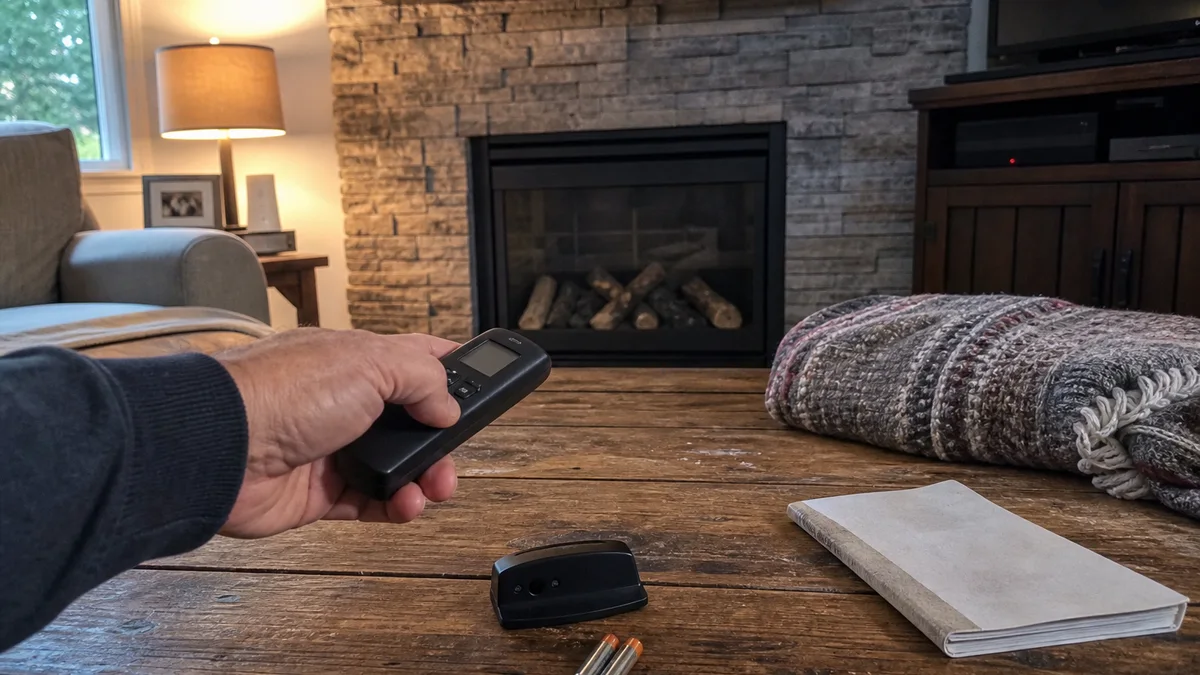
If your gas fireplace remote is not working after summer, begin with fresh batteries in both the handheld remote and the receiver, if your model has a separate battery-powered receiver. Confirm the batteries are installed in the correct direction, check the remote display and make sure the receiver or wall control is in the operating position described in the manufacturer manual. Some systems also need household power. Stop immediately if you smell gas, hear a carbon monoxide alarm, see soot or notice damaged glass. Do not open the sealed firebox, bypass a safety switch or turn gas valves that the manual does not identify as owner controls.
First, identify what has actually stopped working
The remote, its receiver and the fireplace are separate parts of one control system. A blank remote screen usually points toward handset power. A normal-looking display with no response from the fireplace can point toward receiver power, an incorrect control mode, lost communication or an appliance issue. If a wall switch still starts the fireplace, that is useful information because it narrows the problem without taking anything apart.
Find the fireplace make and model before following an online reset sequence. Similar controls can use different pairing steps, receiver locations and power arrangements. The model may be on a rating plate behind an owner-accessible lower panel, but only look where the manual says it can be safely reached. Do not remove glass to find it.
Before testing anything, look and smell. A gas odour, soot around the glass or vent, a cracked glass panel, scorched wiring, an unusual flame or a carbon monoxide alarm changes the situation from troubleshooting to safety. Leave the fireplace off and arrange the appropriate emergency or professional response.
Check batteries, power and ordinary settings
Replace the handheld remote batteries with a fresh, matching set and confirm the polarity against the markings in the compartment. If the fireplace has a separate receiver, it may have its own batteries even when the remote display is bright. Some receivers use household power during normal operation and batteries only as backup. The exact arrangement varies, so use the appliance or control-system manual rather than guessing.
After changing batteries, check for simple settings that can make a working remote seem unresponsive: child lock, thermostat mode, a temperature set below the room temperature, timer mode or a receiver switch left in the wrong position. A recent power interruption can also affect the time or thermostat settings. If the manual identifies a normal wall switch, breaker or plug serving the unit, confirm it is on. Do not run an extension cord or improvise power to the fireplace.
Make one change at a time and record the result. That prevents a successful battery replacement from being confused with an unrelated reset and gives a technician a clean sequence if service is still needed.
Avoid blind resets and hidden controls
Internet videos often show people opening lower compartments, moving receiver switches, holding pairing buttons or relighting pilots. Those steps are not universal. A control marked for one fireplace may behave differently on another, and a pilot procedure can vary by ignition system. Follow only the owner steps in the manual for the exact make, model and control package.
Do not remove the fixed glass, reach around hot or sharp components, bypass a limit switch, bridge wires, defeat a safety lockout or turn the meter valve. Do not repeatedly command ignition if the fireplace attempts to light but shuts down, makes an unusual sound or produces an abnormal flame. Repeated attempts do not correct a fuel, venting, ignition or flame-sensing problem.
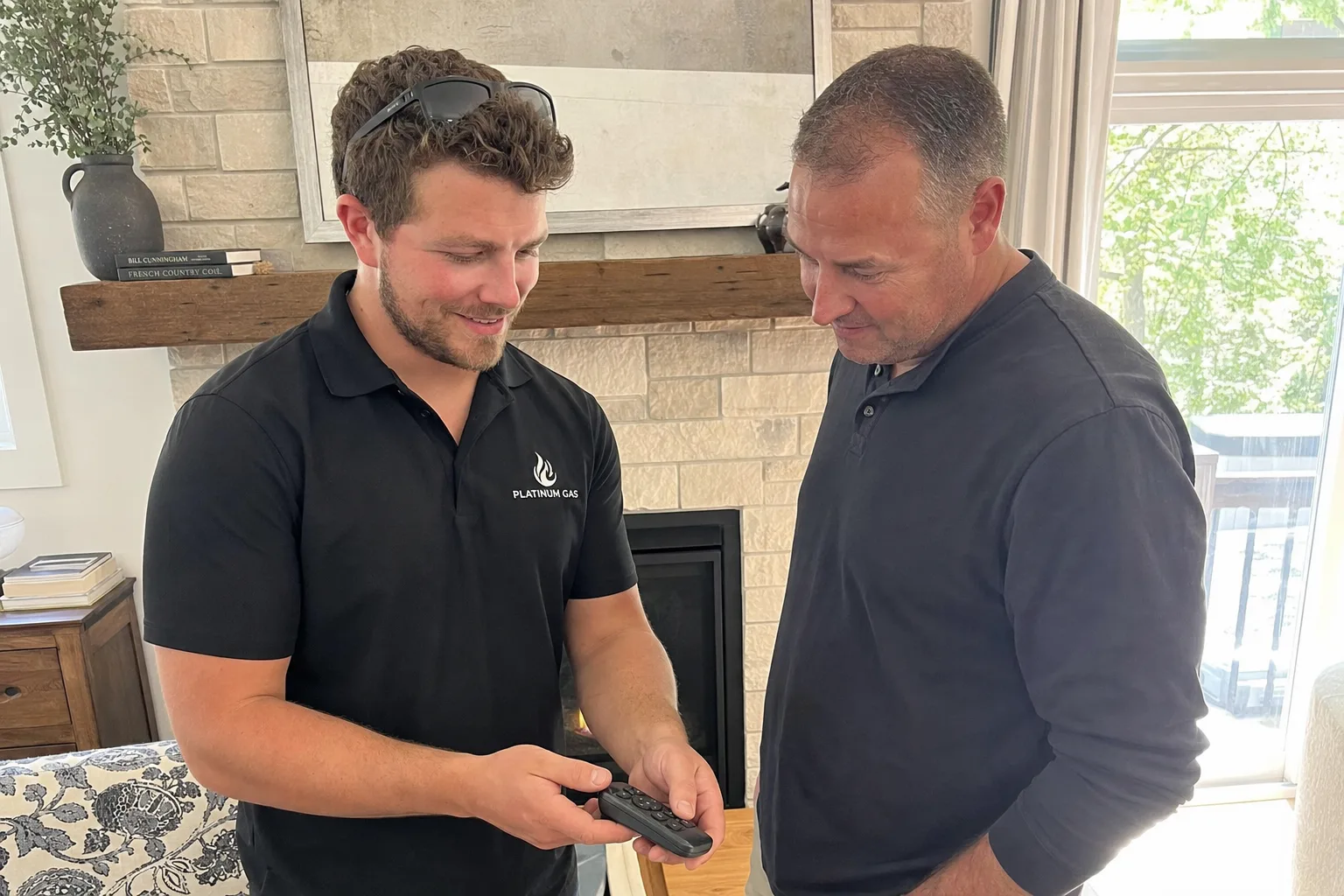
If the remote and receiver need to be paired, use the published manufacturer sequence and stop if the controls do not match the instructions. A receiver hidden behind finished millwork or a sealed panel is not an owner-access point merely because a video shows a similar unit. Preserving the existing safety controls matters more than getting one evening of heat.
Need help with a problem?
Tell us what is happening
Note what you can see, hear or read from the normal controls. Do not remove panels, alter gas fittings or perform regulated tests yourself.
Separate a remote problem from a fireplace problem
The pattern of the failure helps. If the handset screen stays blank with verified fresh batteries, the handset may be the issue. If the remote changes modes but the receiver never responds, receiver power or communication may be involved. If the receiver clicks and the fireplace begins an ignition sequence but no flame appears, the problem has moved beyond a simple remote check.
Also note whether another approved control starts the appliance. A working wall switch with an unresponsive handset suggests a different path than a fireplace that will not start from any control. Do not use another control to keep operating a fireplace that shows soot, delayed ignition, damaged glass, unusual odour or repeated shutdown.
Batteries commonly weaken while a fireplace sits unused, but a power interruption or existing appliance fault can also become noticeable at first use. Record what the display shows, which controls respond, whether ignition begins and whether any warning sign is present.
What to photograph before requesting service
Clear photos can help identify the control system and reduce back-and-forth before an appointment. Photograph only what is visible without removing sealed glass, fixed panels or hot components. Useful images include:
- The full fireplace and surrounding wall, including any wall switch or control.
- The remote front and back, plus the battery compartment and screen after fresh batteries are installed.
- The exact icons, error messages or temperature shown when the problem occurs.
- The make, model and serial information if the rating plate is safely owner-accessible.
- The receiver or battery holder only if the manufacturer manual identifies it as an owner-accessible control.
- The exterior vent termination from ground level, without climbing or touching it.
- A short video of the sound and sequence when a start command is made, provided there is no gas odour or other safety warning.
When to book a service appointment
Request service when fresh batteries and the documented owner settings do not restore normal operation, when the fireplace starts from one control but not another, or when ignition begins and then fails. An appointment is also appropriate when the model manual is unavailable, the receiver is not safely accessible or the system repeatedly loses communication.
Share the make, model, control type and the steps already attempted. Mention whether the fireplace has been unused since spring, whether the home recently lost power and whether any other work occurred near the fireplace. That context helps us prepare for the correct control system instead of arriving to a generic "remote issue."
If the fireplace operates after the first checks, still watch the first complete burn. The flame should remain stable and the unit should respond normally to shutdown. Stop using it if you see soot, delayed ignition, abnormal flame behaviour or a fault message. A working remote confirms only that the command reached the system; it does not replace routine fireplace maintenance or correct an appliance safety concern.
Questions we hear
Frequently asked questions
The handset and receiver can have separate power sources. A bright display confirms the handset has power, not that the receiver or fireplace does. Check the exact manufacturer instructions for receiver power and operating mode.
Use only a wall switch or control identified for normal operation in the appliance manual. If the fireplace shows soot, damaged glass, unusual odour, delayed ignition or repeated shutdown, leave it off regardless of which control works.
Only when the exact manufacturer manual provides an owner pairing procedure and your controls match it. Do not open sealed areas, move unidentified switches or copy a pairing sequence from a different model.
Ask about your project
Tell us about the property and equipment
Send the service address, timing, appliance model and safe photos that show the work area.