
Pool Heating
Pool Heater Installation Day: What Homeowners Should Expect
Prepare for installation day, know what the installers will handle and get comfortable using your new pool heater.
Before you plan
Start with the appliance and site details
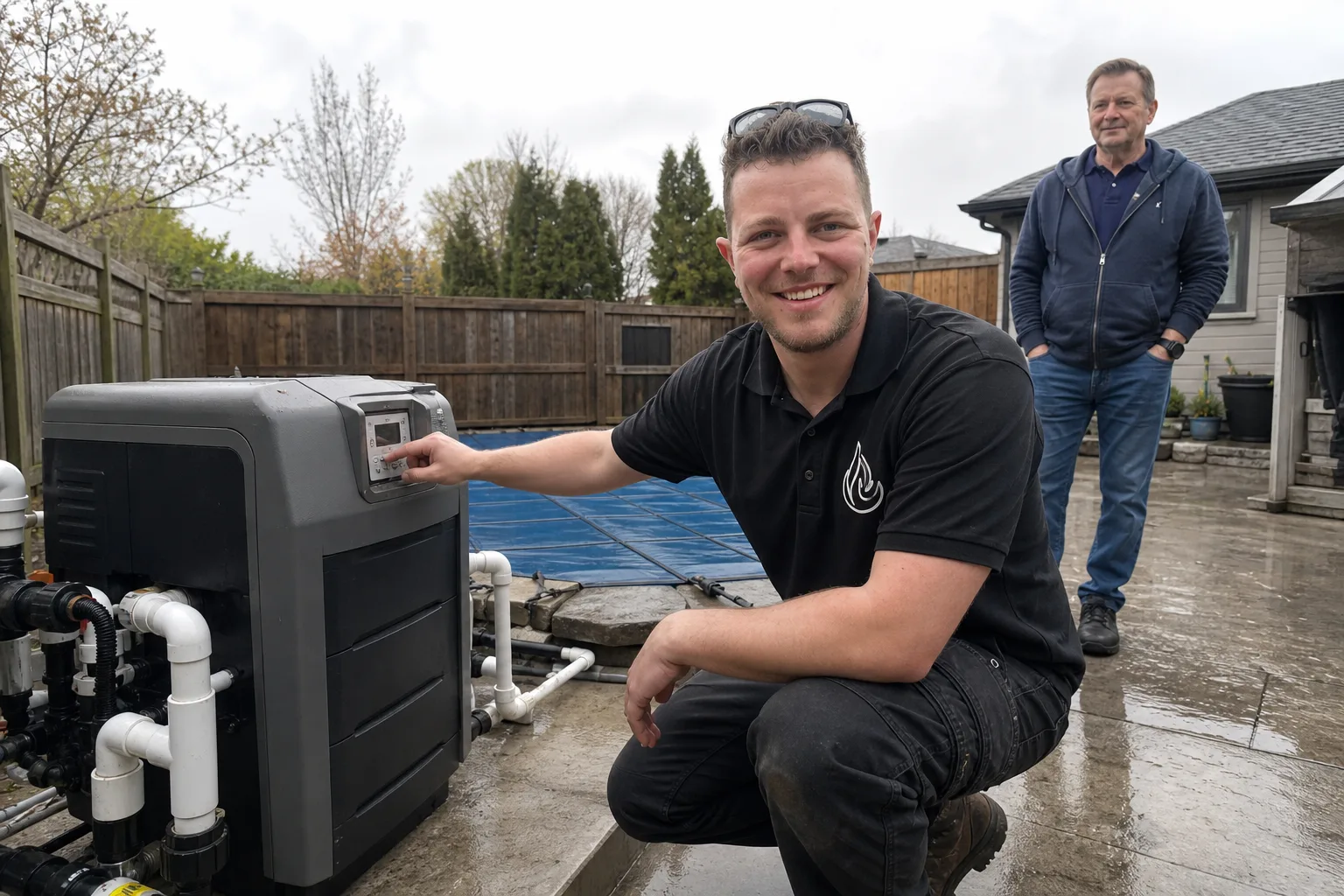
Before installation day, the team checks the heater, gas supply, water flow, electrical needs, equipment pad and required clearances, then agrees who handles each connection. On the day, expect the work area to be protected, the heater placed and connected, and the equipment professionally tested and started according to its manual. You can help by clearing the access route, keeping the equipment information handy and being available for questions. Leave gas disconnection, plumbing changes and all equipment connections to the qualified installers.
Step
Know what your installation includes
Before the appointment, agree on the heater model and fuel, who supplies it, where it will sit and who handles each connection. The gas technician needs the heater's gas-input rating, current manual and a list of other gas appliances on the supply. Your pool contractor checks water flow, water condition and any plumbing changes. An electrician may also need to prepare the power, controls or connection to your pool controller. Having the heater delivered is only one part of being ready.
Check whether the quote includes removing and disposing of the old heater, pad changes, gas lines, electrical work, plumbing, any venting, permits or inspections, startup testing and showing you the controls. Ask about anything not included, such as landscaping or fence removal. Let the team know before changing the heater model: a different unit may need different clearances, connections, electrical power or gas supply.
- Exact manufacturer, model, fuel and current installation manual.
- Existing appliance load and any future gas-appliance plans.
- Named responsibility for gas, plumbing, electrical and restoration work.
- Confirmed equipment access, delivery route and old-heater disposition.
Step
Prepare the equipment area without altering systems
Clear movable furniture, toys, pool accessories and stored chemicals from the route and equipment area. Unlock gates, secure pets and make sure the technician can reach the gas meter or propane supply, electrical panel, pool controls and equipment pad. Trim or move only ordinary vegetation and objects that can be handled safely; do not remove guards, disconnect the old heater, open gas piping or rework pool plumbing. If access requires moving a fence panel, lifting equipment or crossing a delicate surface, arrange that in advance rather than improvising after delivery.
Keep irrigation off around the work zone and identify recent landscaping, drainage or buried-service work. For any excavation, Ontario One Call explains that a locate request is required before digging and that private infrastructure may need a separate private locate. Existing private lines serving pool equipment, lighting, irrigation or an outbuilding may not be covered by a public locate. Confirm those responsibilities before the scheduled date.
Step
Expect placement and connection checks first
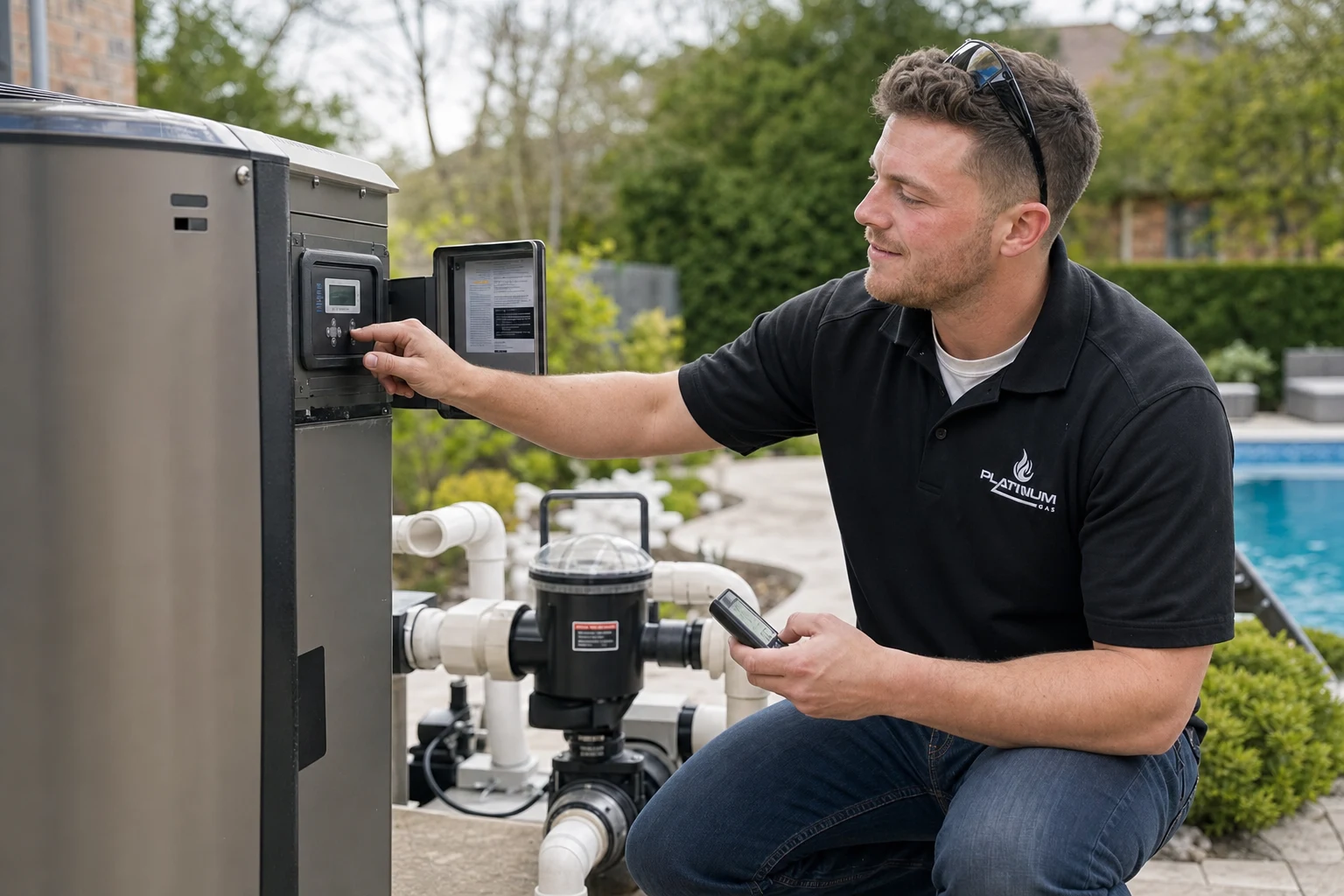
Before permanent connections are made, the installation team should verify the equipment against the work order and reassess the real pad. Manufacturer requirements can involve the base, drainage, service clearances, combustion-air openings, exhaust location, adjacent windows and doors, overhead structures, property features and protection from roof runoff or irrigation. The installer also checks whether controls, rating information and service panels remain reachable. A cramped location that forces routine service through a hedge or against a fence deserves correction before the project is closed.
The pool plumbing needs to provide the water flow required by the heater manual and pool design. The gas technician checks the whole gas supply, not just the size of one visible pipe. Electrical power, bonding and pool-controller connections also need to match the equipment and applicable requirements. If these checks reveal extra work, ask why it is needed, who will do it and what it costs before approving it.
Step
The heater is tested before you use it
Setting a heater on the pad is not the finish line. Regulated connections require professional completion and testing, while the heater itself needs manufacturer-directed startup. The technician confirms that the system is ready to operate, observes ignition and shutdown behaviour, checks controls and verifies that the water-circulation context is appropriate. Any fault or unexpected behaviour should be resolved rather than dismissed as a new-equipment quirk. A homeowner should never be asked to bypass a switch, hold a control in place or repeatedly reset a fault to make the first startup succeed.
The first startup also shows you what normal operation looks and sounds like. Note the display, sounds, control settings and how the heater works with your pool controller. Keep a photo of the rating label with the model, serial number, manual and warranty documents. If another contractor must return before startup is complete, keep the heater off and confirm who will approve its use.
What to include with your request
What would you like to install, fix or improve?
Tell us what you need and where the job is. Add the appliance model, fuel type and a photo if you have them.
Step
Learn the controls before the installer leaves
The final walkthrough should explain ordinary startup and shutdown from the user controls, temperature settings, automation behaviour, visible status messages and the conditions that require service. Ask how the heater interacts with the circulation system and what the owner should check before requesting a diagnosis. The answer should remain within the owner section of the exact manual: observing a code, confirming circulation is scheduled and noting timing are different from opening panels or testing gas and electrical components.
Discuss seasonal care and winterization for the exact model and plumbing arrangement. Ontario freeze conditions make generic advice risky; a drain point or cover shown online may not apply to this installation. Confirm who will provide closing and spring-startup service. Keep the pad clear, maintain water chemistry through the pool professional and report leaks, recurring shutdowns, unusual odour, soot, damaged wiring or impact promptly.
- Manual, model, serial number and warranty information retained.
- Normal controls, status display and automation behaviour demonstrated.
- Seasonal shutdown and service responsibilities identified.
- Keep the final quote, test records and a note of any work still to be done.
Questions we hear
Frequently asked questions
It depends on the job. Replacing a heater on a prepared pad is different from adding gas supply, wiring, plumbing or excavation. Ask for the expected installation time and whether another contractor needs to finish work first.
The circulation system and water conditions must be ready in the way required by the selected heater and pool design. Confirm the startup prerequisites with the pool professional and gas installer instead of assuming a newly filled or partially closed pool is ready.
Do not disconnect gas, electrical or equipment connections unless you are the appropriately qualified trade responsible for that work. Clear ordinary access and provide information, but leave regulated and system-altering work to the installation team.
Keep the manual, model and serial number, warranty information, final quote and any test records provided. Ask the installer to show you the controls, explain seasonal care and point out warning signs that mean you should stop using the heater and get help.
Ask about your project
Tell us about the property and equipment
Send the service address, timing, appliance model and safe photos that show the work area.