
Outdoor Living
Natural Gas vs Propane Outdoor Fire Features: Planning Differences
Natural gas or propane? Compare what each fuel means for the fire feature, gas line, placement and ongoing supply.
Before you compare
Start with the property and equipment
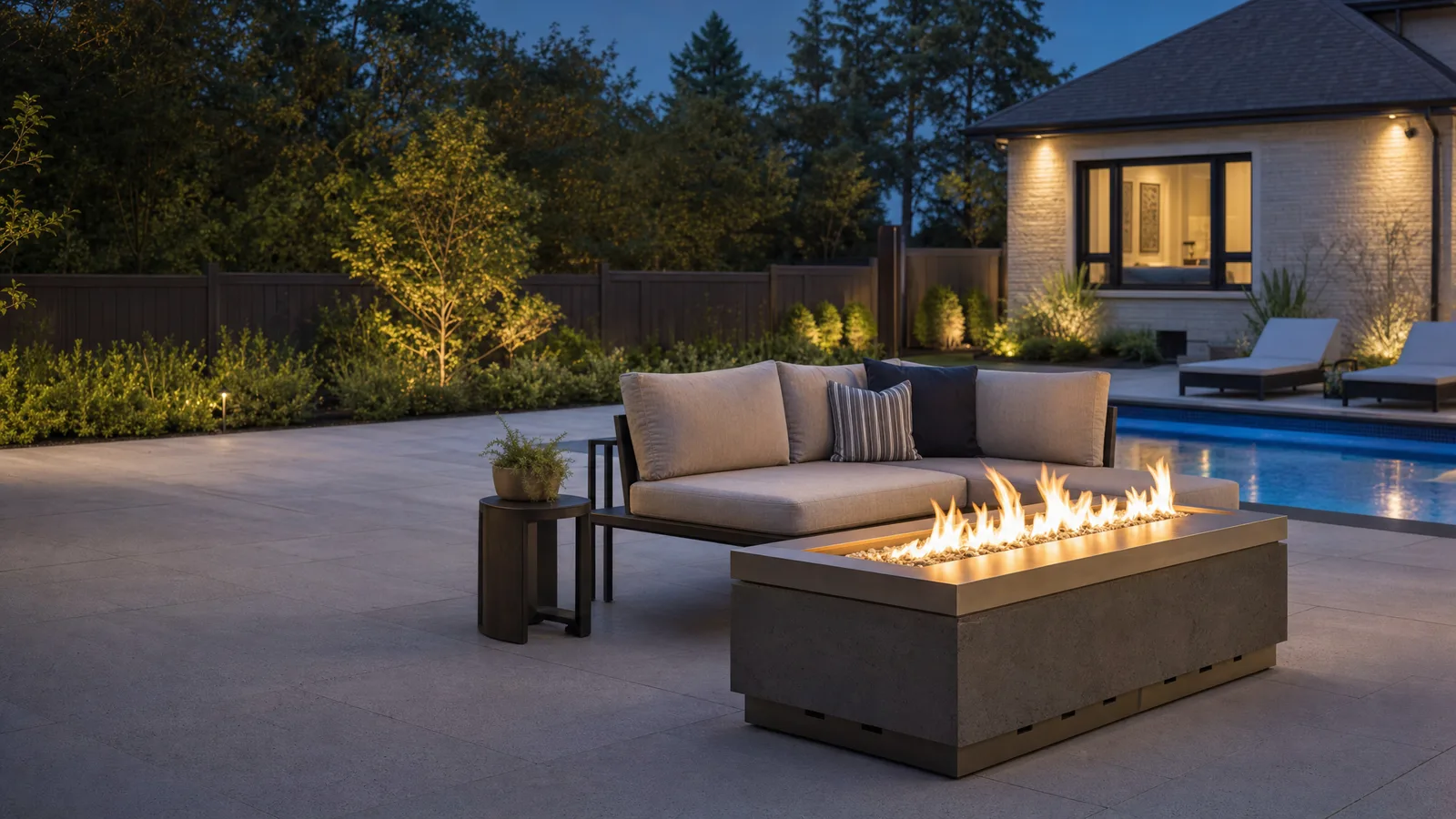
Natural gas commonly suits a permanent outdoor fire feature when a suitable utility supply and professional gas-line route are available. Propane can suit properties without natural-gas service, but storage, regulator and delivery access become part of the project. The fuels are not interchangeable: the appliance must be approved for the selected fuel, supply conditions and outdoor application. Compare the whole system, including gas capacity, route, tank or meter context, controls, clearances, drainage and service access, before ordering a burner or enclosure.
Compare the supply that actually reaches the property
Natural gas begins with the utility service, meter and total connected demand. The existence of a gas meter does not prove that a planned fire feature can be added without assessment. Other appliances, future projects, route length and supply conditions are part of the design. A rural or edge-of-service property may not have natural gas available at all, so confirm the address before choosing a fuel-specific appliance.
Propane planning begins with the storage and delivery system as well as total appliance demand. Tank location, filling access, regulator arrangement and the responsibilities of the propane supplier must be coordinated with the gas contractor and landscape plan. A decorative portable product using a listed cylinder arrangement is different from a permanent feature connected to a fixed propane system. Avoid mixing assumptions between those product categories.
- Natural gas: utility availability, meter and connected-load review.
- Propane: storage, regulator, delivery access and supplier coordination.
- Either fuel: exact approved appliance version and current manual.
- Either fuel: protected route, shutoff, controls and service access.
Let fuel influence location without controlling it alone
A short-looking route is not always the best location. Seating comfort, wind, manufacturer clearances, doors, windows, roof lines, fences, grade, pool edges, drainage and traffic paths come first. Then the fuel system must reach that location through a feasible protected route. Natural gas may favour a permanent connection from the house or meter. Propane storage may introduce a different set of separation, access and protection considerations.
Map the route before concrete, decking, masonry or landscaping closes access. If excavation is involved, arrange Ontario One Call and any private locates that apply. Existing private services to pool equipment, irrigation, lighting or outbuildings may not appear in a public locate response. The finished plan should preserve shutoff and service access rather than hiding them inside a sealed bench or stone enclosure.
Choose a fire feature approved for your fuel
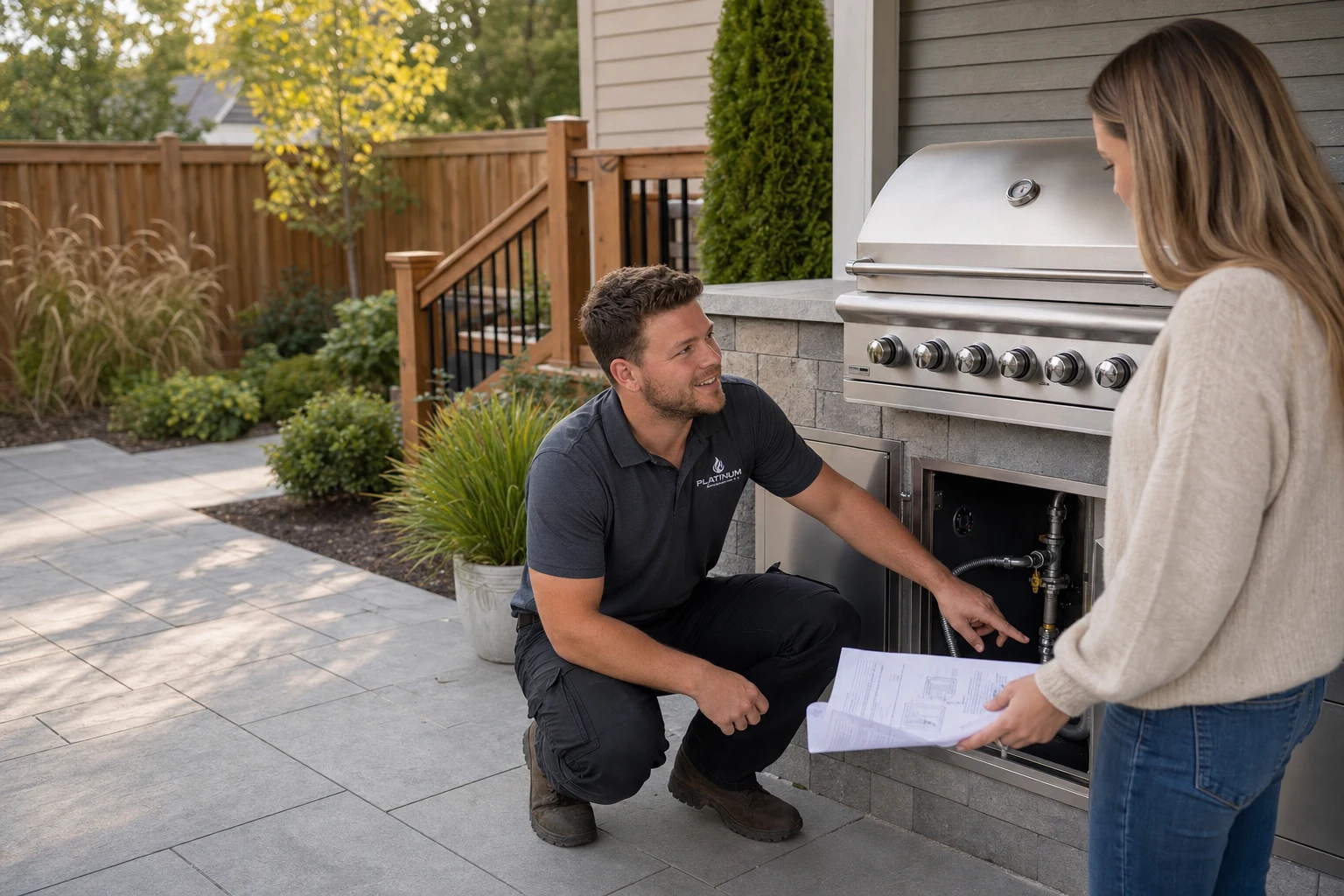
Compare only outdoor products approved for Canada and for the intended setting. The manufacturer's current documents define permitted fuel, pressure, media, controls, enclosure ventilation, drainage, clearances and service access. A natural-gas model and propane model can share an exterior design while using different internal components. A conversion is valid only when the exact appliance documentation permits it and the approved kit and professional procedure are used.
Ask whether the feature is a complete listed appliance, an approved burner system intended for a compliant enclosure, or a decorative product with its own cylinder compartment. Those categories are not interchangeable. Keep the rating plate, manual and model information accessible after finishing. Do not select a burner from visual width or a broad heat number without checking the full listed system.
Before you choose equipment
Find the right fit for your home
Tell us which models you like and where you want the appliance. We can help check the fuel supply, venting, space and access before you buy.
Compare everyday use and supply management
Natural gas offers a fixed connection, so there is no portable cylinder to exchange. That convenience can suit a frequently used permanent patio, but it also commits the feature to a planned gas route and the property's utility capacity. Propane can serve a property without natural gas, while a fixed tank requires delivery planning and a portable approved system requires the owner to follow cylinder handling and storage directions. Neither fuel should be described as universally cheaper without dated local rates, actual input and use assumptions.
Controls should be intentional and accessible while protected from casual operation. Confirm whether the approved system uses a keyed valve, electronic ignition, remote system or other manufacturer-listed control. Some features need electrical service as well as gas. Plan shutdown, weather cover and seasonal care from the exact manual rather than treating one fuel as maintenance-free.
Share your backyard plans with the installer
Provide the Clarington address, a site sketch, photos in several directions, preferred feature type and intended seating. List every existing gas or propane appliance and future project. If natural gas is present, include a clear photo of the meter area without trying to interpret its capacity. If propane is present, identify the supplier and storage arrangement. Share landscape, pool, deck and electrical plans before construction begins.
Choose the fuel that works for your property and the appliance you want. Agree who supplies the fire feature and handles the gas line, base, enclosure, drainage, electrical work, finishes, line locates, inspections and startup. A properly qualified contractor must do the gas work. If the appliance changes, have the team check the new model's instructions before proceeding.
- Property address and confirmed fuel availability.
- Complete current and future appliance list.
- Scaled feature, seating, openings, pool and structure context.
- Construction sequence, excavation, controls and access responsibilities.
Questions we hear
Frequently asked questions
Do not assume so from a generic comparison. Local fuel rates, appliance input, operating time, delivery or utility conditions and installation scope all matter. Use current local information and a defined use scenario.
Only when the exact appliance is approved for conversion and the manufacturer specifies the correct kit and procedure. Fuel conversion is professional regulated work, not a nozzle swap based on a similar-looking model.
Only if the complete product and enclosure are specifically approved for that cylinder arrangement and used exactly as directed. Do not place a cylinder inside a site-built enclosure based on appearance or convenience.
Yes. Coordinate the appliance, location, route, locates, drainage, electrical needs and service access before concrete, stone or decking makes changes disruptive. Final gas design belongs to the qualified contractor.
References
Sources and further reading
Ask about your project
Tell us about the property and equipment
Send the service address, timing, appliance model and safe photos that show the work area.