
Safety and Maintenance
Gas Fireplace Safety Checklist for Families, Children and Pets
A safe family fireplace routine combines the manufacturer instructions with physical separation, clear surroundings, working alarms and an emergency plan everyone knows.
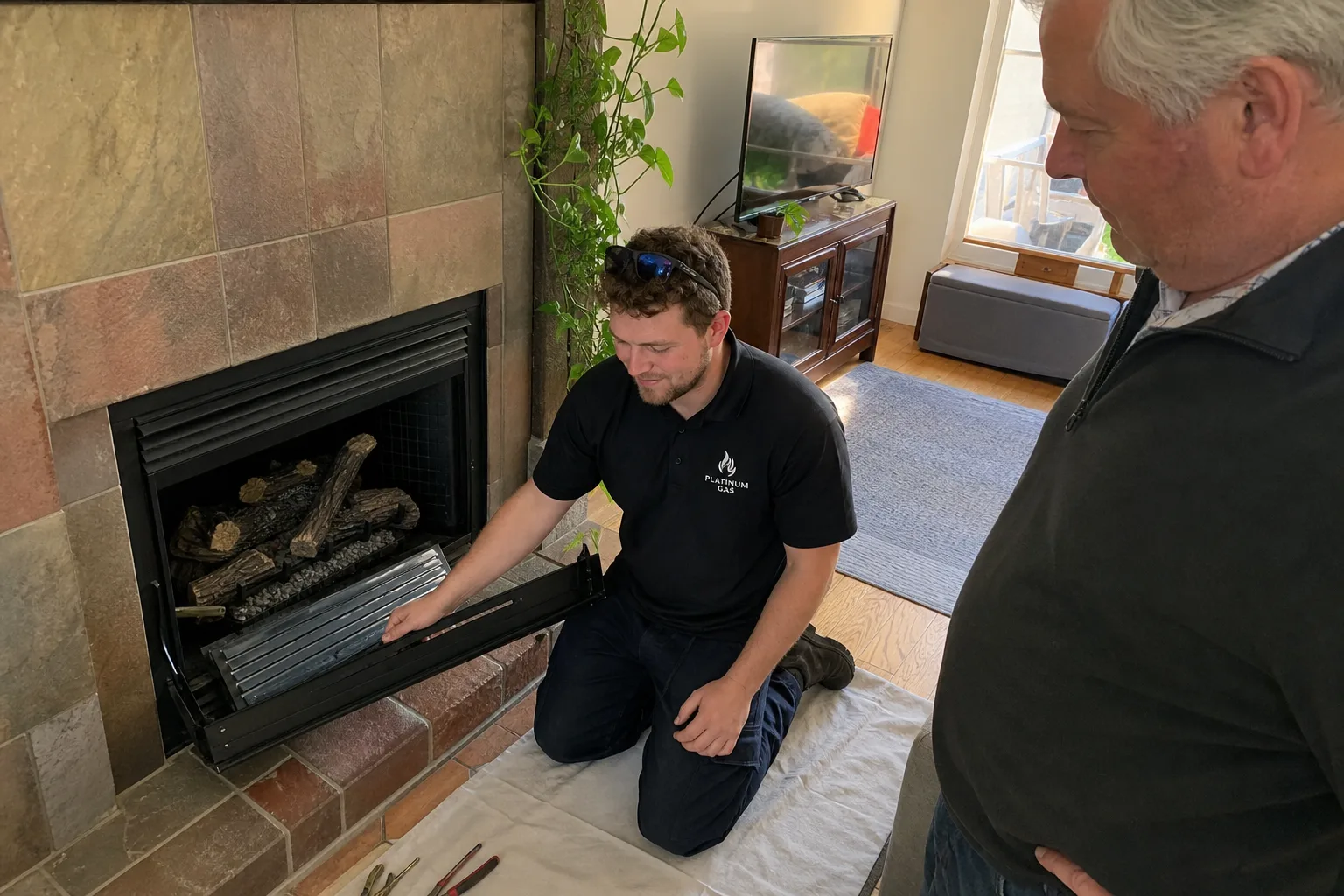
Safe checks
Start with what you can observe
Gas fireplaces can be used safely when the listed appliance is properly installed and maintained, its protective barrier and glass remain correctly fitted, children and pets are kept away from hot surfaces, combustibles stay outside required clearances, controls are supervised, and smoke and carbon-monoxide alarms are maintained. Families should also recognize gas odour and alarms as evacuation events, not troubleshooting invitations.
Create a no-contact zone around hot surfaces
The glass on a gas fireplace can become extremely hot, and children or pets may not understand that a clear surface is dangerous. Keep the manufacturer-supplied protective barrier installed and intact. Use room layout and active supervision to prevent approach rather than relying on verbal reminders alone.
Furniture, toys and pet beds should not create a path that funnels someone toward the glass. After shutdown, continue the boundary for the cooling period described by the manufacturer. A freestanding gate may help in some rooms only if it is stable, does not contact the appliance and respects every clearance and airflow requirement.
- Keep the listed safety barrier correctly installed.
- Supervise young children and pets near the fireplace.
- Maintain the boundary after the flame is off.
- Do not attach unapproved guards or decorations.
Keep the hearth and surrounding wall clear
Paper, toys, blankets, seasonal decorations, pet hair and furniture can migrate toward a fireplace. Follow the exact manual for clearances and keep ventilation openings and service access unobstructed. Do not dry clothing or place gifts, screens or decor against the glass or barrier.
Mantel, television and finish details also need model-specific review. Heat-sensitive objects should not be added based on a generic spacing rule. If the wall is renovated, preserve non-combustible areas, access panels and heat-management components rather than treating the fireplace as ordinary cabinetry.
Keep children from playing with the controls
Store remotes where children cannot activate the fireplace. Use lockout or child-control functions only as described in the manual, and teach older household members how to turn the appliance off without opening it. Do not leave a remote on the hearth or allow it to become a toy.
Thermostatic modes can start a fireplace without someone pressing the on button at that moment. Everyone in the home should understand that behaviour, especially before placing decorations or furniture near the unit. Follow manufacturer restrictions on unattended operation and do not use the fireplace as a substitute for a primary-heating plan unless expressly approved.
- Store remotes securely.
- Understand thermostat and automatic modes.
- Use only manufacturer-provided lockout features.
- Turn off and cool the unit before cleaning nearby.
Need help with a problem?
Tell us what is happening
Note what you can see, hear or read from the normal controls. Do not remove panels, alter gas fittings or perform regulated tests yourself.
Maintain smoke and carbon-monoxide alarms
Carbon monoxide is colourless and odourless. Install and maintain alarms as required by Ontario law and manufacturer instructions, test them regularly and replace devices at the end of their stated service life. Never use flame colour or room smell as a carbon-monoxide detector.
Create a family response: when an alarm sounds or someone may have exposure symptoms, leave the building and call 911. Do not silence the alarm and remain to inspect the fireplace. Keep emergency numbers and the meeting place familiar to caregivers and overnight guests.
Check only what you can safely see
Before use, observe the barrier, glass and surrounding area from outside the appliance. Look for damage, unusual soot, blocked openings, displaced exterior objects or a changed operating pattern. Follow owner-cleaning instructions only when the unit is off and fully cool.
Do not remove sealed glass, reposition logs, vacuum burners, probe ignition components or open fuel and electrical compartments. Schedule service according to the exact manual and promptly when ignition, flame, sound, odour, shutdown or glass condition changes. Preserve service records with the model information.
- Barrier secure and glass intact.
- No new soot, scorching or obstruction.
- Normal ignition, flame and shutdown behaviour.
- Manual and service contact easy to find.
Teach one simple emergency sequence
For natural-gas odour, everyone leaves first. Calls to 911 and Enbridge Gas are made from a safe distance. No one operates lights, phones, appliances, tools or vehicles near the suspected leak, and no one returns until cleared. For propane, call 911 and the propane supplier from a safe location.
Practice the sequence without simulating a leak or manipulating the fireplace. Assign adults to children, pets and anyone needing assistance. Once responders have declared the property safe, the service company can assess the appliance. A short, memorized response is more dependable than trying to diagnose under stress.
Questions we hear
Frequently asked questions
No. Use the listed protective barrier supplied or specified for the appliance and keep it correctly installed. Do not operate with it removed when the manufacturer requires it.
Cooling time varies by model and use. Maintain the no-contact boundary after shutdown and follow the exact manufacturer guidance rather than assuming the glass is safe when the flame disappears.
Only if it remains stable, does not touch the appliance, obstruct airflow or violate clearances. It supplements rather than replaces the listed barrier and supervision.
Follow Ontario requirements, alarm manufacturer instructions and local fire-safety guidance for placement, testing and replacement. Do not place them based on a generic fireplace-only rule.
References
Sources and further reading
Ask about your project
Tell us about the property and equipment
Send the service address, timing, appliance model and safe photos that show the work area.