
Fireplace Guides
Gas Fireplace Planning for Older Homes in Port Hope and Cobourg
Updating a fireplace in an older Port Hope or Cobourg home? Find a gas fireplace that suits the room and its character, with the chimney, venting and any heritage requirements checked before you buy.
Before you plan
Start with the appliance and site details
For an older home in Port Hope or Cobourg, plan a gas fireplace by documenting the existing opening or wall, chimney condition, available vent route, gas supply, electrical needs and finished appearance before selecting equipment. A heritage designation may add review for exterior changes such as a new vent termination, but not every older home is designated. Confirm the property status and current permit requirements with the municipality. A site review can then match an approved appliance to the actual room and installation conditions instead of forcing the house to fit a premature product choice.
Step
Begin with the room and the result you want
The phrase "gas fireplace" can mean several different projects in an older house: placing an insert in an existing masonry fireplace, replacing an older gas unit, converting an open wood-burning fireplace, or building a new feature on a wall that has never held one. Each option involves different installation and finishing work.
Record the finish you want to preserve. Original mantels, tile, stone, plaster, trim and built-in cabinetry can drive the equipment size and installation sequence. At the first visit, we can check those details against the fireplace type and venting the house can support.
Step
Understand the opening, chimney and vent route
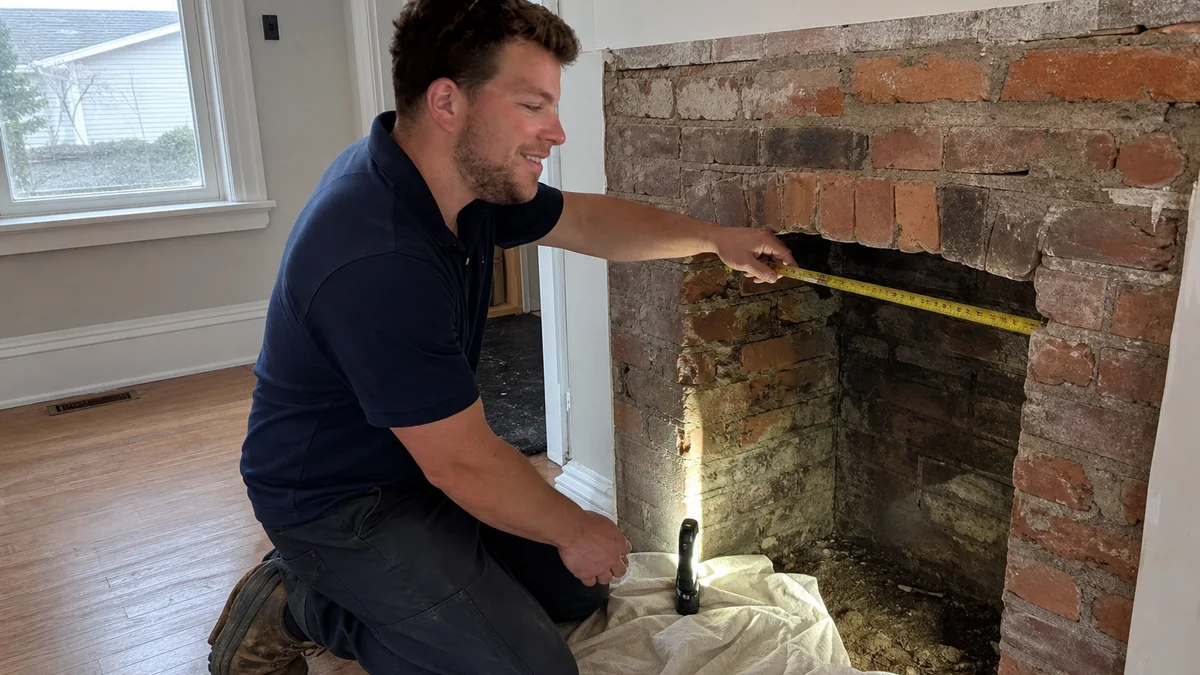
An existing masonry fireplace is valuable context, not automatic proof that a particular gas insert will fit or vent correctly. Opening width and height matter, but so do depth, hearth shape, damper area, chimney path and the condition of surrounding materials. Measurements taken at only the front edge can miss a narrowing firebox or an obstruction farther back.
Direct-vent products and insert vent systems have manufacturer-specific requirements. A new sidewall termination may affect an exterior elevation, walkway, porch or neighbour-facing side yard. A chimney route may need to accommodate approved liners and termination components. These are equipment and site questions, not generic rules that can be solved from one photo.
Do not climb onto the roof or place a camera inside a flue. Photograph the chimney from the ground and leave internal assessment to the appropriate professionals. If the project involves a former coal fireplace, an abandoned appliance, unknown piping or evidence of moisture, flag it early. Old does not mean unsafe by definition, but hidden conditions deserve investigation before finishes and equipment are ordered.
Step
Check heritage status and permits early
An older address is not necessarily a designated heritage property. Check the actual status rather than assuming. The Municipality of Port Hope advises owners of designated properties to consult Planning before exterior work; interior changes generally do not require heritage approval unless they affect the exterior or the designation bylaw specifically protects interior features. Heritage approval does not replace a building permit or other applicable law.
The Town of Cobourg similarly directs owners to confirm whether exterior work on a designated property needs a heritage permit. Cobourg's current building information also lists fireplace work among projects that can require a building permit. Requirements depend on the work planned, so describe the appliance, vent route, structural changes and exterior termination when asking municipal staff.
This early check protects the design. It is easier to choose a suitable route before ordering an appliance than to discover later that a preferred termination conflicts with a protected elevation or needs a revised permit package. Keep municipal confirmation with the project records, especially when several trades are involved.
Step
Coordinate fuel, power, access and finishes
A fireplace is one connected load on the home's fuel system. The existing meter, pipe sizes, route and other gas appliances all matter. A capped pipe near the fireplace may look convenient, but its size, condition and connection cannot be confirmed visually. Plan from verified appliance input and the home's actual gas system, not from the presence of a nearby line.
Many modern fireplaces also need electrical power for controls, blowers or ignition. In a finished older room, the route for power and service access should be decided before plaster, millwork or tile closes the area. Keep the batteries, controls and service points reachable. If the surround blocks routine service, the job is not finished properly.
Agree on who removes the old fireplace and handles brickwork, framing, electrical work, wall repairs, tiling, the mantel and painting. Check what needs to be ready before the gas connection and startup checks. Planning the jobs in order helps avoid delays and protects original materials. Where walls or floors may contain hazardous legacy materials, stop and have them assessed through the appropriate process before disturbance.
What to include with your request
What would you like to install, fix or improve?
Tell us what you need and where the job is. Add the appliance model, fuel type and a photo if you have them.
Step
Choose a fireplace that suits your older home
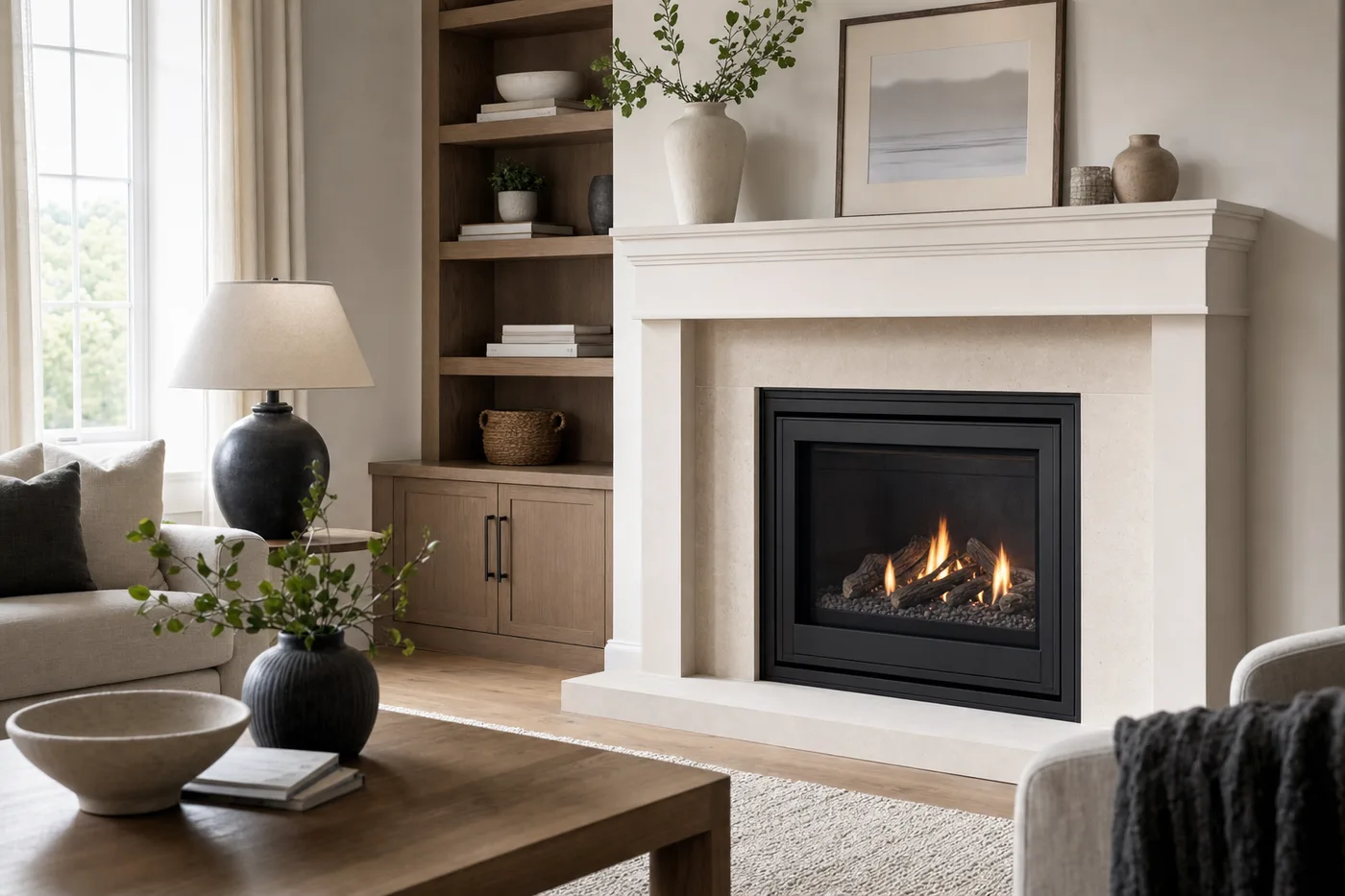
Once the site is understood, appliance selection becomes more useful. An insert may suit an existing masonry opening when the approved dimensions and venting align. A built-in direct-vent fireplace may offer more design flexibility for a new feature but can require framing, clearances, finish transitions and an exterior route. A replacement project still needs the old model, opening and vent system documented; similar-looking products are not automatically interchangeable.
Compare more than viewing area and flame style. Review certified installation requirements, input, heat output, turn-down range, control system, fan options, service access and the manufacturer's approved venting. Natural Resources Canada also recommends considering efficiency information and avoiding the assumption that a decorative flame automatically provides the desired heating performance.
Step
What to photograph before requesting service
For a planning conversation, wide context photos are as important as close details. Take clear daylight images without opening walls, entering a chimney or moving fragile historic material. Include:
- The full fireplace wall from across the room, including ceiling, floor and nearby openings.
- The opening, hearth, mantel, trim and any cracks, staining or previous patches.
- A tape measure held across the front width and height only where it can be done safely.
- The chimney and relevant roofline from ground level.
- The proposed exterior termination area, showing windows, doors, porches, paths and grade.
- The gas meter and mechanical area from a safe distance, plus visible appliance rating plates.
- The likely route between the meter, appliance location and exterior, without removing finishes.
- Any heritage details, cabinetry or original finishes that must remain.
Step
Plan the installation, repairs and finishing together
Bring your photos, any heritage information, the look you want and the fireplace models you like. Ask for a quote that explains the fireplace, venting, gas connection and electrical work, how installers will reach the area, who arranges permits and who handles the finishes. It should also explain anything that still needs to be checked.
For a Port Hope or Cobourg project, local planning is not about adding a town name to a generic fireplace quote. It is about recognizing that older housing stock, established streetscapes and designated properties can affect the route and sequence. The house may be straightforward, but the decision should follow evidence.
Avoid ordering the appliance or closing walls until the installation requirements and responsibilities agree. When the work is complete, keep the model, manuals, permits and service access information together for future maintenance.
Questions we hear
Frequently asked questions
No. Age alone does not establish designation. Confirm the property status with the municipality. On a designated property, exterior work such as a new vent termination may require review even when most of the fireplace work is inside.
No. The opening, chimney route, condition and the selected product's certified venting requirements all need to align. Existing masonry is useful project information, not automatic approval for a particular insert.
It is usually better to confirm the opening, vent route, gas capacity, power, clearances and finish plan first. That information narrows the equipment choices and reduces the risk of ordering a model that does not fit the site.
Ask about your project
Tell us about the property and equipment
Send the service address, timing, appliance model and safe photos that show the work area.