
Outdoor Living
Gas Fire Pit Rules in Clarington and Durham: What to Check Before You Light It
Planning a gas fire pit or fire table? Check your town's rules, the appliance instructions and any current fire restrictions before choosing a spot or lighting it.
Before you plan
Start with the appliance and site details
In Clarington, the municipality says propane and natural-gas outdoor appliances are allowed on residential properties, while wood-burning fire pits are not. That does not make every product or every location acceptable. Use an outdoor appliance that is tested and listed for its intended use, follow its manual, preserve required clearances and check the municipality's current fire notices before each use. Rules and temporary restrictions differ across Durham Region: Whitby, Oshawa and neighbouring municipalities publish their own guidance, and a current burn-ban notice can describe exemptions differently. Before buying, confirm the municipality, exact appliance, fuel, placement and current notice.
Step
Gas fire features and wood fires have different rules
Homeowners often use “fire pit” for several different things: a wood-burning bowl, a masonry fireplace, a portable propane table or a permanently connected natural-gas appliance. Municipal rules do not necessarily treat them alike. Clarington's current page separates commercially tested propane and natural-gas outdoor appliances from recreational wood fires. It says gas appliances are allowed on smaller residential properties where recreational outdoor fires and fire pits are not permitted.
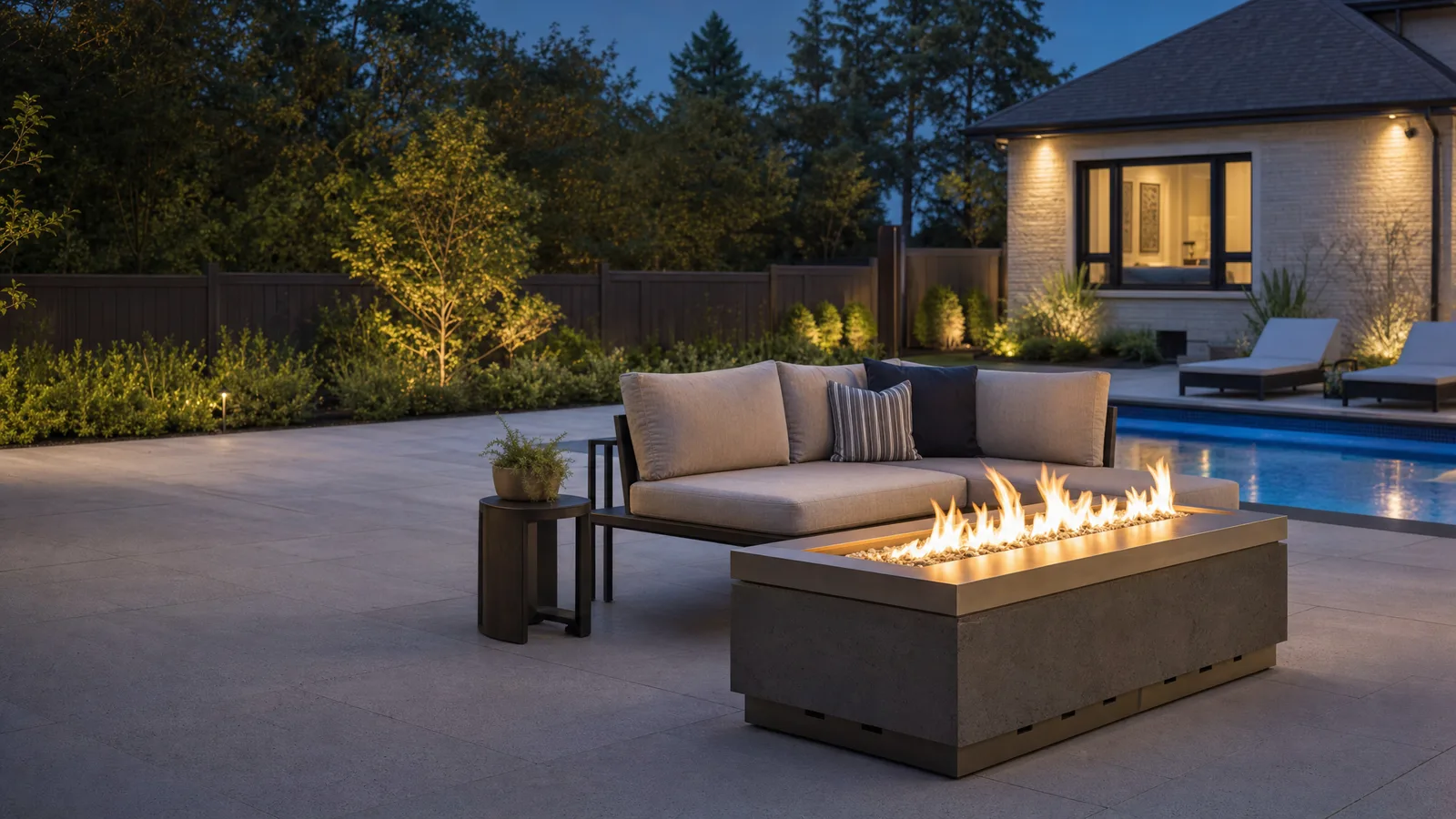
The distinction starts with the product, not its appearance. A decorative bowl filled with media is not automatically an approved gas appliance, and a homemade burner inside a masonry opening does not become one because it burns natural gas. Look for a readable rating plate and an approval mark from a recognized certification body. Confirm that the manual identifies the model for outdoor use, the intended fuel and installation type.
Step
What Clarington homeowners should check
Clarington updated its open-air burning by-law in January 2025. The municipality's public guidance says propane or natural-gas outdoor appliances are allowed on both smaller and larger residential properties. It separately says recreational wood fires require a larger property that can maintain the stated 7.5-metre distance in every direction, and even then they must be in the municipality's defined approved outdoor fireplace. The same page says no recreational burning during a fire ban.
For a gas feature, verify more than the fuel label. Confirm the appliance is intended for outdoors and for the exact fuel supplied. Review the manufacturer-stated clearances to structures, fences, overhead construction, combustible furniture and landscaping. Check whether a pergola, screened room, low soffit or tight courtyard changes the approved location. The appliance must remain accessible for its shutoff, controls, inspection and service after stone, decking or cabinetry is complete.
Before lighting it, check Clarington's current notices and the product manual. If a notice is unclear about a listed gas appliance, contact Clarington Emergency and Fire Services rather than interpreting a general social post. A rule that applied last summer or at another Durham address is not a substitute for the current notice governing this property.
- Confirm the property is within Clarington and not a neighbouring municipality.
- Record the manufacturer, full model, fuel and certification mark.
- Review the outdoor-use statement and all placement requirements in the current manual.
- Keep the shutoff and service areas reachable after finished construction.
- Check current municipal fire and emergency notices before use.
Step
Durham municipalities do not use one shared backyard-fire rule
Moving a project from Bowmanville to Whitby or Oshawa can change the municipal check. Whitby's outdoor-burning page says chimineas, fire bowls and campfires are not permitted under its fires by-law, while propane or gas-fuelled barbecues, grills, cooking appliances and gas fireplaces approved for outdoor use are permitted. Whitby can also issue bans or temporarily suspend burn permits when conditions warrant.
Oshawa publishes its own open-air-burning guidance and identifies approved propane or natural-gas fire pits, bowls and similar appliances separately from prohibited open-air burning. A product still needs the applicable approval and must be used as intended. Port Hope, just east of Durham, likewise issues its own notices. Its July 15, 2026 burn-ban announcement prohibited open-air burning while describing an exception for a CSA-approved outdoor appliance where otherwise permitted. That wording illustrates why residents should read the actual notice rather than assuming every ban has identical coverage.
Use the municipality attached to the service address. Do not borrow a neighbour's answer from another town, rely on a retailer's broad statement or assume the Durham Region name creates one regional by-law. Municipal fire services are the authority for their current outdoor-burning rules and emergency restrictions.
Step
Plan the whole finished area before the gas route
A safe-looking spot on an empty patio can become unsuitable after furniture, fencing, planters, an awning or a future pergola is added. Start with a scaled plan of the finished space. Show property edges, structures, doors, windows, overhead surfaces, combustible finishes, seating circulation and the intended appliance. Then compare that plan with the exact appliance manual and the route needed for the fuel line.
A permanent natural-gas line also needs a protected, serviceable path and an accessible shutoff. Excavation may require Ontario One Call and, where applicable, private locates for lines that public utilities do not mark. Coordinate the gas work before concrete, stone or decking closes the route, but do not bury a line or pour around a connection based on a showroom sketch. The qualified installer must review the actual equipment, supply and site.
What to include with your request
What would you like to install, fix or improve?
Tell us what you need and where the job is. Add the appliance model, fuel type and a photo if you have them.
Step
What to photograph before requesting service
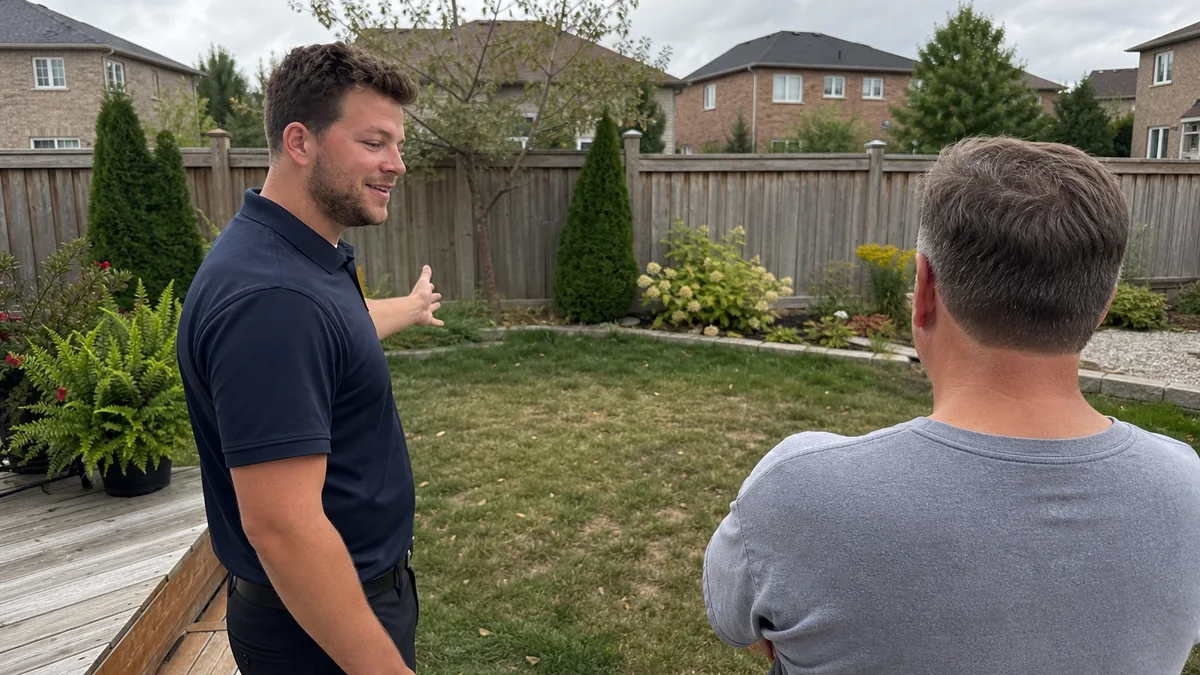
Start with one wide image from the house toward the proposed feature and another looking back toward the house. Include the full patio, nearby walls, doors, windows, fence, overhead construction and the likely route. Add close photographs of the appliance rating plate, model label, installation manual cover and the proposed connection area. If an existing line or shutoff is present, photograph it without opening, moving or testing anything.
For a renovation, include the utility area and all current gas appliances so the new load can be considered with the rest of the property. Mark approximate dimensions on a simple sketch rather than relying on a tightly cropped photo. Tell us whether hardscape is proposed, underway or already complete, and whether a landscaper, electrician or other contractor is involved.
- Wide views in both directions across the proposed area.
- Nearby structures, openings, overhead surfaces and property edges.
- Appliance rating plate, model number and current manual.
- Existing gas equipment, meter context and accessible route areas.
- Project stage, finished materials and other trades involved.
Step
What to check before lighting your fire feature
Before use, check the current municipal notice, the surrounding area and the appliance condition. Remove combustible clutter only as the manual permits, keep required clearance zones open and confirm that the appliance has not been moved or damaged. Do not operate it when a connection, burner, control, barrier or enclosure appears altered. Follow the manufacturer's lighting and shutdown instructions rather than a routine remembered from a different fire table.
Weather matters even when the municipality permits the appliance. Strong wind, accumulated leaves, dry vegetation, standing water, unstable surfaces or nearby construction can make it a poor time to operate. Supervise the appliance, keep children and pets away from hot surfaces, and do not leave it running while people go inside. Let components cool before covering or moving anything.
Questions we hear
Frequently asked questions
Clarington's current public guidance says propane and natural-gas outdoor appliances are allowed on smaller residential properties, while recreational outdoor fires and fire pits are not. The exact product, placement, manufacturer instructions and current municipal notices still need review.
Do not assume one regional answer. Municipalities issue and word their own notices, and treatment of listed gas appliances can differ. Read the current notice for the service address and ask the local fire service when the wording is unclear.
No. The burner, enclosure, fuel, clearances, ventilation, controls and installation method must be approved for the intended use. A decorative enclosure does not make improvised gas components acceptable.
Ask about your project
Tell us about the property and equipment
Send the service address, timing, appliance model and safe photos that show the work area.