
Gas Safety and Planning
When Enbridge May Need to Review Gas Load for a Pool Heater, Fireplace or Outdoor Kitchen
Adding a gas appliance may mean checking more than the nearest pipe. Your installer checks the home's gas lines, and Enbridge may need to review the supply or meter.
Before you plan
Start with the appliance and site details
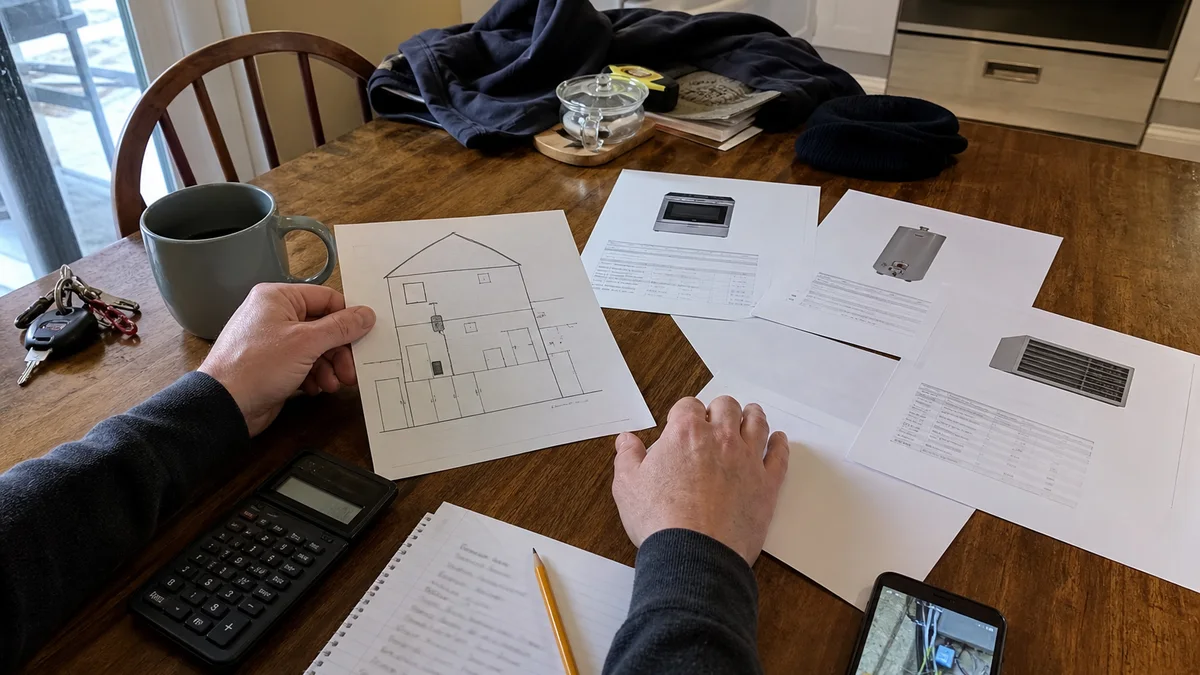
A new gas appliance does not automatically require Enbridge to visit, but the project may need a utility review when the added demand affects the service, meter, regulator, delivery pressure or approved load information. The gas contractor first gathers every existing and proposed appliance input, assesses the customer piping and determines the service requirements. If a load or pressure change, additional meter or new service is needed, Enbridge directs builders and HVAC contractors to submit the appropriate application through GetConnected. Do not order a large pool heater, fireplace or outdoor-kitchen package simply because a capped line exists. The appliance demand, total connected load, line sizing and utility service are related checks, and each must support the finished plan.
Step
There are two capacity checks, not one
The first check is inside the property: can the customer-owned piping safely serve the exact appliance along with every other connected load? That review considers appliance inputs, pipe material and route, length, pressure, existing branches, condition and the applicable installation requirements. A large meter does not make an undersized backyard branch adequate, and a nearby capped outlet does not prove the route was designed for the new equipment.
The second check is at the utility boundary: can the Enbridge service, meter, regulator and delivery arrangement support the requested total load and pressure? Enbridge publishes a process for contractors to request a natural-gas service, additional meter, or load or pressure change when new gas equipment is added. The contractor supplies technical information; the homeowner does not need to guess a meter size or ask the utility for a particular part.
Both checks should be completed before the project is locked into appliance purchases, landscaping or finish construction. Passing one does not pass the other. A compliant customer-side design still depends on an adequate utility supply, and a utility-approved load still needs properly designed piping to the appliance.
Step
When might Enbridge need to be involved?
High-input equipment such as some pool heaters can materially increase a property's connected demand. A new outdoor kitchen may combine a barbecue, side burner, pizza oven and fire feature rather than add a single small load. A renovation can also group a fireplace, range, dryer or water-heating change into the same period. The total, not the marketing category, is what matters.
Utility involvement is more likely when the existing service information does not match the proposed demand, a pressure change is needed, the meter or regulator arrangement must change, an additional meter is requested, or the property is receiving new natural-gas service. A rural or long service route, multi-unit property or substantial future phase can add coordination. The contractor should identify the applicable path rather than promise that Enbridge is never involved.
- New natural-gas service or additional meter.
- Proposed equipment that changes total connected load.
- Requested delivery-pressure change.
- Meter or regulator arrangement that may not support the design.
- Several appliances added as one renovation or outdoor-living project.
Step
List your existing and new gas appliances
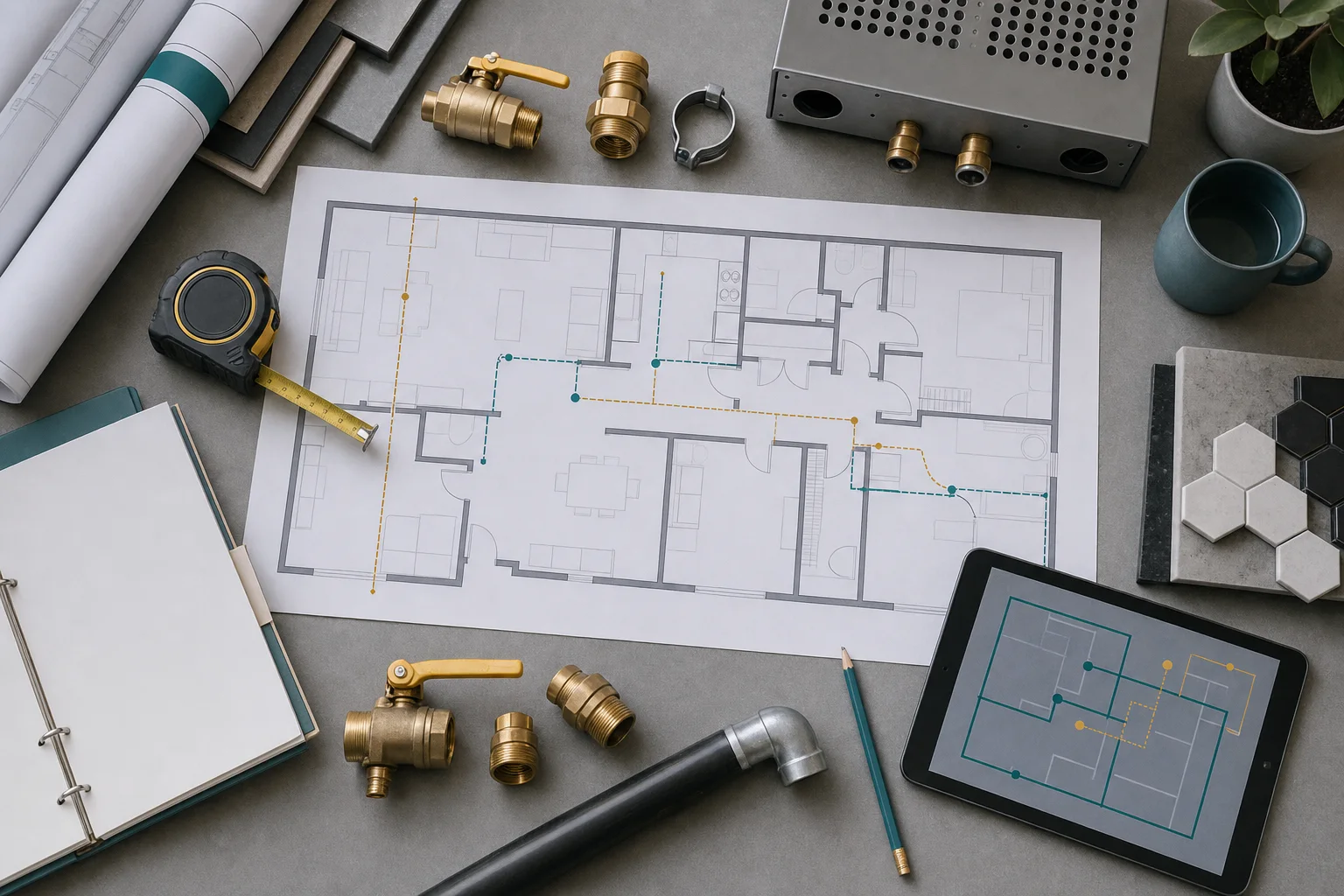
Collect the rating-plate input for every existing gas appliance: furnace or boiler, water heater, range, dryer, fireplace, garage heater and any outdoor equipment. Add the exact proposed models and their fuel inputs. Do not estimate from physical size or use a retailer's category average. A fireplace can have a different input than the old unit it replaces, and two similar-looking pool heaters can create different design requirements.
Identify appliances that will be removed, retained or installed later. Future plans matter because a line route or service change designed only for today's barbecue may have to be revisited for next year's pool heater. At the same time, do not inflate the application with hypothetical equipment that has no defined model or project. Give the contractor enough certainty to state what is included and what would require reassessment.
Provide the service address, Enbridge account context if requested, meter photographs, project drawings and timing. The contractor can translate those inputs into the technical load and pressure information used for design and any utility application. Accurate information helps avoid a rejected or revised request and keeps homeowners from ordering equipment against an assumed capacity.
Step
Check the gas supply before buying new equipment
Begin with the use goal and a shortlist of exact appliances. Have the site and existing system assessed before final purchase. The gas contractor can review the connected-load list, proposed routes and customer-side requirements, then determine whether Enbridge must review a load or pressure change, additional meter or service work.
Where an application is required, Enbridge's contractor-facing process uses GetConnected. Enbridge reviews and coordinates its portion; timing depends on the requested work, available information and site conditions. Its published builder guidance asks for substantial lead time for new service installations. That does not mean every appliance addition takes the same time, but it is a strong reason not to leave utility-dependent work until the week before a pool opening or landscape completion.
After the utility path is known, coordinate the customer piping, appliance installation and any electrical, pool, masonry, cabinet or landscape work. Keep access open for inspections, startup checks and future repairs. Do not disconnect existing fuel equipment or demolish required systems until the responsible parties confirm the sequence.
What to include with your request
What would you like to install, fix or improve?
Tell us what you need and where the job is. Add the appliance model, fuel type and a photo if you have them.
Step
What to photograph before requesting service
Take a straight-on photograph of the gas meter that shows the full assembly and surrounding clearance, followed by a readable close-up of its visible labels without touching the equipment. Photograph the utility room widely enough to show the main customer piping and branches. Add the rating plate of every gas appliance, plus the exact model information for each proposed appliance.
For an outdoor project, include wide views from the house to the destination and back again. Show finished surfaces, grade changes, doors, windows, decks, proposed cabinets and likely access areas. If plans exist, mark the appliance positions and approximate route. Do not remove panels, insulation or ceiling finishes simply to produce a picture.
Send the address, project stage and target timing with the photographs. Explain which appliances are staying and which are being removed. The intake will not replace the on-site calculation or Enbridge decision, but it can reveal missing model data before schedules and purchases depend on it.
- Full meter assembly and readable visible labels.
- Wide utility-room piping context.
- Rating plates for all existing gas appliances.
- Specifications for exact proposed models.
- Outdoor route, finished plan and project schedule.
Step
Avoid the assumptions that create late project delays
“There is already gas at the house” establishes fuel availability, not spare capacity. “The meter looks large” is not a technical review. “The neighbour installed the same heater” says nothing about this property's service, piping or appliance load. “The old line worked” does not prove condition or capacity for a different model. These shortcuts tend to surface after equipment is delivered and other trades are waiting.
Another common mistake is designing the finished feature before selecting the appliance. A pool heater needs a serviceable equipment layout. A fireplace needs an approved vent and enclosure. An outdoor kitchen needs model-specific openings, ventilation and accessible connections. Utility capacity matters, but it cannot rescue an unsuitable appliance location or customer-side route.
Questions we hear
Frequently asked questions
No. The total connected load, existing service, delivery conditions and customer piping determine the path. Some projects fit the verified system; others require a load, pressure, meter or service review.
Enbridge controls its service and meter arrangements. A qualified fuels contractor assesses and designs the customer-owned piping, assembles the technical load information and initiates the applicable utility process when needed.
Select an exact model or firm shortlist so the demand is known, but avoid irreversible purchase and construction commitments until the site, customer piping and any utility requirements have been assessed.
Ask about your project
Tell us about the property and equipment
Send the service address, timing, appliance model and safe photos that show the work area.