
Gas Safety and Planning
New Gas Line vs Extension: Which Does Your Appliance Project Need?
The nearest gas pipe is not always the right place to connect. The contractor needs to check your existing system, all connected appliances and a suitable route for the new line.
Before you compare
Start with the property and equipment
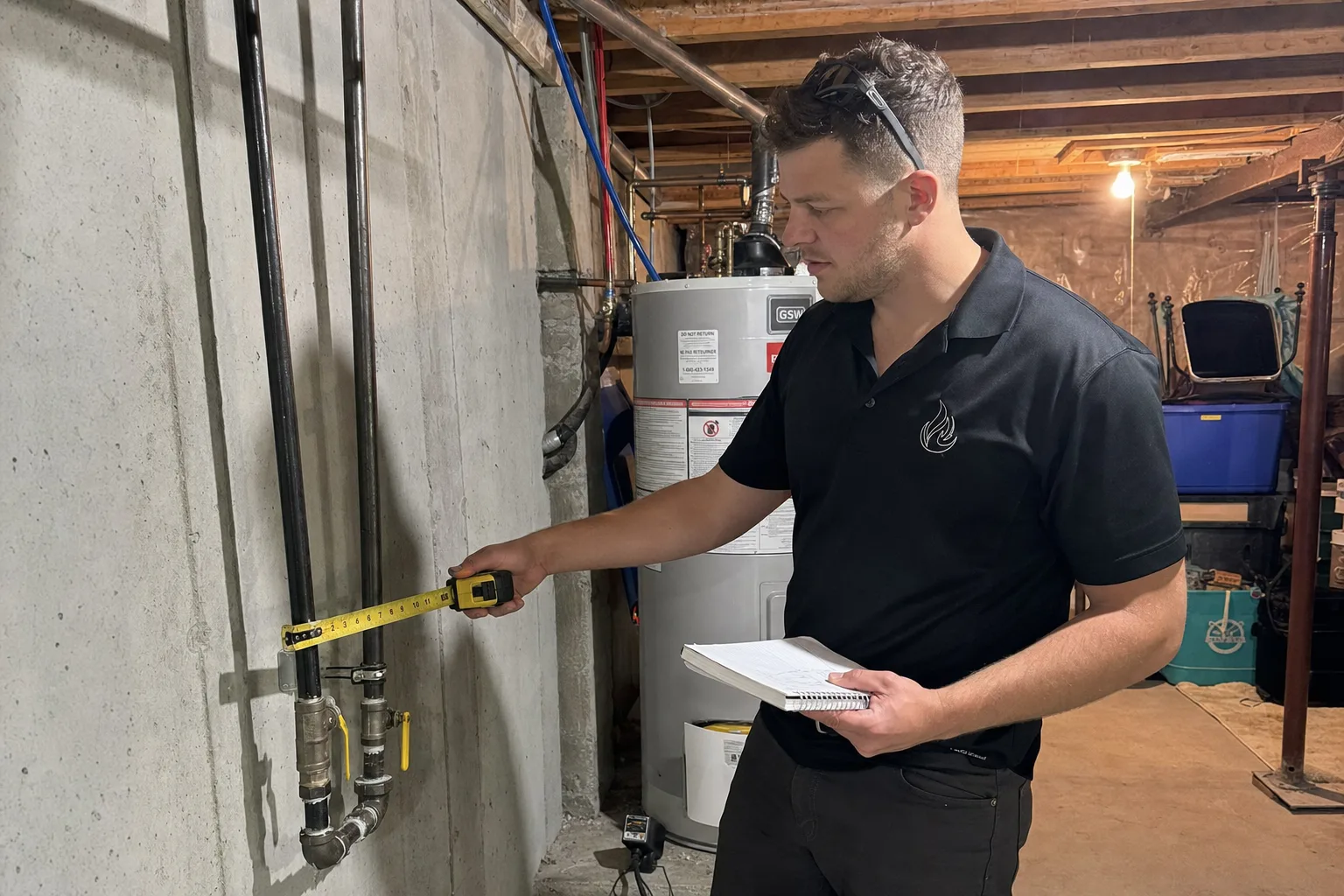
An extension may suit a new appliance when an existing branch is appropriately located, documented, in suitable condition and able to serve the revised connected load. A new route may be needed when capacity, material, condition, isolation, protection, access, future plans or routing make the existing branch unsuitable. The decision requires the exact appliance demand and an assessment of the whole fuel system; homeowners should not choose a connection point or pipe size from distance alone.
Start with the appliances you want to connect
Provide the exact appliance model, fuel and location along with all current gas appliances. Include likely future additions such as a pool heater, barbecue, range or fire feature. A route that works for today’s modest load may be poor planning when another major appliance is already part of the renovation. The technician uses manufacturer demand information and the applicable requirements to evaluate the system.
State whether the project is a replacement, relocation, new connection or fuel conversion. An outlet near the intended location might serve an abandoned or smaller appliance, or it may be a capped end with unknown history. Distance to the nearest visible pipe is only one fact. Capacity, upstream connections, condition, shutoff access and route protection determine whether that point is useful.
- Exact appliance model, fuel and manufacturer input.
- Every current and planned gas appliance.
- Known line history, material and previous use.
- Accessible indoor, outdoor and utility routes.
- Renovation stage, finishes and future construction.
When extending a line may make sense
An extension can be reasonable when the serving branch is verified, has suitable capacity for the revised connected demand, remains in acceptable condition, and offers a compliant route with accessible shutoff and protection. It may reduce material and disruption compared with returning to another distribution point. That conclusion must come from assessment, not from the presence of a tee or cap.
The extension should still be planned for the exact appliance and surrounding trades. A short visible distance can require difficult work through finished ceilings, cabinets or exterior walls. Restoration, fire stopping, weather sealing and access need defined responsibility. If the route would bury connections or create poor service access, a longer but clearer path may be the better project.
When a new line may be the better choice
A new route may be indicated when the existing branch cannot support the load, its history or condition is uncertain, it is poorly located, or extending it would produce an impractical concealed path. A separate route can also improve isolation and future service, or support a planned outdoor cluster of equipment more directly. “Dedicated” does not automatically mean independent of the entire property supply; upstream capacity still matters.
For a Newcastle pool or patio project, reviewing the route before hardscape can open options that disappear after construction. For an indoor range, a basement ceiling or cabinet plan may decide whether a new path is less disruptive. The useful comparison shows access and restoration as well as pipe length. The shortest route is not always the best choice for the finished job.
Before you choose equipment
Find the right fit for your home
Tell us which models you like and where you want the appliance. We can help check the fuel supply, venting, space and access before you buy.
Routing includes protection, locates and service access
Gas piping can pass through indoor, outdoor, underground or transition conditions, each with specific material, support and protection requirements. The homeowner’s role is to reveal site constraints and avoid closing the path, not to select materials or burial details. Identify finished rooms, crawlspaces, decks, driveways, retaining walls, drainage, gates and planned structures that can affect access.
Where excavation is involved, request public utility locates through Ontario One Call and account for private services the public locate may not cover. Coordinate excavation, backfill and restoration responsibilities before work begins. Leave shutoffs and other required service points accessible after cabinetry, landscaping or a cover is installed. A route is only successful if it can be inspected, protected and serviced over its life.
Compare the whole job, not just pipe length
Ask each quote to show where the line will connect and run, which appliance it serves and how the gas demand was checked. It should also include access, digging, wall openings, protection, testing, any required permits or inspections, repairs to disturbed areas and who does each part. It should also state whether the plan allows for known future appliances or would need further alteration later.
One option may use less pipe but require extensive ceiling or cabinet restoration. Another may use a longer exterior route with simpler access. Pricing should reflect all this work, not just a price per foot of pipe. Ask what happens if hidden problems are found and which areas need to stay open until testing and the final walkthrough are complete.
- Connection point and verified serving capacity.
- Protected route, penetrations and accessible shutoff.
- Excavation, public locates and private-service planning.
- Testing, startup checks and job records.
- Restoration and future-appliance assumptions.
Get ready for the visit and walkthrough
Share the address, fuel, exact appliances, project stage, site photos and drawings. Keep utility, ceiling and outdoor access available. Do not remove caps or open finished areas around live services unless the responsible contractor directs the work. If another contractor is choosing the equipment, get the final model details before the gas work is planned.
After the walkthrough, keep the quote, appliance and line details, model information and any records provided. Ask which shutoff serves the new appliance, how to use it according to the manual and when a future change needs another professional check. A future contractor should be able to understand what the route serves without reverse-engineering a renovation.
Questions we hear
Frequently asked questions
No. Capacity, access, condition, route protection and restoration can make a farther new route less disruptive. Compare quotes based on the full work your home needs.
Not automatically. Its material, condition, route, upstream supply, shutoff and connected-load capacity must be reviewed against the exact appliance.
Yes, when they are reasonably planned. They can change capacity and route decisions even if connection occurs later.
No. Public locates are essential where applicable, but private services on the property may need separate investigation and locating.
References
Sources and further reading
Ask about your project
Tell us about the property and equipment
Send the service address, timing, appliance model and safe photos that show the work area.