
Safety and Maintenance
Why Does My Gas Fireplace Smell? What to Do First
A fireplace odour is not something to diagnose by trial and error. Start by treating any rotten-egg or sulphur smell as a gas emergency, then use the appliance manual and qualified service to evaluate non-emergency odours.
What to do first
Start with the immediate safety steps
If a gas fireplace smells like rotten eggs or sulphur, leave immediately. From a safe distance, call 911 and Enbridge Gas at 1-866-763-5427. Do not use a phone, switch, appliance, flame, tool or vehicle near the suspected leak, and do not re-enter until emergency responders or the utility say it is safe. A dusty or manufacturing odour can occur in limited, appliance-specific situations, but that possibility must never be used to explain away a suspected gas odour, a carbon monoxide alarm, soot, an abnormal flame or physical symptoms.
Gas odour comes before every other explanation
Natural gas is given a distinctive rotten-egg or sulphur-like odour so a possible release can be recognized. Enbridge Gas directs people to leave the area immediately and call both 911 and its Ontario emergency line from a safe distance. That direction applies whether the smell seems faint, comes and goes, appears only when the fireplace starts, or is noticed near an exterior termination. Do not stay to locate the source. Do not test switches, use a phone inside, light anything, start a nearby vehicle or operate the fireplace. A service appointment is not a substitute for emergency response. Once the utility or emergency responders have controlled the situation and cleared the property, appliance diagnosis can follow.
- Leave everyone and pets out of the affected area immediately.
- Call 911 and Enbridge Gas at 1-866-763-5427 from a safe distance.
- Do not re-enter until the authority handling the emergency gives clearance.
After emergency crews say it is safe
Send the appliance or gas-line details for service
Do not use this form during an emergency. After emergency responders or the fuel supplier say it is safe to return, send the appliance or gas-line details, the symptom and any recent service history.
Why smell alone cannot diagnose a fireplace
Homeowners use words such as gas, dust, hot metal, plastic, chemical, smoke or soot for very different conditions. The location and timing of an odour can help a technician ask better questions, but a description cannot prove the cause. Odour can travel from another appliance, a utility space, an exterior source or materials near the fireplace. A venting or combustion concern may also create signs other than the added natural-gas odour. The safe dividing line is therefore conservative: a possible gas smell triggers evacuation and the utility response, while a clearly non-gas odour is considered only after there is no emergency signal and the exact appliance instructions have been reviewed.
Dust after a long period without use
Some fireplace manufacturers explain that dust on accessible heated surfaces can create a temporary odour when an appliance returns to use after a warm season or another long pause. That is a model-specific operating note, not a general diagnosis. Consider it only when there is no rotten-egg or sulphur smell, no alarm, no soot, no abnormal flame, no visible damage and no concerning symptom. Check the owner manual for the exact model rather than relying on advice for another fireplace. If the odour is strong, returns after the limited period described by the manufacturer, changes character or arrives with another warning sign, discontinue use and request an assessment instead of repeatedly running the unit to see whether it clears.
New-appliance and finish curing odours
A current owner manual may describe a temporary curing or burn-in odour from coatings, logs, lubricants or nearby finish materials during initial operation. The permitted duration, ventilation direction and operating procedure belong to that exact fireplace and installation. They should be confirmed in the manual provided with the appliance. A curing explanation is not appropriate for an older unit that develops a new smell, and it never overrides emergency gas guidance. Materials added during a renovation can also react to heat even when they are outside the appliance, which is one reason the installer and finish trades need to follow the listed clearances and material instructions rather than judging suitability by appearance alone.
Soot, flame changes and venting clues
Black deposits, recurring glass discolouration, a flame that looks different from its established normal pattern, scorch marks, damaged vent components or staining near the termination deserve professional review. Enbridge Gas advises that appliance venting terminate outdoors and remain free of cracks, corrosion and blockage. These conditions can involve combustion air, burner condition, media placement, vent performance, pressure, maintenance or an appliance-specific fault. They cannot be resolved safely by moving logs, opening the sealed glass, adjusting a burner or changing a vent. If a carbon monoxide alarm sounds or anyone has possible exposure symptoms, leave the building and call 911. Carbon monoxide itself has no smell, so the absence of odour does not establish safety.
When to stop using the fireplace
Stop and seek the appropriate help when an odour is persistent or unexplained, the unit repeatedly fails to operate normally, the flame or glass appearance changes, an exterior termination appears blocked or damaged, the sealed glass is cracked, or water has reached the appliance. Treat gas odour and alarms as emergencies rather than ordinary service calls. For a non-emergency concern, do not remove panels, disturb media, bypass a safety control, improvise a relighting procedure or continue cycling the unit. The correct next step depends on the rating plate, ignition system, vent arrangement, fuel and manufacturer instructions. Preserving those details also makes a later assessment more useful.
What to record only after the situation is safe
Once there is no active emergency and the area is safe, note the make and model, whether the fireplace uses natural gas or propane, when the odour began, whether the appliance was new or returning after a seasonal pause, and any visible display message. Describe the odour in your own words and state whether it appeared before ignition, during operation or after the unit stopped. Existing photos of the full fireplace and exterior termination can add context. Do not restart the appliance to recreate a symptom, approach a suspected leak for a photo, or open the firebox to obtain a rating plate. Information gathering should never add exposure or alter the condition a technician needs to assess.
How a technician checks the fireplace
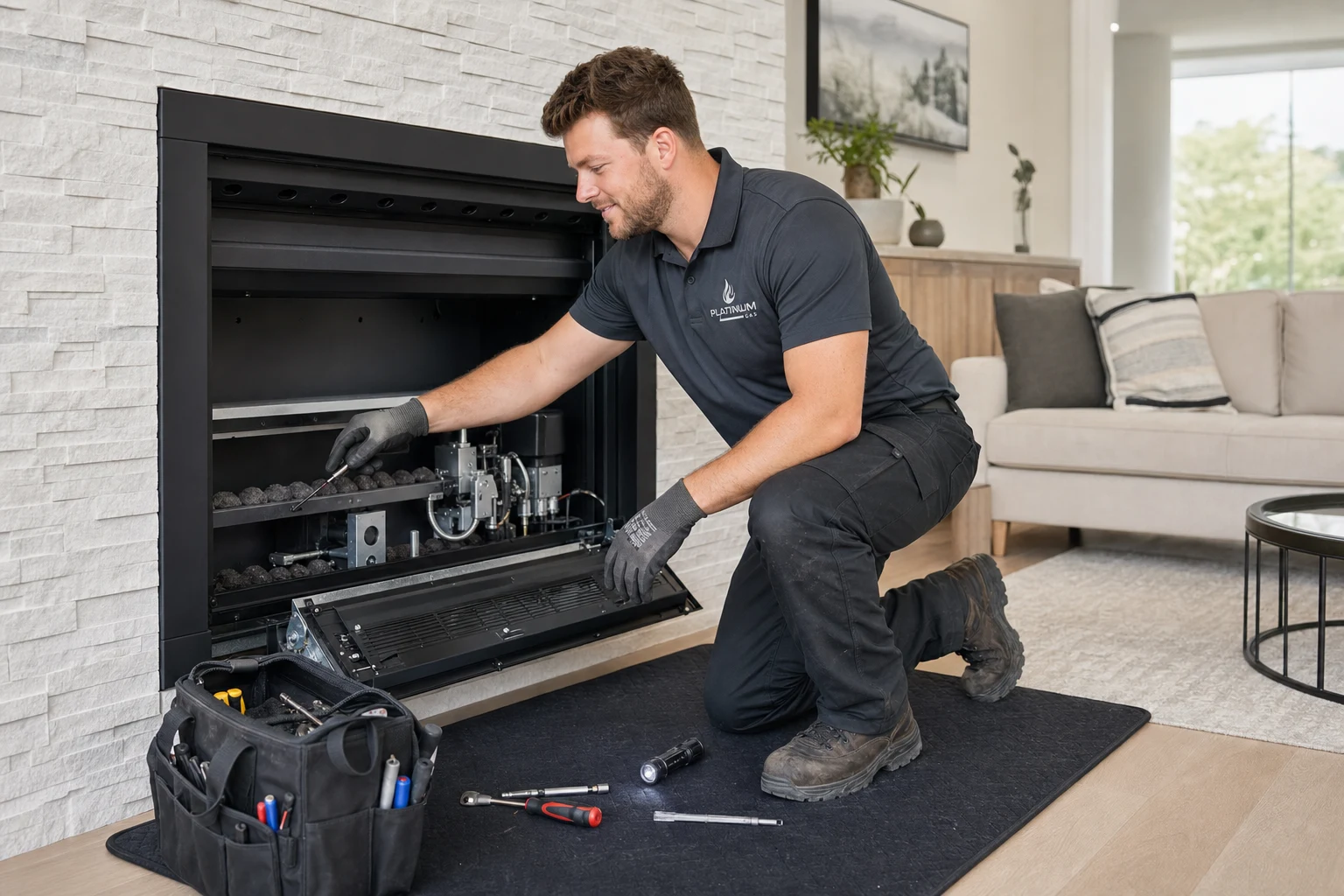
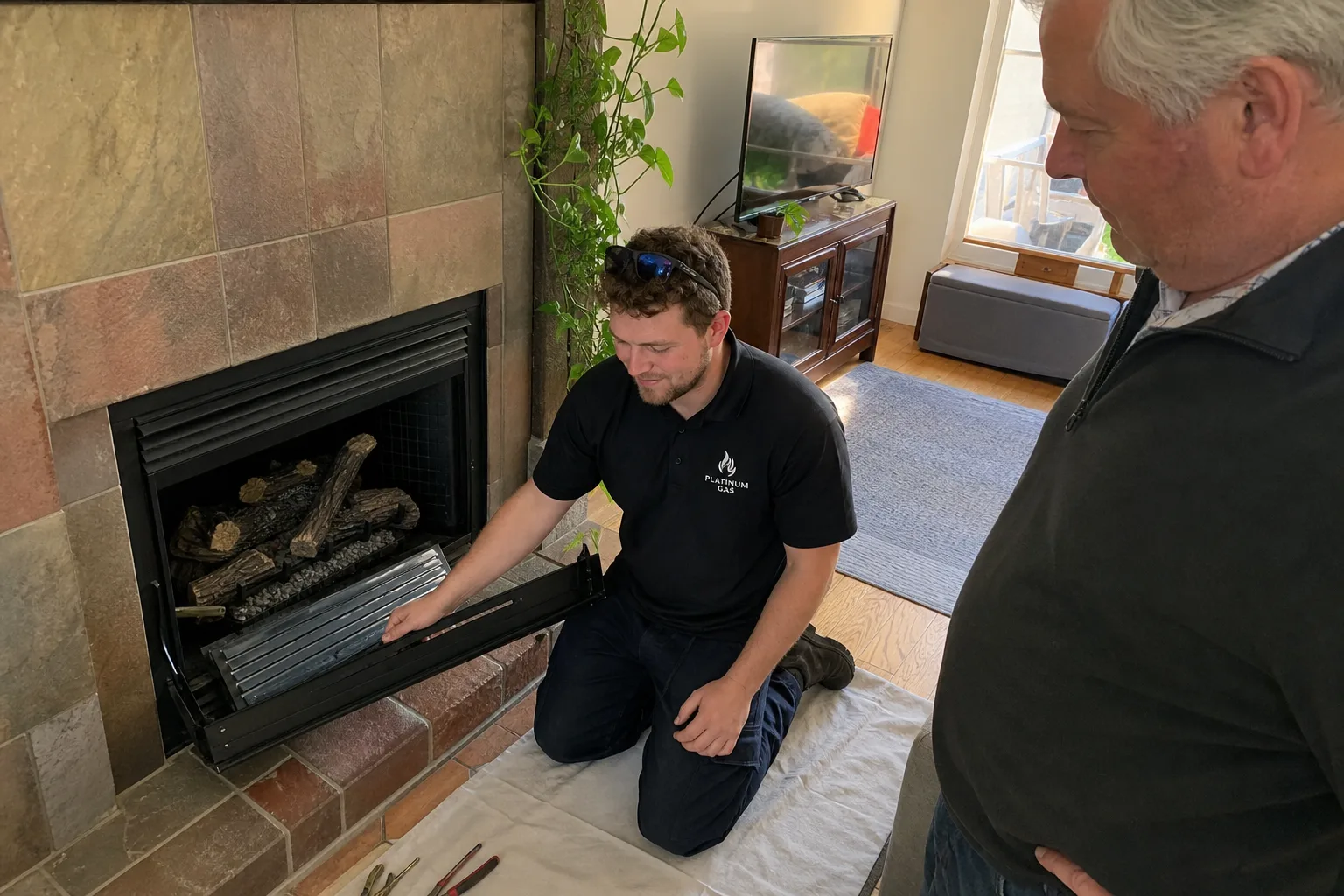
After an emergency has been cleared, or for a non-emergency operating concern, a service assessment begins with the exact appliance and symptom. Depending on the model and condition, the review may consider visible appliance integrity, approved media arrangement, ignition and controls, burner operation, venting context, combustion indicators and the surrounding installation. Some findings can point beyond the fireplace itself to fuel supply, building work or another trade. Share the fireplace model and what you've noticed so Platinum Gas can prepare for the visit. Any repair recommendation should identify what was observed and why the proposed work relates to that finding.
Questions we hear
Frequently asked questions
Yes. Do not use intensity to decide whether a suspected gas odour is safe. Leave immediately, call 911 and Enbridge Gas at 1-866-763-5427 from a safe distance, and do not re-enter until cleared.
Some manufacturer manuals describe a limited dust odour after extended non-use. That explanation applies only when the smell is clearly not gas, there are no other warning signs, and the exact model manual supports it. Persistent or changing odours need assessment.
No. Carbon monoxide is colourless and odourless. If a carbon monoxide alarm sounds or someone has possible exposure symptoms, leave the building and call 911 rather than trying to inspect the fireplace.
No. Do not recreate a possible unsafe condition. For gas odour, evacuate and call emergency contacts. For a non-emergency issue, provide the model, symptom and existing observations without repeatedly operating or opening the appliance.
Ask about your project
Tell us about the property and equipment
Send the service address, timing, appliance model and safe photos that show the work area.