
Pool Heating
Gas Pool Heater vs Electric Resistance Heater: When Each Makes Sense
Electric resistance and heat-pump pool heaters are different technologies. This comparison focuses on resistance units, which turn electricity directly into heat.
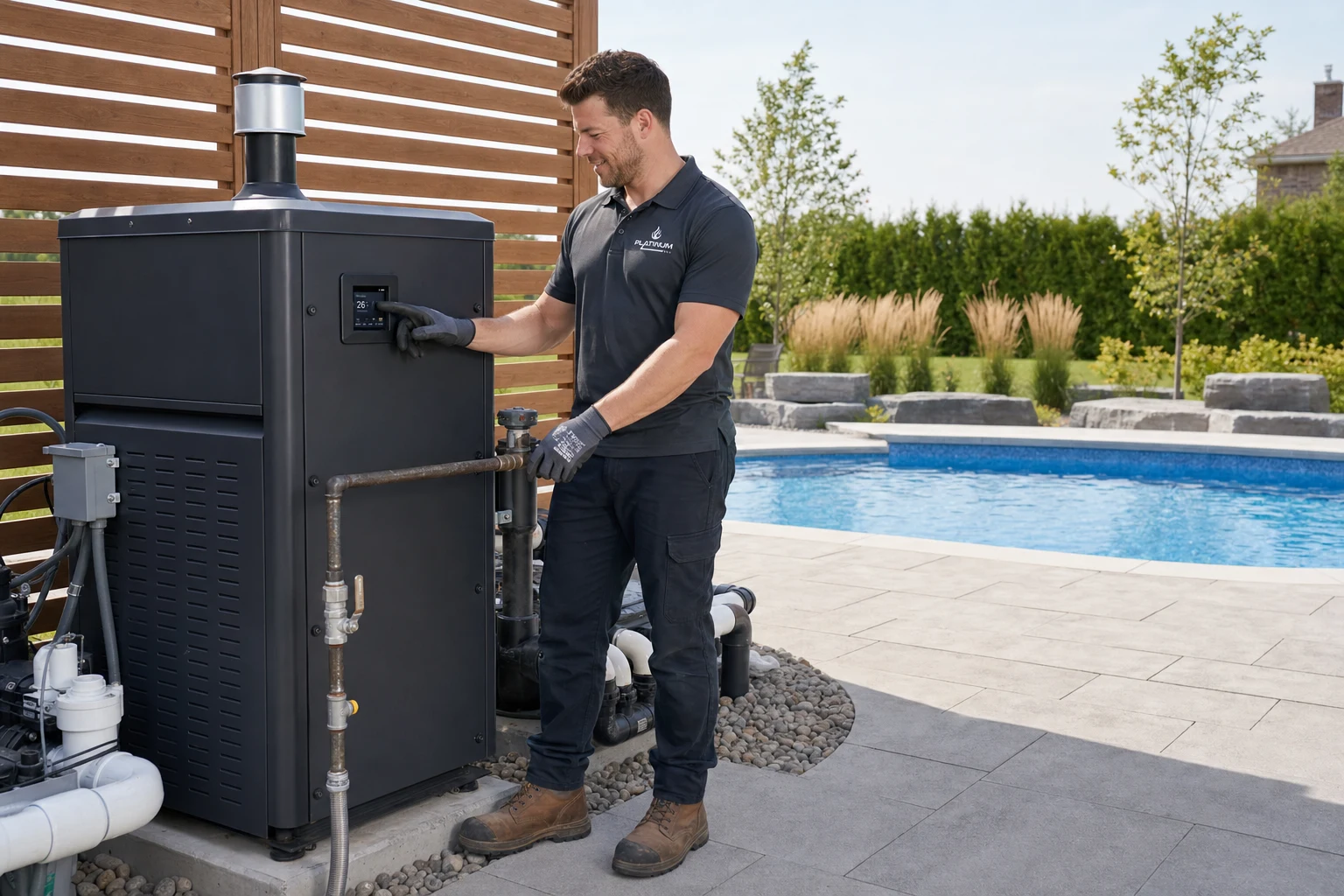
Before you compare
Start with the property and equipment
A gas pool heater usually makes more sense when a full-size pool needs substantial on-demand output, faster recovery or operation in cooler outdoor conditions and the property can support the fuel demand. An electric resistance heater can make sense for a small body of water, spa or specialized load where suitable electrical capacity is available and the required output is modest. Compare actual models and the complete site infrastructure; do not substitute heat-pump claims for resistance-heater performance.
Identify the electric technology first
An electric resistance heater passes electrical energy through heating elements and transfers that heat to circulating water. A heat pump uses electricity to move heat from outdoor air and behaves differently as air conditions change. Product pages sometimes group both as electric, but their output, electrical demand, efficiency metrics, physical requirements and operating pattern are not interchangeable.
Confirm whether a proposal is for resistance or heat-pump equipment before comparing it with gas. Ask for the exact Canadian model, rated output, voltage, amperage, water-flow range and environmental conditions. A technology label without those facts cannot support a useful decision.
- Resistance: direct electrical heating elements.
- Heat pump: refrigerant system moves ambient heat.
- Gas: combustion heat transferred to pool water.
- Compare exact output and infrastructure, not category names.
How warm, and how quickly?
A full-size inground pool contains a large mass of water and continually loses heat at the surface. When the goal is a meaningful temperature increase in a limited time, required delivered output can be substantial. Gas-heater families commonly offer outputs intended for that use. Many resistance units target smaller pools, spas or lower loads, though actual product ranges must be checked.
Define gallons, surface area, starting and target temperatures, cover use, wind, season and acceptable heat-up time. Then compare delivered output from candidate models. A heater should not be selected solely because it can eventually add heat under ideal conditions; it must match the real use pattern.
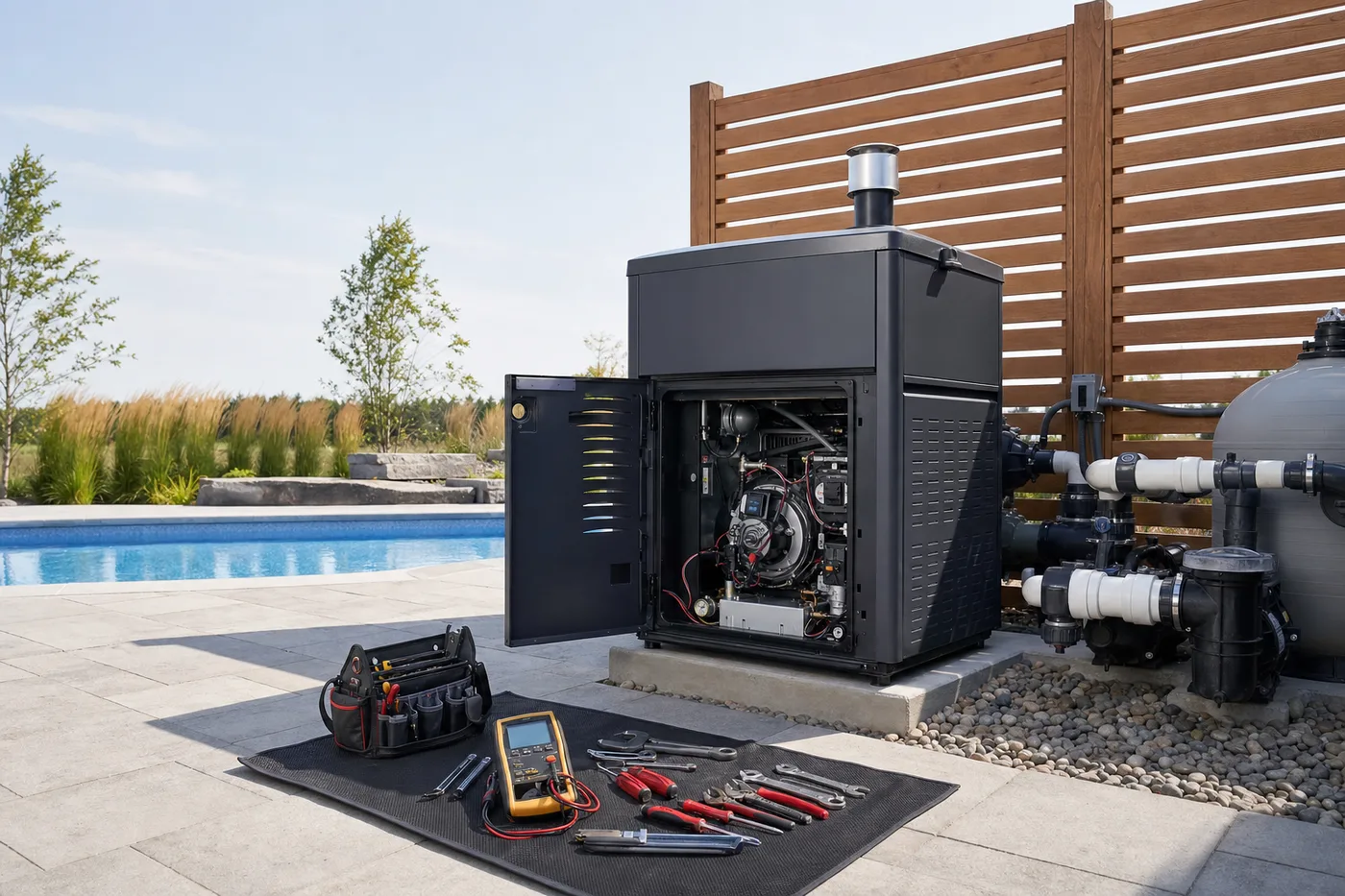
Check electrical service before considering resistance heat
Resistance heating can require a large dedicated electrical load. The property service, panel capacity, feeder route, conductor size, overcurrent protection, disconnect, bonding and local installation conditions need review by the appropriate qualified electrical trade. The existence of an outlet or old heater circuit does not establish suitability.
Ask for the cost of any electrical upgrades separately from the heater. Long routes, panel upgrades or service changes can dominate project feasibility. Do not compare an appliance-only online price with an installed gas proposal that includes fuel work, or the reverse. Put both options on the same complete-project basis.
- Exact voltage, phase and current requirements.
- Available service and panel capacity.
- Dedicated circuit, disconnect and route.
- Bonding, weather exposure and trade responsibilities.
Before you choose equipment
Find the right fit for your home
Tell us which models you like and where you want the appliance. We can help check the fuel supply, venting, space and access before you buy.
Check gas capacity and placement for a gas heater
A gas option adds demand to the home system. Meter or propane supply, regulator conditions, line sizing, route, other appliances and exact heater input all matter. The equipment pad must also satisfy manufacturer clearances, combustion-air and venting conditions, drainage and service access.
A large nominal heater cannot be treated as a drop-in replacement merely because the plumbing connections look similar. Confirm water flow, gas capacity, pad layout and controls together. If utility or propane-supplier review is needed, include it in the project schedule rather than assuming approval after purchase.
Model operating cost with current local inputs
Operating cost depends on delivered heat needed, equipment efficiency, local electricity and fuel rates, fixed or delivery charges that actually apply, and hours of use. Rates change, and time-of-use electricity can complicate a simple comparison. Use dated utility information and state whether taxes and delivery components are included.
Compare a defined scenario, such as maintaining a covered spa or raising a pool by a stated temperature under stated conditions. Do not conclude that one technology is always cheaper from a single rate. The better answer may change between a small spa used occasionally and a large exposed pool expected to recover quickly.
- Date every utility-rate input.
- Use the same delivered-heat scenario.
- Include actual model efficiency or output information.
- Separate installation cost from operating estimate.
Choose for your pool, not a ranking
Gas tends to fit high-output, time-sensitive heating when supply is feasible. Resistance can fit modest loads and compact applications where electrical capacity is already suitable. A heat pump belongs in a separate comparison for owners prioritizing steady seasonal maintenance under favourable ambient conditions. Hybrid strategies also need careful control and cost review rather than assumptions.
A recommendation should document pool dimensions, use pattern, cover habits, target conditions, current equipment, candidate models, infrastructure work and service support. That makes the decision auditable and prevents an attractive fuel label from hiding a system that cannot meet the desired recovery time.
Questions we hear
Frequently asked questions
No. A resistance heater turns electricity directly into heat, while a heat pump moves heat from outdoor air. Their outputs, electrical needs and response to ambient conditions differ.
A suitably rated system can add heat, but the required recovery rate, electrical demand and available products must be compared for the actual pool. Many resistance units are better suited to smaller loads.
Current gas heaters commonly use electrical ignition, controls and safety systems. The exact voltage and outage behaviour come from the model manual and must be included in planning.
There is no durable universal answer. Calculate a defined heating scenario using current local rates and exact equipment performance, then consider complete installation and operating patterns.
References
Sources and further reading
Ask about your project
Tell us about the property and equipment
Send the service address, timing, appliance model and safe photos that show the work area.