
Safety and Maintenance
Gas Fireplace Flame Problems: What Colour, Height and Movement Can Signal
A changed flame is useful evidence, but it is not a reliable do-it-yourself diagnosis. Compare it with the exact model manual and the fireplace's normal behaviour.
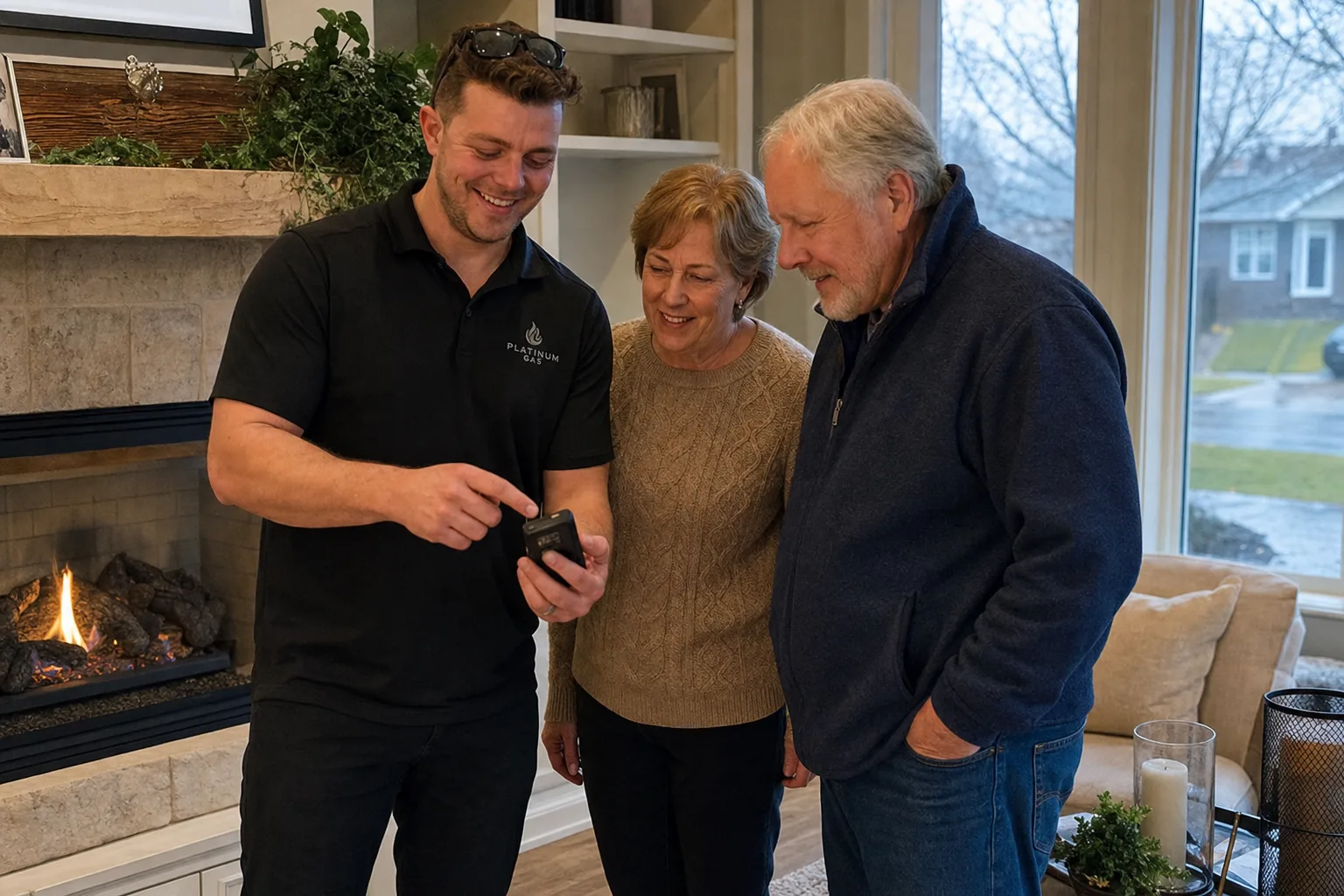
Safe checks
Start with what you can observe
Stop using a gas fireplace and arrange qualified assessment when the flame has changed noticeably from normal, lifts or rolls outside its intended pattern, repeatedly goes out, arrives after delayed ignition, produces soot or discolouration, or appears with new sound, odour, alarm or glass damage. Flame colour alone is not a universal test because approved patterns vary by burner, fuel, media and operating stage. Record the change without opening or adjusting the appliance.
Know the normal flame for your fireplace
Gas-fireplace flames are designed around a particular burner, fuel, media placement, log set, glass assembly and control range. Some start with a different appearance while the appliance warms; some change visibly between low and high settings. A generic internet photo cannot establish what your unit should look like.
Find the model and current owner manual. Compare the observed flame with manufacturer descriptions only from a safe viewing position. Note the setting, time since ignition and whether a blower or other control was operating. The most useful signal is often a clear change from the fireplace's established normal pattern.
- Exact model and fuel.
- Low or high setting and minutes since ignition.
- Recent cleaning, service or media disturbance.
- Whether sound, odour, alarms or shutdowns changed too.
Stop for delayed lighting or flames outside their normal area
A pause, buildup sound, sudden ignition or flame appearing where it should not is not a condition to reproduce for a video. Turn the unit off if it can be done without approaching a suspected leak and follow the emergency sequence whenever gas odour is present. Do not repeatedly cycle the switch to see whether the symptom returns.
Delayed ignition can have more than one cause, including ignition, burner, media or supply conditions. Flame movement can also be affected by the glass assembly, vent system or pressure. Those possibilities require the exact appliance procedure and test instruments, not an owner adjustment.
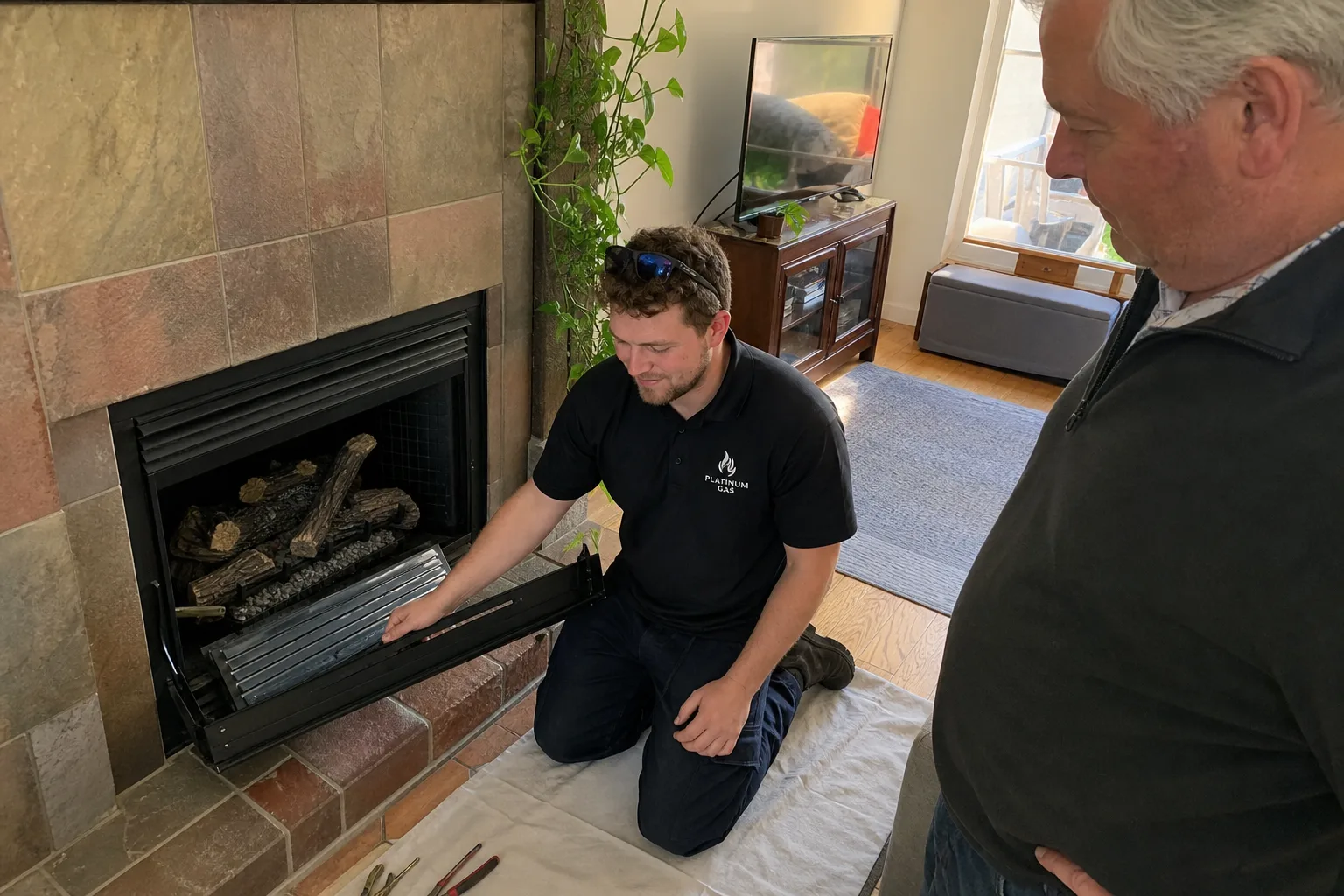
Notice soot, scorching and glass changes
New black deposits, scorching beyond the manufacturer-described pattern, a cracked glass assembly or persistent haze can indicate a condition that deserves service. Do not remove hot glass or operate a sealed fireplace with damaged, loose or missing glass. The glass is part of the listed appliance system, not a decorative screen.
Photograph exterior evidence after the appliance is off and cool, but do not clean it away before service if doing so requires opening the unit. Note whether media was recently moved or replaced. Incorrect log or media placement can affect flame contact, which is why placement must match the exact manual.
- Do not operate with cracked or improperly secured glass.
- Do not move logs or media to improve appearance.
- Preserve photos of soot or discolouration for service.
- Keep the surrounding area clear as the manual requires.
Need help with a problem?
Tell us what is happening
Note what you can see, hear or read from the normal controls. Do not remove panels, alter gas fittings or perform regulated tests yourself.
Listen for a change in ignition or burner sound
Clicking during an ignition sequence can be normal for some controls, while persistent clicking, rumbling, whistling, popping or a new vibration may indicate a problem. The context matters: when the sound starts, how long it continues, whether the flame changes and whether the appliance shuts down.
Do not remove panels or hold a phone close to hot or moving components to capture audio. A short description from normal viewing distance is enough. Service can then follow the manufacturer diagnostic sequence and determine whether the concern involves ignition, burner, fan, media, venting or another system.
Separate gas odour from other operating smells
Gas odour requires immediate evacuation and emergency calls from a safe distance. Do not stay to inspect the flame. Carbon monoxide has no smell, so a normal-smelling room does not overrule an alarm. A new or persistent burning, electrical, exhaust-like or unusual odour without a gas smell also deserves the appliance being turned off and assessed.
Some manuals describe limited curing or dust odours in particular circumstances, but that explanation must come from the exact model guidance and should not be used to dismiss a changing or persistent condition. When in doubt, stop operation and describe the odour without attempting to recreate it.
Record the flame change, code, sound and timing
Provide the make, model, serial if accessible, fuel, control setting, timing, displayed codes and recent work. Explain whether the change happens at ignition, only on high fire, after the blower starts or after extended operation. Mention soot, glass changes, alarms and odour first.
A technician can then use the current manual to inspect and test the fireplace, check the burner materials and glass, watch how it lights and runs, and check the gas supply or venting as needed for the service. The goal is not merely a prettier flame. It is a documented cause and a safe return to the manufacturer-approved pattern.
- Model, fuel and code.
- When the change begins and whether it repeats.
- Photos from a normal safe viewing position.
- Recent service, media or renovation changes.
Questions we hear
Frequently asked questions
No. Approved appearance varies by appliance, fuel, burner and media, and it may change during warm-up. Use the exact manual and a change from normal as context rather than one universal colour rule.
No. Log and media placement is model-specific and can affect combustion and flame contact. Leave the appliance off and have placement and the underlying cause checked.
It may relate to an ignition sequence or fault, depending on the model and timing. Record the displayed code and behaviour without opening the unit, then arrange service if it persists or the manual directs.
A photo can help describe the issue but cannot verify pressure, combustion, venting, ignition or component condition. A site assessment is needed for a reliable diagnosis.
References
Sources and further reading
Ask about your project
Tell us about the property and equipment
Send the service address, timing, appliance model and safe photos that show the work area.