
Pool Heating
Is Your Property Ready for a Gas Pool Heater? A Site Checklist
Check what your pool, gas supply and equipment area need before a new gas heater arrives.
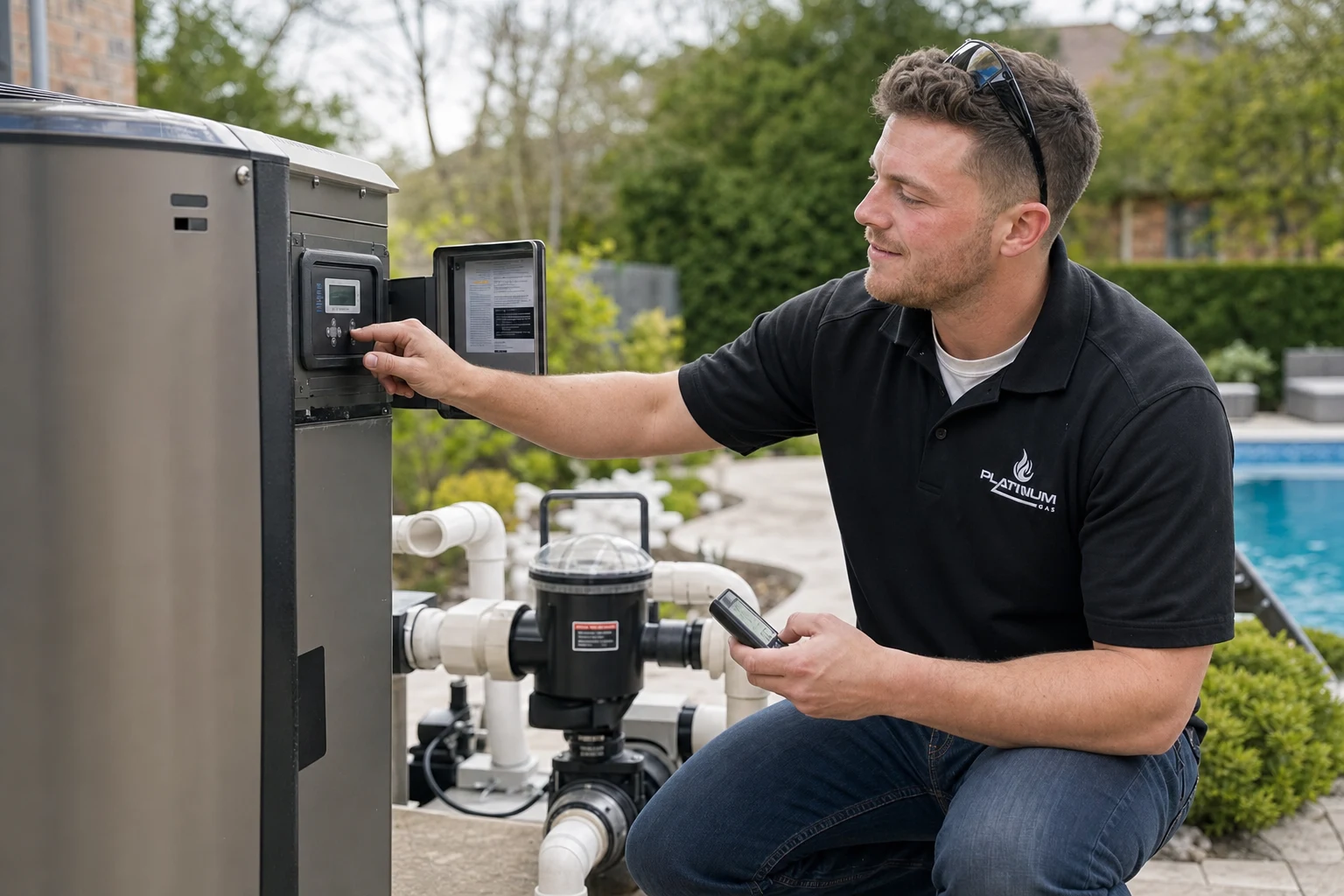
Safe checks
Start with what you can observe
Start with how you want to use the pool, the heater models you are considering and whether the property uses natural gas or propane. Your installers then check gas capacity, space and clearances around the heater, water flow, electrical connections, drainage and access for delivery and future service. Any digging and seasonal care also need to be planned. The qualified contractors confirm when everything is ready for the selected heater.
Checklist 1: pool, season and heat goal
Record pool surface dimensions, approximate volume if known, normal starting and target temperatures, desired recovery time, swimming season, wind exposure and cover use. Note whether the heater will support occasional weekend use, steady maintenance or a spa. These inputs help compare heater capacity and controls; gallons alone do not define the right equipment.
Identify the pool professional and current circulation equipment. Water flow, valves, automation, chemistry and bypass arrangements affect the project and remain within the relevant professional scope. Do not modify circulation to force heater operation.
- Pool dimensions, target conditions and use pattern recorded.
- Wind, cover use and intended season described.
- Pool equipment and responsible pool professional identified.
Checklist 2: gas supply for the heater and other appliances
Confirm whether the address has natural gas, propane or neither. List every existing fuel-burning appliance and known future project. Photograph the meter or propane context from a safe accessible location, but do not infer capacity from a label or visible pipe. A qualified gas technician evaluates the full connected system and selected heater input.
For propane, identify the supplier, storage arrangement, delivery access and other connected loads. Fuel versions are not interchangeable. Do not order equipment until the correct model and supply plan are confirmed.
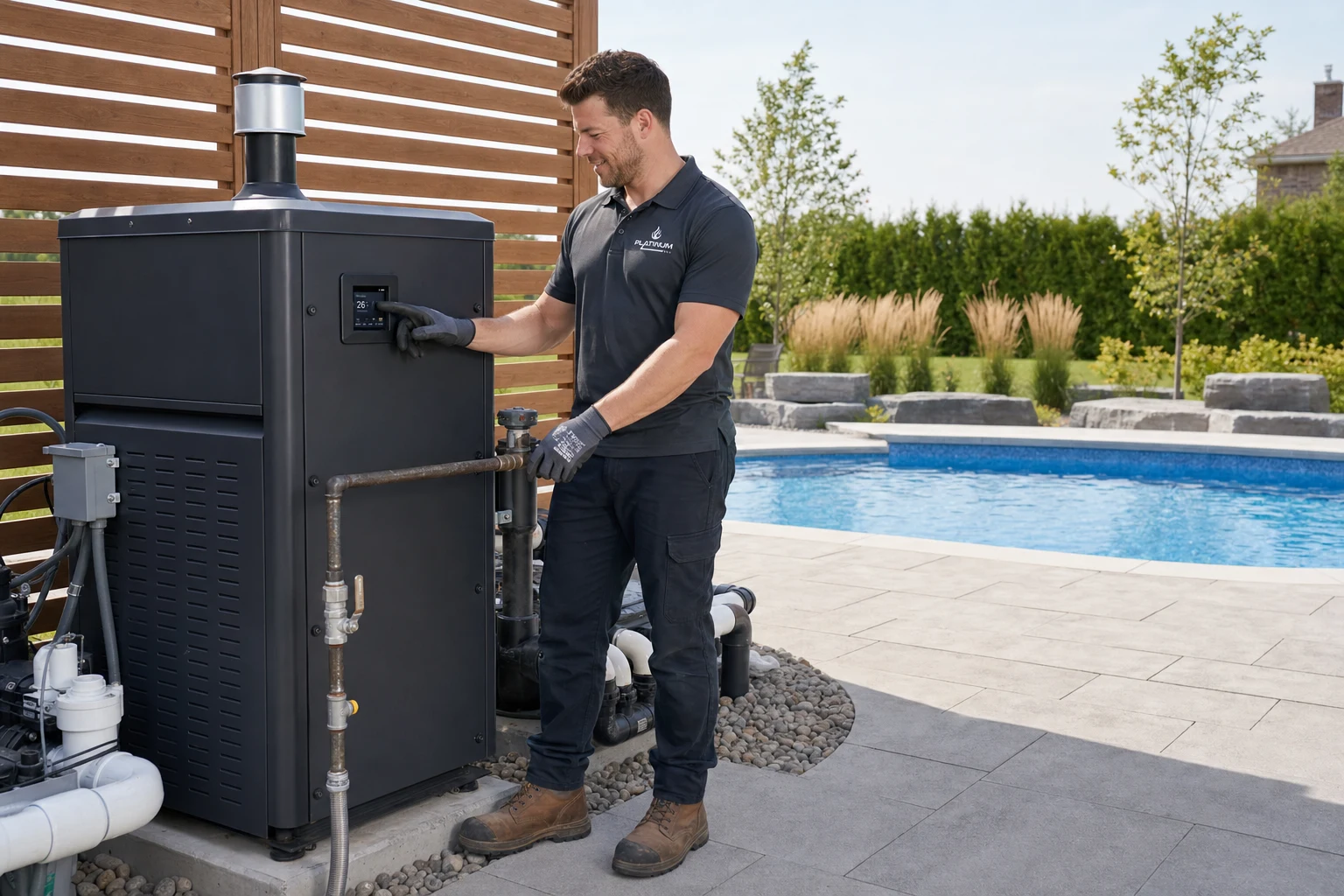
Checklist 3: pad, airflow and service access
Measure the available pad and photograph it with nearby walls, fences, windows, doors, roof lines, grade, vegetation and other equipment visible. The exact manual defines base, placement, clearances, airflow or venting conditions and service space. Roof runoff, irrigation and poor drainage can make an apparently open location unsuitable.
Trace the delivery route and future technician path. Gates, slopes, landscaping and tightly packed pumps matter. Controls, rating information and removable panels must remain accessible after installation and when ordinary pool equipment is being serviced.
Before you request installation
Tell us about your installation plans
Tell us what you'd like installed, where it will go and your ideal timing. Add a model or photo if you have one. Leave gas connections and venting to a qualified installer.
Checklist 4: water, electrical and controls
Confirm who will adapt the pool plumbing and validate circulation. Collect details for automation and remote control if the heater will integrate with a pool system. The exact heater may require household electrical supply and specified connection arrangements. An electrician and pool professional should coordinate their work with the gas installer.
Do not assume an existing receptacle, extension cord or old-heater connection is suitable. Record the panel and control locations for assessment without opening electrical equipment. Decide where the owner will operate the heater and how the system will be shut down normally.
Checklist 5: digging, timing and learning the controls
If a new route involves digging, arrange Ontario One Call and any private locates before excavation. Identify pool, irrigation, lighting, electrical, septic and private gas infrastructure. Coordinate route decisions before decking or landscaping is complete. Name who owns removal, delivery, gas, plumbing, electrical, pad work, restoration and startup.
For a Newcastle installation request, send the address, equipment photos, how you want to use the pool and the construction schedule. Before the job is finished, ask for the manual and model details, a demonstration of the controls and advice on normal operation. Agree who will winterize the heater and who to contact for service.
Also review the space around the pad as the yard will exist after the project. Future fencing, equipment screens, shrubs, storage bins and pool accessories can consume airflow and technician access that was available during construction. Mark a keep-clear service zone on the landscape plan and explain it to anyone completing later work. Confirm how roof snow, downspouts and irrigation behave in spring and fall, not only on a dry summer site visit. Readiness should remain true after the yard is furnished and planted.
Keep the quote, current manual, photos, gas and pool-work details, electrical and controller requirements, line-locate responses and contractor contacts together. Your installers still handle the technical design, but having one set of information helps everyone work from the same plan.
Before delivery, check with the installers that the ordered heater and accessories match the plan, the access route is clear and any preparation by other contractors is complete. Confirm that the pool system is ready for the work being done that day.
- Locates and excavation responsibilities identified.
- All trade scopes and dependencies written down.
- Exact equipment and current manual confirmed.
- Commissioning and owner handover included.
Questions we hear
Frequently asked questions
No. The technician must assess all connected loads, fuel conditions, route and the selected heater. A nearby pipe does not prove capacity or suitability.
No. The exact manual defines the base, placement, clearances, airflow, drainage and service conditions. Existing pads still need assessment.
Many modern gas pool heaters require electrical power for ignition, controls and operation. Requirements vary by model and should be coordinated with the appropriate trade.
Avoid committing until fuel, capacity, pad, circulation, electrical needs, controls and exact model compatibility are reviewed. A returnable shortlist is safer than an unverified purchase.
Ask about your project
Tell us about the property and equipment
Send the service address, timing, appliance model and safe photos that show the work area.