
Outdoor Living
Combining Fire and Water Features: A Backyard Coordination Guide
Plan a backyard with both fire and water, with the right space, drainage and connections for each feature.
Before you plan
Start with the appliance and site details
A successful fire-and-water feature begins with two approved systems and one coordinated site plan. Review splash and wind, drainage, separation of gas and electrical systems, pool or fountain chemistry, weather exposure, fuel route, controls, materials and independent service access before construction. Each appliance keeps its own manufacturer requirements. The water effect must not wet, flood or obstruct the gas feature, and the fire feature must not expose water-system materials or users to unapproved heat.
Step
Choose the fire and water equipment before the layout
Identify the exact fire appliance or approved burner system and the exact water feature. Collect both manuals, dimensions, utility needs, drainage, clearances and service zones. A rendering may integrate them visually, but each product retains its own technical boundaries. Avoid specifying a decorative bowl first and searching later for components that appear to fit inside it.
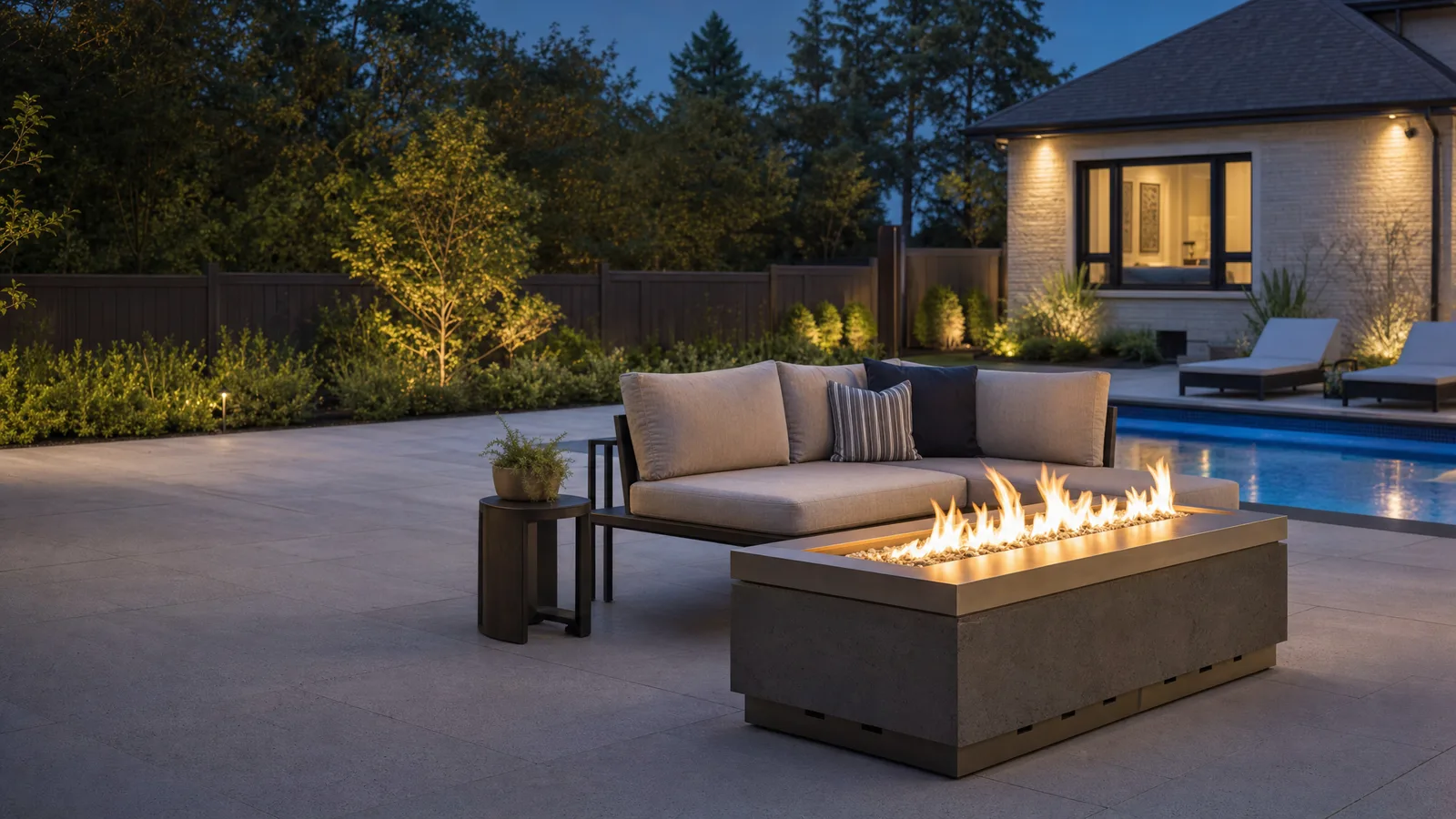
Decide the experience: paired fire bowls beside a pool, flame above a water wall, separate fire and fountain focal points, or another arrangement. Then test whether the concept still works when service panels, pumps, drains, valves, controls and weather protection are drawn at full size.
- Exact fire and water equipment with current documents.
- Independent utility, drainage and access requirements.
- Full-size composition including users and circulation.
- Named gas, electrical, water and construction responsibilities.
Step
Control splash, spray and wind together
Water does not stay within a perfect rendering. Wind can carry spray across burners, controls, ignition components, media and finishes. Observe prevailing wind and model different pump or fountain settings. Account for pool activity, cleaning and overflow. Keep the fire system within its approved exposure and preserve drainage so water cannot collect in the enclosure.
Wind also affects flame stability and comfort. A wall intended to shield one feature may redirect air or spray toward the other. Use only approved wind accessories and resolve the whole airflow pattern. After flooding, impact or visible water intrusion, keep the gas feature off until assessed.
Step
Coordinate gas, electrical and water routes
The gas contractor assesses fuel supply, appliance input, route, shutoff and controls. The electrician addresses pumps, lighting, ignition or automation in the wet outdoor environment. The pool or water-feature professional defines plumbing, filtration, drains and winter care. All routes should be overlaid before excavation and structure work begins.
Arrange Ontario One Call and any needed private locates before digging. Private gas, electrical, irrigation, pool and lighting services may need separate identification. Keep junctions, valves and controls accessible and prevent one system's maintenance from requiring disconnection or demolition of another.
Step
Select materials for heat, moisture and chemistry
Stone, concrete, metal, porcelain, waterproofing, sealants and adhesives can respond differently to heat, standing water, chlorine or salt, staining and freeze-thaw. Coordinate complete assemblies with both equipment manuals and material instructions. A finish described as outdoor-rated is not automatically suited to continuous splash or the heat zone around a burner.
Design caps, slopes, drains and ventilation openings so water leaves the structure. Avoid concealed cavities that collect moisture or debris. Keep decorative media specific to the approved fire product and water treatment specific to the water system; do not add substances across systems for appearance.
What to include with your request
What would you like to install, fix or improve?
Tell us what you need and where the job is. Add the appliance model, fuel type and a photo if you have them.
Step
Test and care for the fire and water features separately
Commission the fire feature under its manufacturer instructions and regulated gas requirements. Start, balance and test the water feature through its responsible trade. Then observe both operating together for splash, drainage, airflow and control conflicts. The owner should receive separate manuals, model and serial records, warranty information and seasonal care responsibilities.
For a Courtice project, share the address, site plan, concept and construction schedule early. Identify who leads coordination and holds the pre-close review. Future service access should allow the gas feature, pump, drains and electrical components to be reached without dismantling the entire architectural piece.
Before the job is finished, make a simple care list showing who looks after the burner, gas and electrical controls, pump, water treatment, drains, finishes and winter preparation. Ask whether either feature can be used while the other is off; follow the exact equipment instructions. After heavy rain and before freezing weather, look for visible drainage or finish problems without opening the equipment. Leave leaks, electrical concerns, unusual flames, odours and faults to the appropriate professional.
Keep controls understandable for guests and maintenance personnel without inviting casual operation. Labels should follow the equipment and trade documentation, while emergency contacts and normal shutdown information remain available to the owner. Do not create a single homemade master switch unless the approved systems and responsible trades specifically support that control strategy.
- Separate commissioning and handover records.
- Joint observation under normal wind and water settings.
- Clear shutdown and seasonal responsibilities.
- Independent service routes preserved.
Questions we hear
Frequently asked questions
Only if a complete approved system and its instructions explicitly support that configuration. Do not combine separate components because they fit a visual concept.
Many water pumps, lighting, ignition and controls involve electrical work. The exact equipment and site determine scope, which should be handled by the appropriate trade.
Plan to prevent repeated splash and water accumulation. Follow the exact fire product's exposure and drainage requirements, and stop use after flooding or visible water intrusion until assessed.
Name one project lead, but preserve clear responsibility among the gas contractor, electrician, pool or water professional and construction trades. All should use one current plan.
References
Sources and further reading
Ask about your project
Tell us about the property and equipment
Send the service address, timing, appliance model and safe photos that show the work area.