
Gas Safety and Planning
Fireplace Contractor Checklist: 12 Questions Before You Hire
Know what to ask about qualifications, the installation quote and care after the job, before you hire a fireplace contractor.
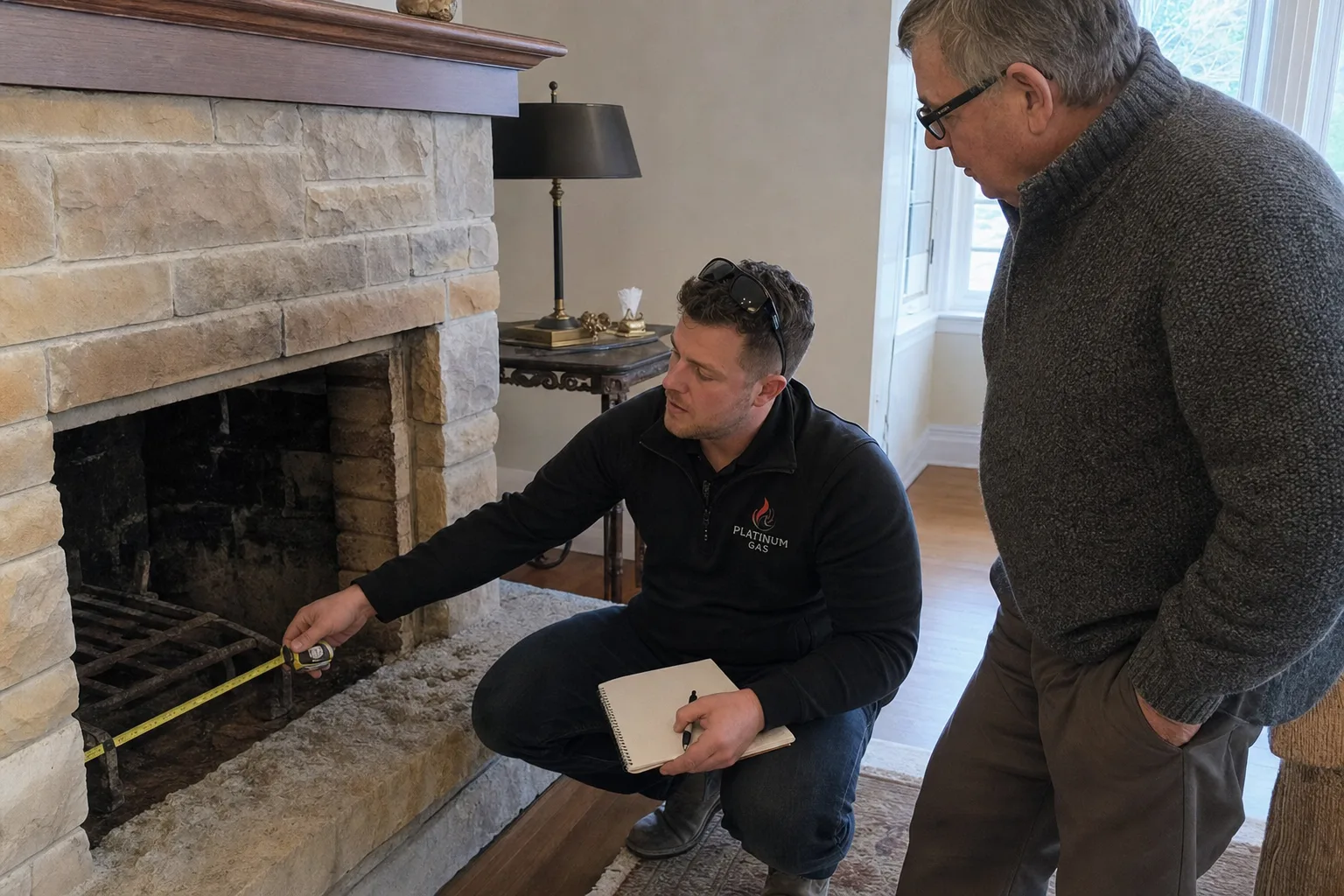
Safe checks
Start with what you can observe
Before hiring a fireplace contractor, check that the business is registered for fuels work and the technician is certified for the work involved. Ask who chooses and supplies the fireplace, and who handles the gas, venting, wiring, framing, finishes, approvals, testing and final walkthrough. Get a written quote that follows the selected fireplace manual and explains what is included, insurance, how changes are approved and who handles warranty questions. Compare those details rather than relying on a general “certified” claim or the lowest appliance-only price.
Questions 1–3: qualifications and insurance
1. What is the registered fuels-contractor business name? Check the business through TSSA's public resources and confirm that the name on the quote matches. Use the step-by-step guide to verify an Ontario fuels contractor and technician without treating registration as an endorsement. 2. Who will perform the regulated work, and what certificate scope applies? Business registration and an individual's certificate are not the same. The contractor should be able to explain who is responsible without turning the answer into vague marketing.
3. What insurance applies to this project? Ask for current proof of insurance suited to the work and your property. If subcontractors are involved, ask who hires them and who is responsible for their work. Get clear names and responsibilities rather than relying on a promise that one person “handles everything”.
- Verify the contracting business, not just a logo or first name.
- Ask which individual certificate scope covers the planned work.
- Confirm insurance and subcontractor responsibility in writing.
Questions 4–6: checking your home and choosing a fireplace
4. What needs to be assessed before the appliance is ordered? The answer should cover room use, fuel supply, gas capacity, vent route, openings, exterior conditions, electrical needs, clearances, finish design and service access. 5. Is the exact appliance approved for Canada and this application? Ask for the current model and fuel version, not a catalogue family name.
6. Which installation manual and specification revision will govern? The contractor should work from the documents for the supplied unit and make them available to coordinating trades. Be cautious if key dimensions come only from memory, a retail listing or a different model's drawing. Model substitutions should trigger another compatibility review.
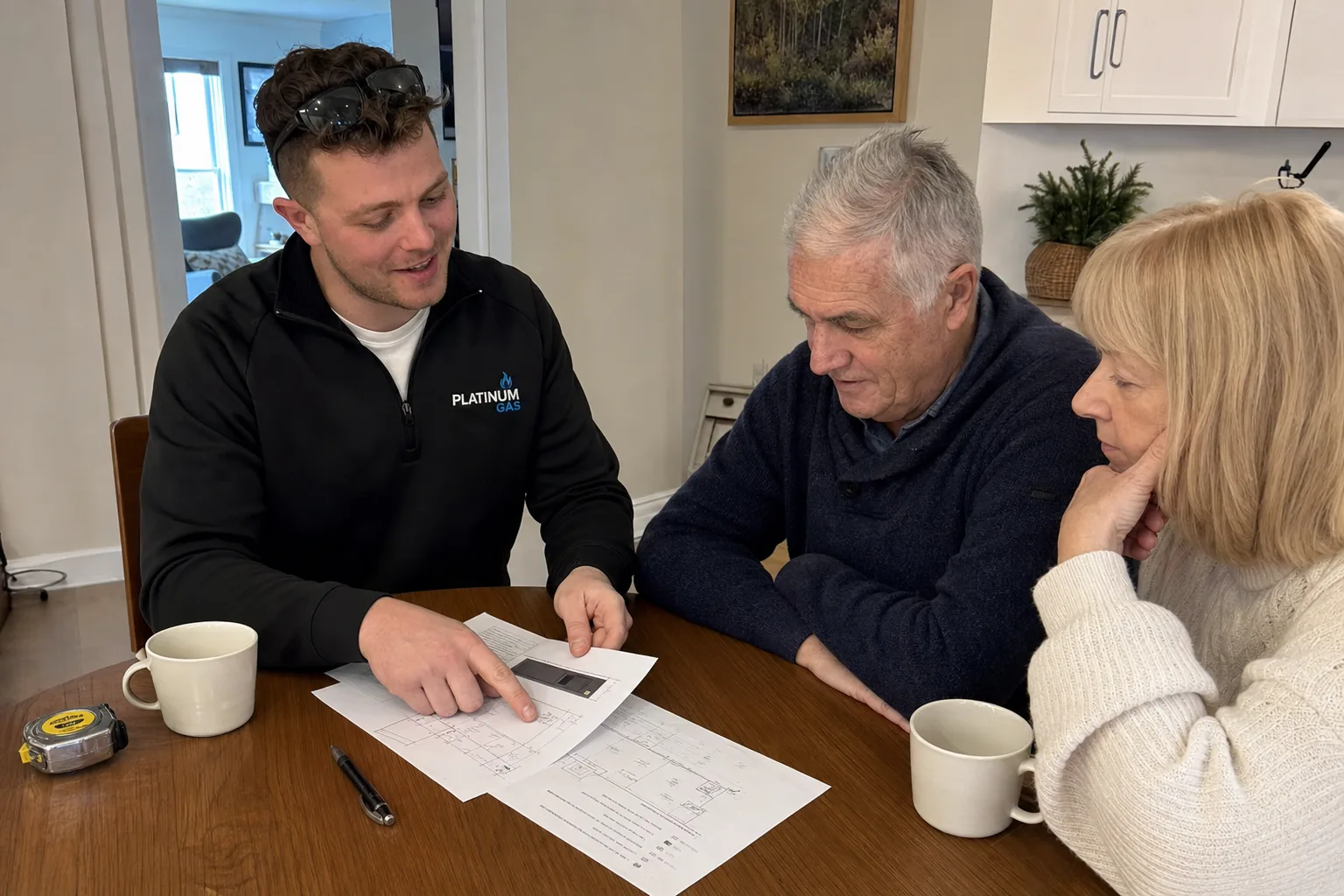
Questions 7–8: what is included and who does the work
7. What is included and excluded? The written scope should address removal, appliance and accessories, fuel work, venting or liners, electrical work, framing, noncombustible materials, finish restoration, exterior work, permits or inspections where applicable, commissioning and cleanup. Clarify tax, delivery and disposal. Avoid comparing one full installation quote with another that covers only appliance and gas connection.
8. Who coordinates each trade and the construction sequence? Fireplace projects can involve gas, electrical, framing, masonry, cabinetry and finish work. Identify who supplies drawings, who approves the opening before it closes, and how conflicts are resolved. One current plan should be shared by everyone.
Before you choose a contractor
Know who you are hiring and what is included
Check the business registration, technician qualifications and insurance. Ask for a written quote that explains the work, what costs extra, and how the finished installation will be tested and shown to you.
Questions 9–10: changes and testing before use
9. How are concealed conditions and changes handled? Existing chimneys, fireplace cavities and finished walls can reveal problems. Ask how the contractor documents the condition, explains options and obtains approval before extra work. An estimate should distinguish confirmed work from allowances or assumptions.
10. How will the fireplace be tested before I use it? The work should include required system testing and startup according to the manufacturer, not just showing that the flame lights. Ask what test records you will receive and how any startup problem will be handled. Repeated resets, bypassed safety controls, unusual soot or odours should not be dismissed as normal for a new installation.
Questions 11–12: learning the controls, warranty and service
11. What will you show me before the job is finished? Ask for the manual, model and serial information, a demonstration of the controls, warranty details, maintenance advice and a list of any work still to be done. Learn what you can check yourself and which warning signs mean you should stop using the fireplace and get help.
12. Who supports future service and warranty questions? Manufacturer, retailer, installer and finish trades can have different responsibilities. Ask who is the first call, what documentation must be retained and how access will be preserved. Across the Platinum Gas service-area hub, address and project scope still determine availability; verify the contractor for the actual property and work rather than assuming a directory listing guarantees scheduling.
Compare the answers before accepting a quote. Look for the right model instructions, clear responsibilities and an understandable order of work. A contractor who explains that an electrician or another check is needed is helping you plan the whole job. Keep emails, drawings, product choices and approved changes with the contract so you and any future service technician can see what was installed.
- Written handover package and owner orientation.
- Warranty roles, service contact and proof-of-purchase requirements.
- Future access to rating plate, controls, glass, fan and vent components.
- Clear response path for defects, odour or abnormal operation.
Questions we hear
Frequently asked questions
They describe two different concepts. TSSA registers fuels-contracting businesses and certifies individual technicians. Verify the business registration and ask which technician certificate scope applies to the work.
The exact current documents should be available early enough to coordinate venting, framing, clearances, electrical work, finishes and access. Retain the final manual at handover.
Not necessarily. Normalize included equipment, gas and vent work, electrical and construction scope, approvals, commissioning, cleanup, warranty and exclusions before comparing.
No. Reviews can describe customer experience but do not prove current business registration, technician scope, insurance, exact product competence or the completeness of your project quote.
References
Sources and further reading
Ask about your project
Tell us about the property and equipment
Send the service address, timing, appliance model and safe photos that show the work area.