Fireplace Guides
Which Gas Fireplace Features Work During a Power Outage?
The phrase "works without electricity" is too broad. Flame, ignition, controls, fan and accent features can have different power needs in the same fireplace.
Before you compare
Start with the property and equipment
Some gas fireplaces can operate the flame during a household power outage through a standing-pilot system or a manufacturer-designed battery backup for electronic ignition. Others require line power. Even when flame operation remains available, the blower, lights, remote display, thermostat or enhanced controls may not work. Verify each function in the exact current manual and test owner procedures only under normal, safe conditions before an outage.
Separate flame operation from powered features
A fireplace can contain an ignition system, gas valve, receiver, remote, thermostat logic, fan, accent lighting and optional heat-management controls. The fact that gas reaches the home does not power those components. Ask which exact functions need household current and which have an approved backup.
A salesperson saying the fireplace "works in a blackout" may mean only that a flame can be established. It may not mean normal fan output, remote communication or lighting. Put each desired function on a checklist and verify it in the manual.
- Ignition and gas-valve control.
- Wall switch, receiver and remote.
- Blower and heat-distribution components.
- Accent lighting and auxiliary controls.
Standing pilot and electronic ignition differ
A standing-pilot design maintains a pilot flame during normal operation and may support millivolt controls without line power, subject to the exact system. Electronic ignition systems light on demand and often use household power, though some include a specified battery-backup arrangement.
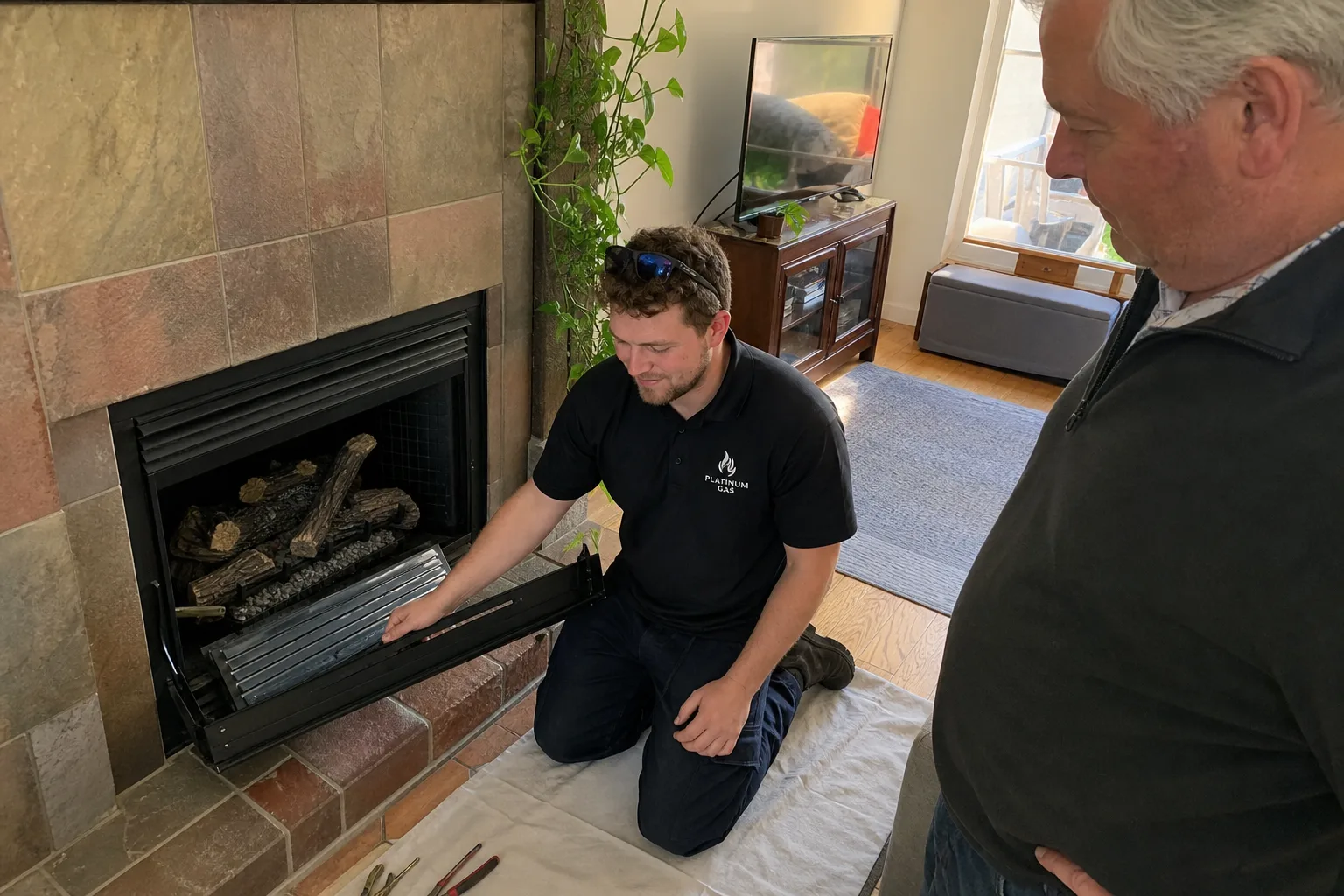
Do not infer the system from the fireplace age or visible switch. Identify the model and read the owner and installation manuals. Some backup compartments are owner accessible; others are service components. Follow battery type, polarity, storage and removal instructions exactly.
The fan may not run during an outage
Even when a flame operates, a line-powered blower may stop. Natural convection can still deliver some heat for appliances designed to operate that way, but distribution and room response can differ from normal operation. Do not block grilles or add an unapproved fan to compensate.
Heat-sensitive finishes and television clearances remain unchanged during an outage. A silent blower should not be treated as a reason to run the flame higher or longer than normal. Follow the exact model instructions and keep the surrounding area clear.
- Expect different heat circulation without a fan.
- Do not add portable fans against the appliance.
- Keep vents and convection openings unobstructed.
- Respect normal operating and clearance limits.
Before you choose equipment
Find the right fit for your home
Tell us which models you like and where you want the appliance. We can help check the fuel supply, venting, space and access before you buy.
Controls and thermostats may be limited
Remote receivers, displays and thermostatic logic vary by product. A battery-backed ignition may support basic on and off while modulation, schedules or smart-home integration remain unavailable. Some systems require a particular switch position before power is lost.
Review outage instructions while power is available and store the manual and approved batteries where adults can access them. Do not experiment during a storm. After power returns, follow manufacturer guidance for restoring normal control and remove temporary backup batteries if directed.
Battery backup is model-specific
Use only the battery type, holder and connection supplied or specified by the manufacturer. Do not splice leads, substitute a power bank or connect a generator directly to fireplace electronics. Leaking or depleted batteries can damage controls and should be handled according to the manual.
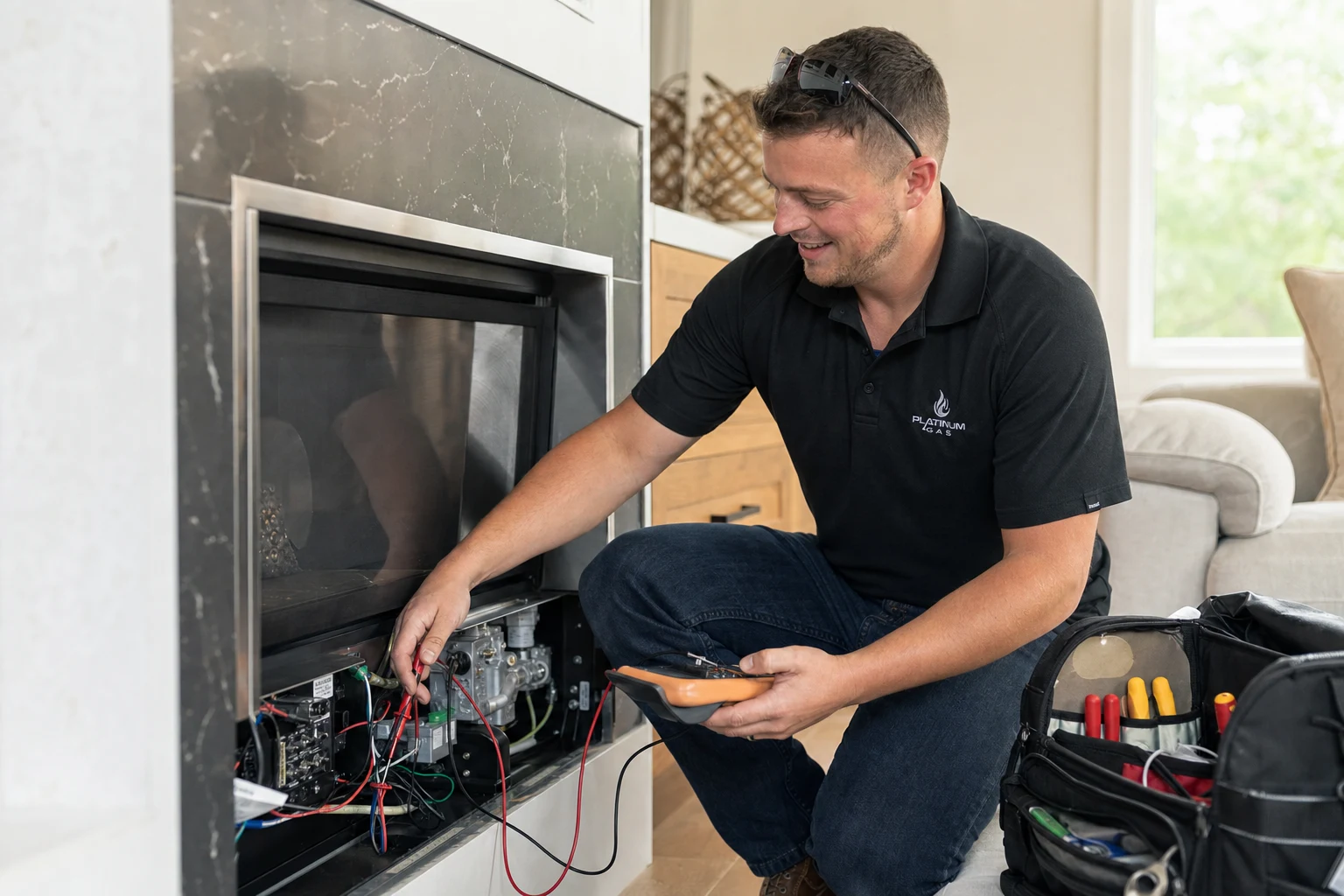
Check batteries on the maintenance schedule without waiting for an outage, but never enter a service compartment the owner documentation does not authorize. Record replacement dates. If the backup fails to follow the expected sequence, arrange service instead of repeatedly cycling the appliance.
- Exact specified battery chemistry and count.
- Approved holder and accessible location.
- Replacement and removal schedule.
- No improvised external power.
Build a broader outage plan
Confirm smoke and carbon-monoxide alarms have functioning backup power. Keep safe lighting, communication and evacuation supplies available. A fireplace should not be the only plan for vulnerable occupants, frozen plumbing or an extended winter outage unless a qualified household heating strategy supports that use.
Before buying, ask for written answers about flame, fan, controls and backup for the exact model. After installation, ask for a walkthrough and practise only the normal-use steps allowed in the manual. That turns outage capability into a verified feature rather than an assumption.
What to ask at the walkthrough
Ask the installer to demonstrate normal ignition, shutdown and control behaviour while household power is available. Identify any approved battery compartment, battery type, switch position and indicator sequence without opening areas reserved for service. Confirm whether backup is automatic or requires an owner action described in the manual.
Write down what will not work: blower, lights, thermostat, remote or heat-management accessories. Ask how the fireplace should be returned to normal after power restoration and when service is required. Household members should understand that unusual odour, delayed ignition, damaged glass or an alarm overrides the outage procedure and requires the appliance to remain off.
Questions we hear
Frequently asked questions
No. Ignition and controls vary. Some use standing pilots, some have approved battery backup and some require line power. Check the exact manual.
Often not, unless the exact model and approved backup arrangement specifically support it. Flame operation and fan operation should be verified separately.
Only when the manufacturer documentation and an appropriate electrical assessment approve the connection. Do not improvise power to fireplace controls.
Not automatically. Its approval, output, outage functions and intended use are model-specific. Maintain a broader household emergency plan.
References
Sources and further reading
Ask about your project
Tell us about the property and equipment
Send the service address, timing, appliance model and safe photos that show the work area.