
Fireplace Guides
Gas Fireplace Insert Features Compared: Blowers, Remotes, Logs and Liners
Compare the warmth, fan, remote and flame style you want, starting with an insert that fits your fireplace and venting.
Before you compare
Start with the property and equipment
Compare gas fireplace insert features in this order: verified fit in the existing fireplace, approved vent or liner system, fuel version and heat-output range first; then blower behaviour, remote or thermostat controls, ignition and power needs, log or media style, surround dimensions, lighting and service access. A premium feature package cannot correct an unsuitable opening or liner route. Use current Canadian specifications and the exact installation manual, not a generic best-insert list.
Before you choose
Check these details against the property
| Compare | What to assess |
|---|---|
| Fit and venting | Opening classification and dimensions, hearth, approved liner route, connections and service access come before accessories. |
| Comfort and controls | Compare heat range, low-fire behaviour, blower sound and access, remote functions, power needs and thermostat behaviour for the room. |
| View and future care | Compare approved logs or media, glass care, fronts and surrounds while preserving controls, labels and removable service components. |
Check the fireplace opening and venting first
An insert reuses an appropriate existing fireplace opening; it does not fit every masonry cavity or factory-built fireplace. The front and rear dimensions, depth, hearth, opening shape, original fireplace classification, chimney route and surround coverage all matter. Homeowner measurements can screen options, but the technician verifies them against the current manual and checks whether connections and service points remain accessible.
The chimney is a route, not an automatic gas vent. Natural Resources Canada explains that an existing chimney used for a gas insert needs an approved vent arrangement. The exact model defines liner components, intake and exhaust configuration, termination and route limits. Compare only inserts compatible with the assessed opening and vent path before spending time on logs, lighting or remote options.
- Opening dimensions, original fireplace type and hearth conditions.
- Approved liner route, termination and exact model compatibility.
- Fuel version, electrical needs and connection access.
- Surround coverage without concealing damage or service points.
How a blower fan helps spread the warmth
A blower can help move warm air into the room, but its presence does not define the insert's overall heating fit. Ask whether it is standard or optional, how speed is controlled, when it starts and stops, what normal sound is like and how it is accessed for service. In a quiet sitting room, low-speed sound may matter more than maximum airflow. In an open area, the ability to circulate heat may be valued more.
Compare the appliance's heat-output range and fireplace efficiency information alongside the blower. Ceiling height, insulation, windows, connected rooms and other heating influence comfort. Avoid choosing a high-input model for a small room merely because it has a larger viewing area. Low-fire operation and control range can be as important as maximum output.
Remotes and thermostats change everyday operation
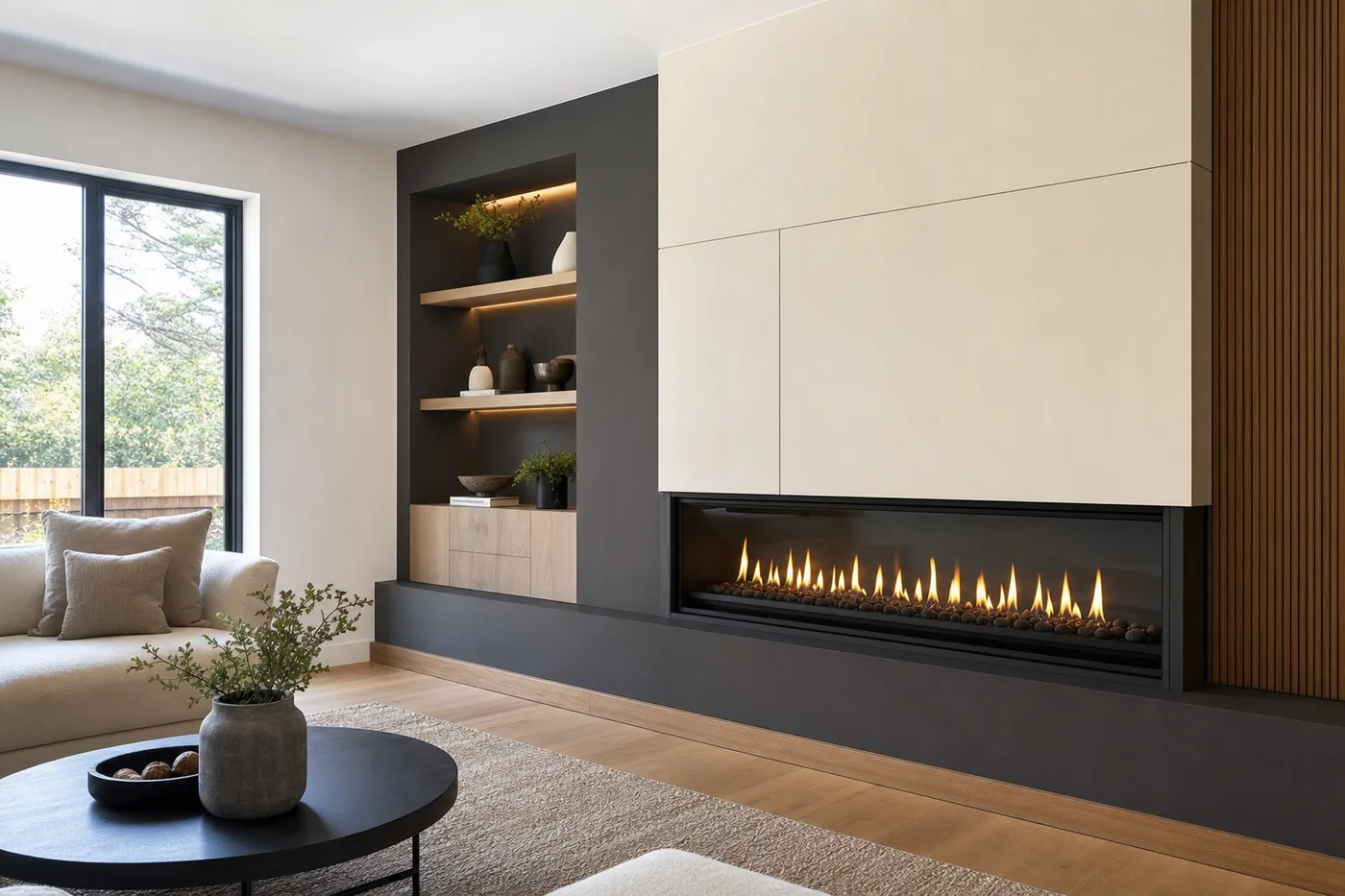
Controls can range from simple on-off operation to flame adjustment, thermostat modes, fan control and lighting. Compare only functions documented for the exact insert and control package. Ask what requires household power, what uses batteries, how the receiver is accessed and which features remain available during an outage. Do not assume that two remotes from the same brand are interchangeable.
Thermostat behaviour deserves discussion. A fireplace can respond differently in an open-concept room than in a compact den, and the remote's sensing location can affect comfort. Learn the normal owner controls at handover, retain pairing instructions and avoid moving internal modules or bypassing a control because a battery change did not resolve a fault.
Before you choose equipment
Find the right fit for your home
Tell us which models you like and where you want the appliance. We can help check the fuel supply, venting, space and access before you buy.
Logs, glass and media shape the view and maintenance
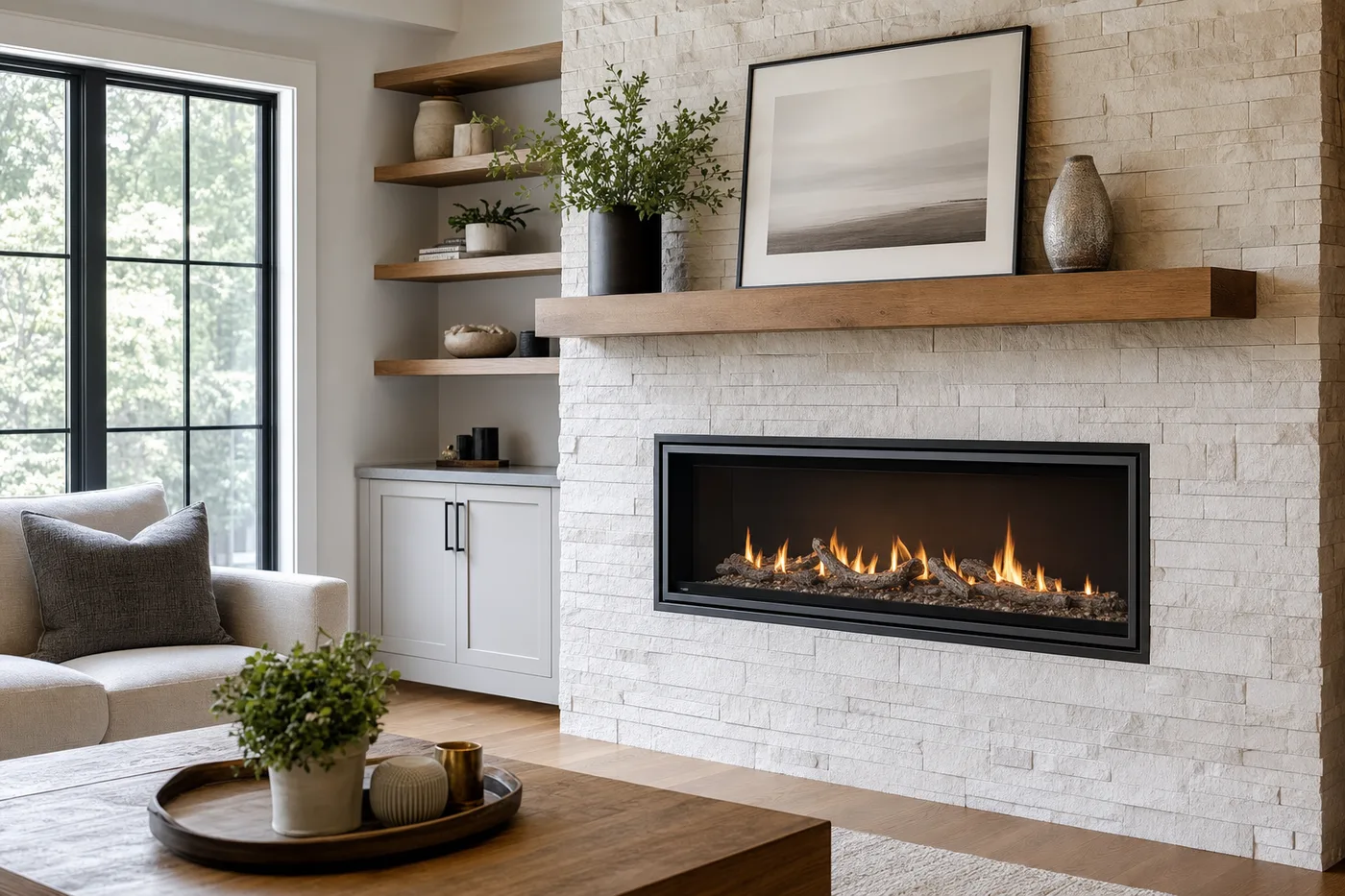
Traditional log sets, contemporary glass or stone-style media, liners and interior panels can change flame presentation and the perceived depth of the firebox. Use only media approved for the exact model and arrange it as the manual directs. Adding extra material, substituting decorative stone or changing log placement can affect flame and combustion. Compare the complete display in operation rather than selecting from an unlit sample.
Ask how glass is removed, which cleaner the manufacturer permits, and what the owner may safely maintain. Some coatings and media need specific care. A design with more lighting or reflective surfaces may show dust differently. Keep the barrier, glass and gaskets in their approved configuration and book service for damage, soot or a changed flame pattern.
Choose a surround that leaves room for service
The surround bridges the insert and existing opening, so compare actual face dimensions, trim depth, finish and coverage. A larger plate can hide a rough edge but should not conceal deterioration or prevent service. Coordinate mantels, televisions and heat-sensitive finishes using the exact insert manual. The finished composition should preserve the rating plate, controls, shutoff and the removal path for glass, fan and serviceable components.
For a Whitby assessment, provide straight-on and angled opening photos with rough dimensions, plus the full room, hearth, mantel, chimney exterior and utility areas. Ask to compare two or three compatible models using the same feature checklist. Availability and options change, so confirm the current Canadian documentation before ordering.
- Verified fit and liner system.
- Heat range, blower sound and control behaviour.
- Approved media, front and surround composition.
- Cleaning, glass removal and future service access.
Questions we hear
Frequently asked questions
No. Blower availability and whether it is standard or optional vary by model. Compare the current Canadian specification, control options, sound and service access for the exact insert.
No. Use only media approved for the exact model and arrange it according to the manufacturer instructions. Unapproved or misplaced media can affect operation and create damage.
Outage behaviour varies by ignition and control system. Ask what uses household power or batteries and which functions the manufacturer says remain available. Do not assume all features continue.
A surround can cover the visual gap at the face, but it cannot make an incompatible firebox, chimney route, fuel system or clearance condition acceptable. Fit begins behind the trim.
References
Sources and further reading
Ask about your project
Tell us about the property and equipment
Send the service address, timing, appliance model and safe photos that show the work area.