
Fireplace Guides
How to Compare Gas Fireplace Inserts Without Relying on 'Best' Lists
The right gas insert fits your existing fireplace, chimney and the way you use the room. Compare those needs before choosing a model.
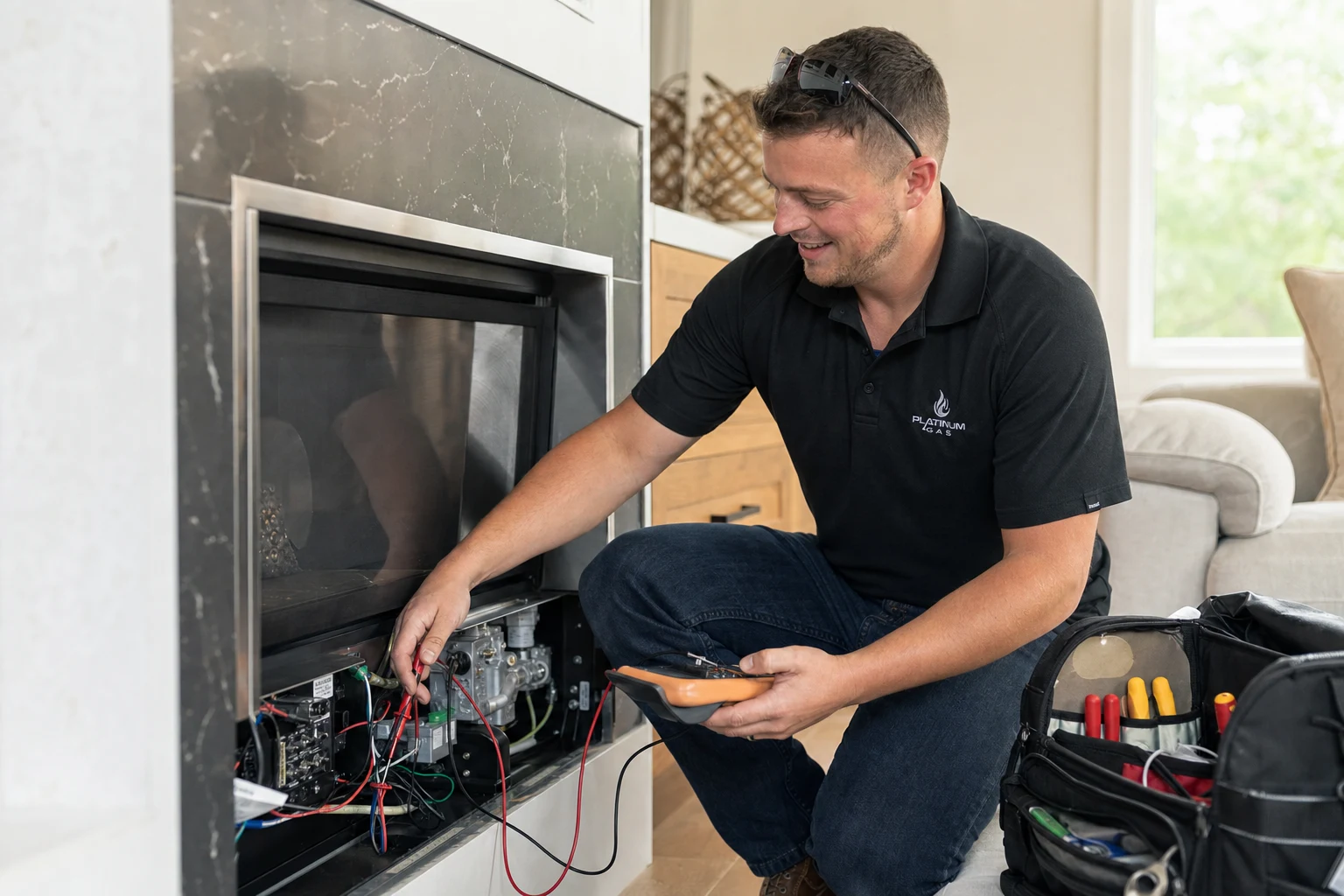
Before you compare
Start with the property and equipment
The best gas fireplace insert is the one approved for the existing fireplace, fuel and liner arrangement while meeting the room’s heat, control, appearance and service needs. Compare exact models using the current Canadian manual: minimum opening dimensions, vent and liner requirements, heat-output range, efficiency information, electrical needs, fan and control behaviour, surround coverage, access, warranty and local service support. Do not buy from a ranking before the opening and chimney path are assessed.
First, check whether an insert will fit
An insert is designed for an appropriate existing fireplace, commonly with an approved liner arrangement through the chimney. A decorative recess, former appliance cavity or framed niche is not automatically suitable. The original fireplace type, condition and labels matter. Water damage, previous modifications, an obstructed chimney, a shallow or irregular firebox, hearth conditions and access at the top can change model compatibility or rule out the approach.
Record the opening at several widths, heights and depths because masonry is not always square, but treat homeowner measurements as screening information only. Faceplate and surround dimensions need room to cover the opening without hiding a problem or conflicting with adjacent trim. The assessor also needs the hearth, full wall, chimney exterior and accessible utility route. A model that fits the front dimension can still fail on rear depth, liner path or service access.
- Original fireplace type, condition and available labels.
- Opening width, height and depth at more than one point.
- Chimney path, top access and evidence of water entry.
- Hearth, adjacent trim and desired surround coverage.
- Fuel, electrical access, heat goal and room use.
Compare physical fit and finished fit separately
Physical fit asks whether the appliance, connections, liner components and required access can occupy the opening exactly as the manual permits. Finished fit asks whether the viewing area, faceplate, backing plate and surround look intentional with the hearth and room. A small unit may technically enter a broad opening yet require a surround that overwhelms the flame. A larger viewing area may create heat or depth requirements the site cannot support.
Ask for the dimensional drawing and approved surround options for each shortlisted model. Note projections, control access and how the door or glass is removed. If custom finishing is planned, coordinate it with the installer before fabrication. The finished assembly must retain access to the rating plate, controls, shutoff and serviceable components rather than using millwork or stone to conceal them permanently.
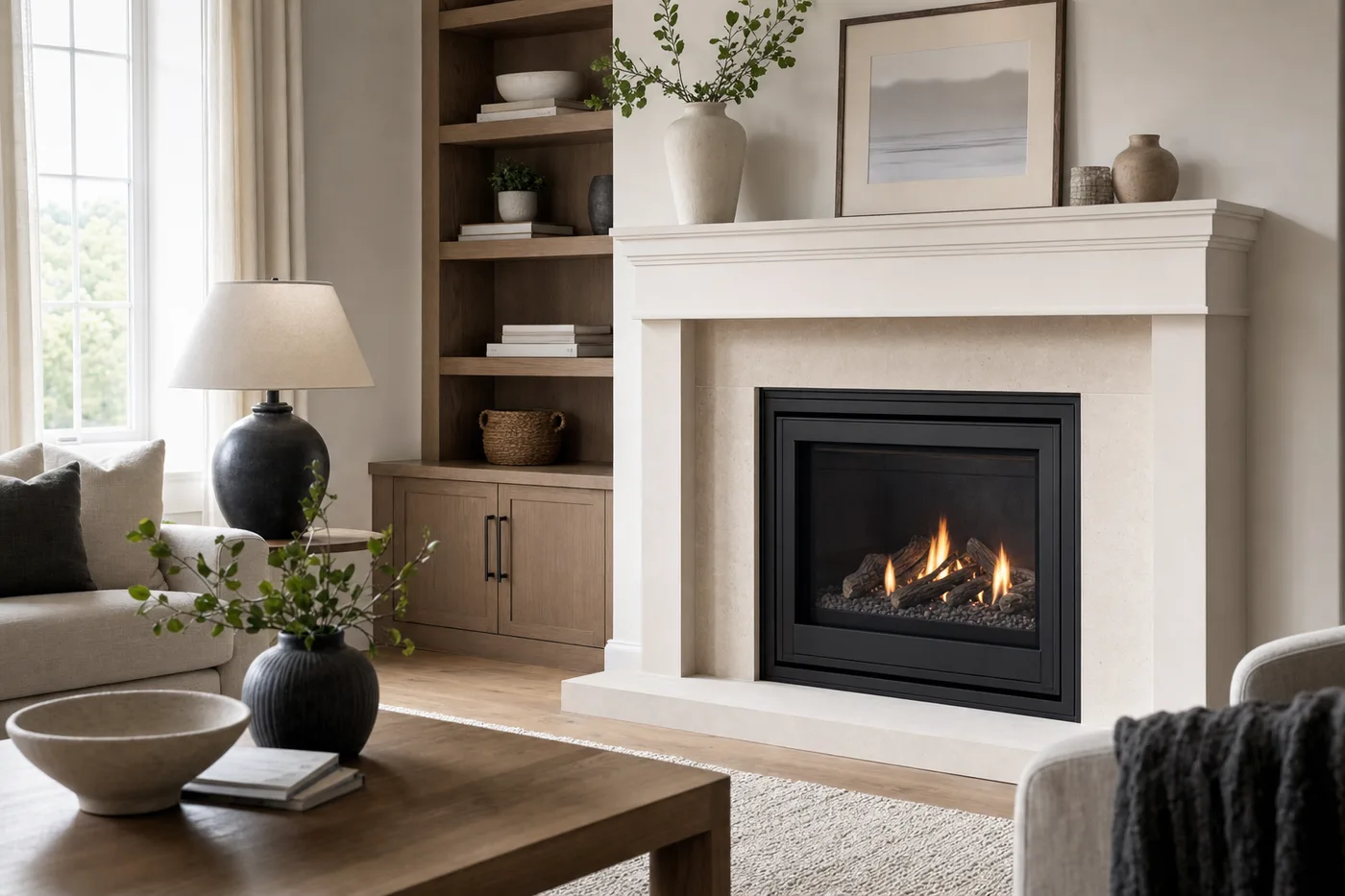
Compare heat output with what the room needs
Maximum input is not a complete statement of room comfort. Compare the manufacturer’s reported heat-output range, fireplace efficiency information, turn-down behaviour, fan options and control strategy for the exact fuel version. A smaller, enclosed room can benefit from a useful low-fire setting; a larger connected space may place more weight on output and air movement. Insulation, glazing, ceiling height and other heating influence the result.
Decide whether the insert is expected to provide ambience, supplemental room heat or both. Ask how the fan sounds and behaves at different settings, how the remote or thermostat function operates, and what remains available during a power outage for that model. Avoid claims that one insert “heats up to” a fixed area without explaining the assumptions. Site and household use are more informative than a marketing square-foot number.
Before you choose equipment
Find the right fit for your home
Tell us which models you like and where you want the appliance. We can help check the fuel supply, venting, space and access before you buy.
Review the liner, fuel and electrical plan
Direct-vent inserts commonly use separate approved paths for combustion air and exhaust within the existing chimney, but the exact arrangement, components and limits are model-specific. Chimney height, offsets, termination, cold exposure and access affect feasibility. Do not assume an old liner can remain or that a chimney makes venting automatic. The technician must plan from the current manual and actual route.
The property’s gas capacity and line route also require assessment. A fireplace opening may be far from an accessible fuel path, particularly when finished basements or masonry limit access. Fans, lighting and advanced controls may need electrical power. Clarify who provides any receptacle or circuit and when that work occurs. Fuel, venting and power should be resolved before the insert and surround are ordered.
Read warranty and service information like an owner
Warranty headlines matter less than the written terms for the exact appliance and components. Check registration requirements, labour coverage, exclusions, approved installation and maintenance conditions, and the process for obtaining parts. Confirm whether qualified local service is available and whether routine access remains open after finishing. A feature-rich insert is less attractive if a common service task requires dismantling the surrounding room.
Retain the manual, purchase record, model, serial number and installer documentation. Ask which glass, gasket, media, remote, fan and ignition components are unique to the model. Do not treat accessories from a related product as interchangeable. Current manufacturer support pages and manual libraries are more reliable than a review article written around an older product revision.
Compare a few models that fit your home
Build a one-page comparison for two or three compatible models. Record opening fit, view size, heat range, efficiency information, liner arrangement, fuel version, controls, fan, electrical requirements, surround options, service access, warranty and what the installation quote includes. Mark any item that still needs site verification. This makes the actual trade-offs visible across the shortlist.
For a Port Hope masonry fireplace, opening and chimney condition may lead the decision. In a Whitby family room, low-fire comfort and fan behaviour may matter more. Platinum Gas can help narrow a shortlist after the existing fireplace and project goal are reviewed. The final quote should name the model and explain all the installation work, not simply promise a “premium insert.”
Questions we hear
Frequently asked questions
No. An insert is a self-contained appliance with its own firebox, glass, controls and approved vent or liner arrangement. Product formats and installation requirements should not be treated as interchangeable.
Measurements are only a first screen. Original fireplace suitability, chimney and liner path, fuel, electrical needs, surround coverage, clearances and service access require assessment before ordering.
There is no universal best brand. Compare compatible exact models, current manuals, local service support, heat and control needs, warranty terms and all the installation work.
No. Condition, geometry, chimney route, hearth, prior changes and the model manual determine suitability. Some openings need repair or a different fireplace solution.
References
Sources and further reading
Ask about your project
Tell us about the property and equipment
Send the service address, timing, appliance model and safe photos that show the work area.