
Fireplace Guides
Can a Gas Fireplace Insert Heat a Room? Sizing and Heat Distribution
A gas insert can make a room warmer. The model, room size, insulation and layout all affect how much warmth you will feel.
Before you plan
Start with the appliance and site details
Yes, a properly selected gas fireplace insert can provide useful supplemental heat to the room where it is installed. Results depend on the exact model’s output range and fireplace efficiency information, room volume, insulation, windows, connected spaces, existing heating, climate, blower and control behaviour. The insert must also fit the existing fireplace and approved liner route. Compare low-fire comfort and heat distribution, not just maximum input or a marketing room-size label.
Step
Do you want the look of a fire, extra heat or both?
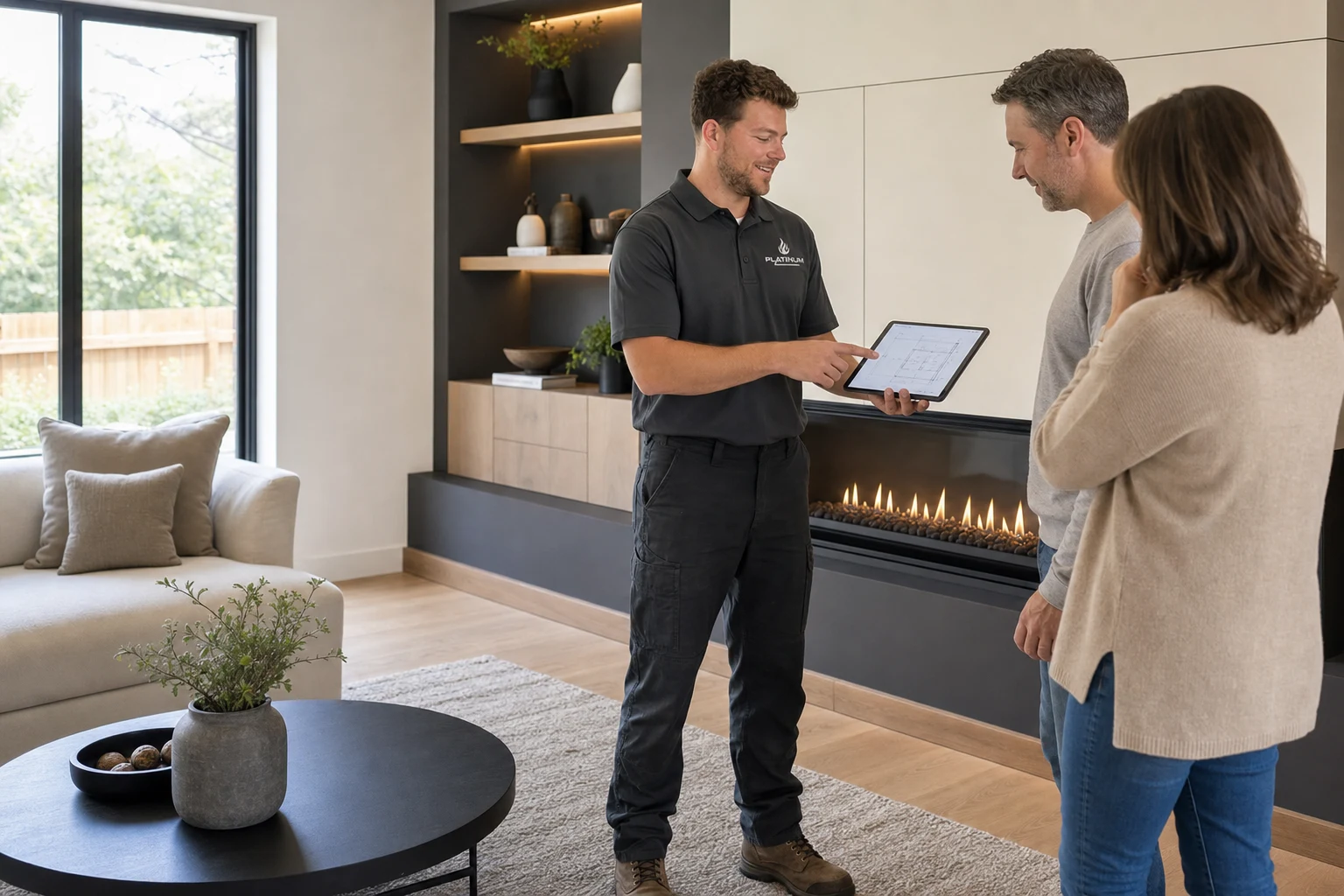
Start with how the room is used. A formal living room lit occasionally has different needs from a family room occupied every evening. Note desired comfort, occupancy, normal door positions, connected hallways, other heat sources and whether the fireplace is expected to warm only the immediate seating zone. An insert should be described as supplemental room heat unless the broader building and heating design establishes another role.
Record room length, width and ceiling height, but do not stop at floor area. Large windows, exterior walls, insulation, air leakage, open stairs and adjoining rooms affect heat loss and movement. A tall open room can require a different approach from an enclosed den with the same square footage. Share this context during selection.
- Hours and seasons of expected use.
- Room volume, glazing, insulation and exterior exposure.
- Openings to stairs, halls and adjacent rooms.
- Existing heating and the desired comfort zone.
Step
Compare how much heat the insert gives on high and low
Input describes fuel entering the appliance; it does not by itself tell you how much useful heat reaches the room. Review the manufacturer's output range and fireplace efficiency information for the exact fuel version. Maximum performance matters on colder days, while minimum or low-fire operation can matter more during mild weather. A unit that repeatedly overheats the seating area may be less comfortable than one with a well-matched control range.
Avoid online rules that assign one insert to a fixed room size without assumptions. Climate, building envelope and layout change the result. Compare models under the same room brief, and ask how the ignition, thermostat and flame modulation behave. Product availability and specifications change, so use current Canadian documentation.
Step
Understand what a blower can and cannot do
A blower can move warm air away from the insert and improve circulation within the room. It cannot correct an undersized appliance, excessive heat loss or a floor plan that prevents air movement. Ask whether the fan is standard or optional, how speed is controlled, when it starts, what low-speed sound is like and whether it can be serviced after the surround is installed.
Ceiling fans and open doors may influence distribution, but the homeowner should not improvise internal changes. Observe comfort at normal settings after installation and make control adjustments only within the owner instructions. If the blower becomes noisy, fails or changes behaviour, book service rather than opening the insert.
Step
Make sure the heating choice still fits the fireplace
The desired heat output does not override physical fit. The insert must suit the existing fireplace type, opening dimensions, hearth, chimney and approved liner route. A large viewing area may not fit the cavity, while a smaller compatible unit could offer a heat range better matched to the room. Surround coverage, electrical supply and access for controls, fan, glass and service also affect the shortlist.
Measure for early screening, then have the opening and chimney path assessed before ordering. Do not remove fixed parts or enter the chimney. An existing chimney still needs the approved vent arrangement required by the exact insert. Vent-free fireplaces are not approved for use in Canada.
What to include with your request
What would you like to install, fix or improve?
Tell us what you need and where the job is. Add the appliance model, fuel type and a photo if you have them.
Step
Plan controls around real household routines
A thermostat or programmable remote can make heat easier to manage, but sensing location and room openness influence the result. Discuss where people sit, whether doors stay open and how quickly the room tends to warm. Ask which functions depend on household power and how the manufacturer describes outage operation. Keep remotes away from direct heat and retain model-specific pairing and battery instructions.
For help choosing an insert in Bowmanville, send safe photos of the opening, room and chimney, along with measurements and how much extra warmth you want. Once installed, ask to see the normal flame, fan and controls. Contact the technician if the room regularly gets too hot or stays cold, or if you notice soot, unusual smells or unexpected operation. Do not try to correct this by changing internal parts.
- Compare minimum and maximum useful output.
- Assess blower and thermostat behaviour in the actual layout.
- Confirm opening, liner and service-access compatibility.
- Learn normal operation and document comfort after commissioning.
Questions we hear
Frequently asked questions
An insert is commonly planned for useful supplemental heat in the room and nearby connected spaces. Whole-home performance depends on the building and heating design and should not be promised from an appliance label alone.
No. Compare useful output, turn-down range, room heat loss, layout, controls and physical fit. Too much heat can make a room uncomfortable, while input alone does not describe delivered heat.
A blower changes heat distribution and perceived comfort. Use the manufacturer's fireplace efficiency information for the exact model rather than assuming the fan changes the appliance rating.
A photo helps show layout, but useful selection also needs dimensions, ceiling height, glazing, envelope context, openings, existing heating and the verified fireplace and liner conditions.
References
Sources and further reading
Ask about your project
Tell us about the property and equipment
Send the service address, timing, appliance model and safe photos that show the work area.