
Fireplace Guides
Fireplace Installation vs Repair: Which Service Do You Need?
Fix a fireplace you still enjoy, or replace one that no longer suits the room? Here is how to weigh the problem, the options and the work involved.
Before you compare
Start with the property and equipment
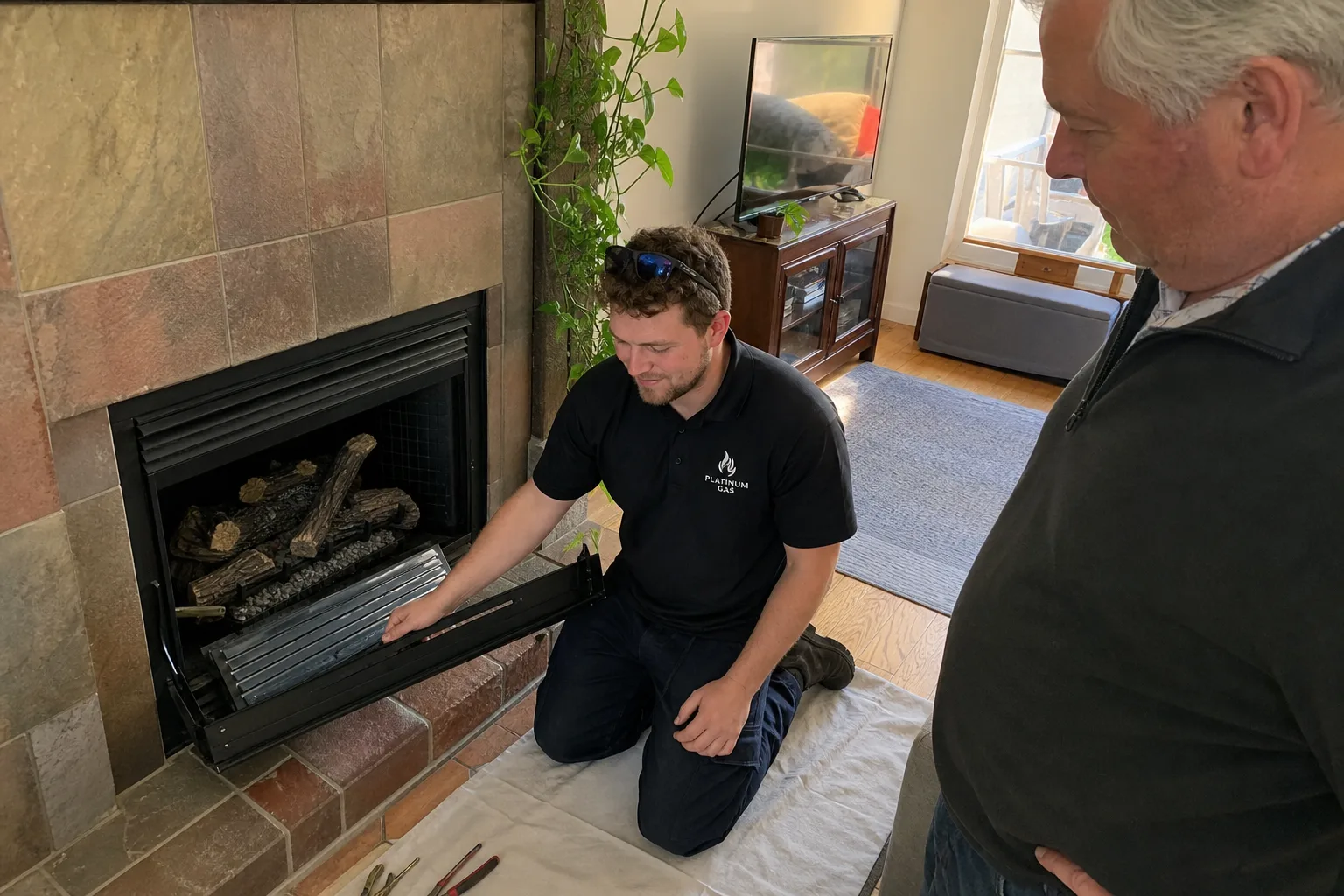
Choose repair when an existing approved fireplace still suits the room and the concern is a diagnosable operating, control, ignition, fan, glass or maintenance issue with serviceable parts. Choose installation or replacement when there is no fireplace, the existing unit or vent system is unsuitable, parts are unavailable, repeated failures make repair impractical, or the project changes the fuel, location, heat goal or finished wall. A technician may need model information, symptoms and a site visit before either path can be confirmed.
Start with the reason for the request
A service request is easier to route when it describes what changed. For repair, note the exact symptom, when it began, whether it happens on every attempt, the displayed code, unusual sounds or odours, and any recent outage, renovation or control change. Provide the manufacturer, model and serial number from an accessible label or retained manual without removing panels. A short video of normal user-control operation can help when the situation is safe.
For installation, describe the outcome instead: new focal point, replacement of an older unit, conversion of an appropriate existing fireplace opening, more usable room heat, new controls or a redesigned wall. Include full-room and exterior photos, approximate wall or opening dimensions, current fuel and known electrical access. These details reveal whether the first visit should focus on diagnosis, product planning or both.
- Repair intent: identify a change in an existing appliance.
- Installation intent: create or materially change the appliance system.
- Replacement intent: assess both existing conditions and a new model.
- Safety intent: stop use and follow emergency guidance before scheduling.
When a fireplace repair makes sense
Start by assessing a repair when the appliance previously operated normally and still meets the household's comfort and design needs. Examples include inconsistent ignition, a nonresponsive remote, a fan problem, an abnormal flame, repeated shutdown, damaged glass or gasket concerns, or maintenance that is overdue. These symptoms can have multiple causes; a fault code is an intake clue, not permission to replace parts or bypass a safety device.
Repair feasibility depends on the exact model, parts availability, appliance condition, vent and fuel-system findings, access, and whether the surrounding installation remains suitable. Avoid ordering a component from a generic symptom list. A technician should diagnose the system, confirm the approved part and assess whether the repair restores safe, reliable operation. If the appliance has multiple defects or an unavailable critical part, the recommendation can change after inspection.
When to consider a new or replacement fireplace
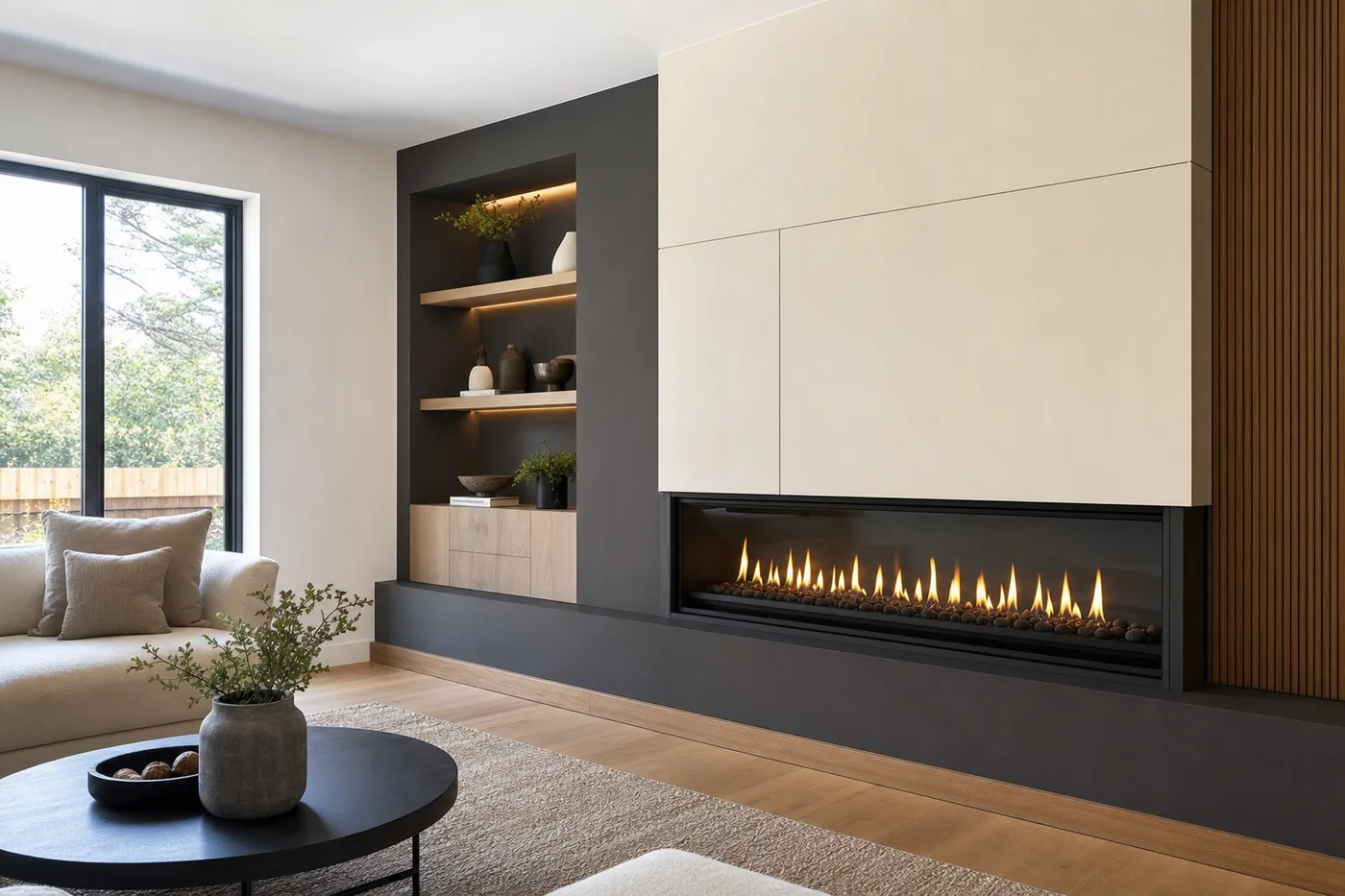
A room without a fireplace needs a new installation. Replacement may also make sense if you want a larger flame view, different heat output, easier controls or a new feature wall. For an older fireplace, parts availability, damaged venting, fit and recurring repairs can affect the decision. Age alone does not mean it needs replacing: compare the repair options with the work and cost of a new installation.
A new fireplace is more than the visible box. Appliance selection, fuel and gas capacity, vent route, electrical supply, framing, noncombustible materials, mantel or television coordination, exterior termination and service access all matter. An insert in an appropriate fireplace opening follows a different planning path from a new built-in. The assessment should identify which format fits before finishes or equipment are ordered.
Before you choose equipment
Find the right fit for your home
Tell us which models you like and where you want the appliance. We can help check the fuel supply, venting, space and access before you buy.
Compare the full repair and replacement costs
A responsible repair-versus-replace comparison includes more than the price of one service call or appliance. For repair, consider the diagnosed cause, approved parts, current condition, other known defects, warranty status and likely serviceability. For replacement, include removal, appliance and accessories, gas and electrical work, venting, framing, finish restoration, permits or inspections where applicable, commissioning and future access. Ask which items are confirmed and which remain allowances or other-trade responsibilities.
Do not treat a replacement as an upgrade unless the new unit is actually suited to the room and use. Compare heat-output range, fireplace efficiency information, control behaviour, noise, visual proportions and manual requirements. Likewise, do not assume a lower repair amount is good value if the appliance cannot be restored to an acceptable condition. The decision should follow diagnosis and project goals, not a generic age threshold.
Tell us the symptom, model and project goal
If the fireplace is not working properly, request a repair and tell us the model and when the problem started. If you want to change the fireplace, wall, opening, fuel or amount of heat, ask about installation or an insert. Not sure whether to repair or replace? Say so. The technician can check what you have and talk through both options.
In Oshawa and nearby service areas, include the exact address because fuel availability, building type, exterior access and travel all affect fit. Share clear photos, but expect final compatibility and repairability to require direct assessment. Do not continue operating an appliance with gas odour, soot, damaged glass, unusual flame, persistent venting concern or repeated unexplained shutdown while waiting for an appointment.
- Existing unit: manufacturer, model, serial and approximate age if known.
- Symptom: exact timing, frequency, code and safe observations.
- Project goal: repair, replacement, insert, new wall or undecided.
- Site context: room, exterior wall, fuel, controls and finish constraints.
Questions we hear
Frequently asked questions
Photos and model information can improve triage, but they do not prove the internal condition, vent performance, fuel supply, electrical state, approved parts or installation quality. A diagnosis may still require an on-site assessment.
No. Age is only one factor. Repairability, parts, condition, venting, household goals, service access and total replacement scope all matter. A sound appliance with an approved repair may remain the better fit.
Usually, because changes to the appliance face, surround, opening or feature wall can affect clearances, access and approved components. Describe the desired appearance and the existing unit so the correct assessment path can be chosen.
Do not schedule routine service first. Leave immediately, move to a safe distance and call 911 and Enbridge Gas at 1-866-763-5427. Do not use switches, electronics, flames, appliances, tools or vehicles near the suspected leak.
References
Sources and further reading
Ask about your project
Tell us about the property and equipment
Send the service address, timing, appliance model and safe photos that show the work area.