
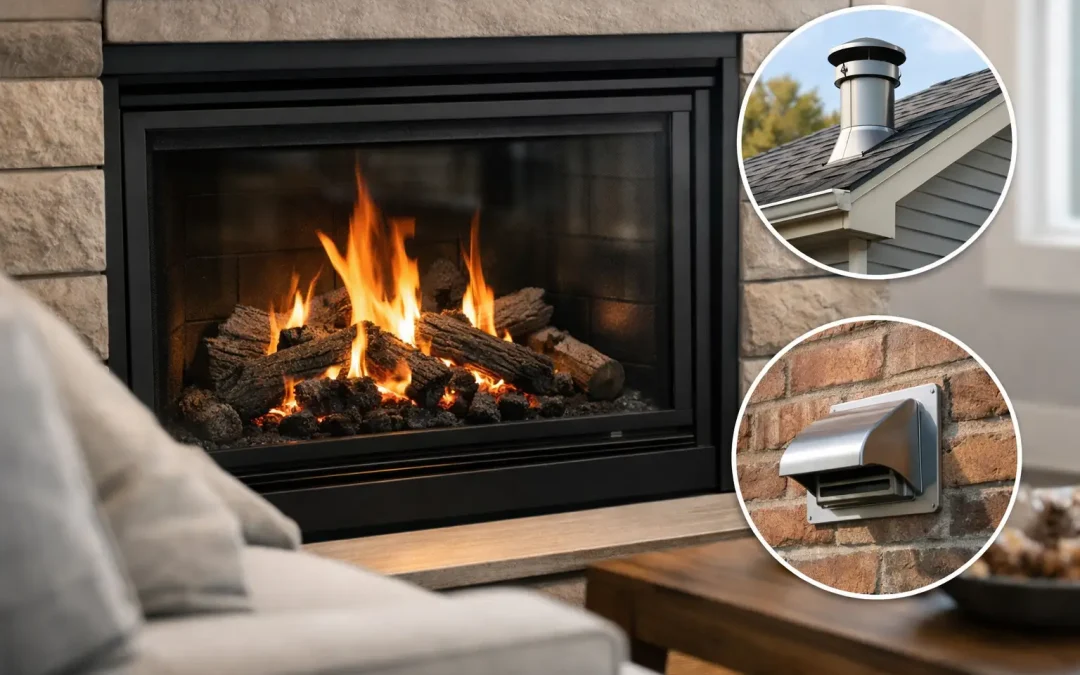
A fireplace can transform a room, but the flame itself is only part of the system. What happens behind the wall, above the unit, and through the venting path is what determines whether your fireplace performs beautifully or becomes a long-term headache. This gas fireplace venting guide is designed to help homeowners understand the basics without getting buried in technical jargon.
If you are planning a new fireplace, replacing an older unit, or trying to make sense of venting options during a renovation, the right answer is rarely one-size-fits-all. The fireplace model, your home’s layout, local code requirements, and the kind of comfort you want all shape the best venting solution.
Why venting matters more than most homeowners realize
Gas fireplaces are built to provide controlled combustion, but they still need a safe way to manage exhaust, heat, and air movement. Proper venting removes combustion byproducts, protects indoor air quality, and helps the appliance operate as it was designed to. It also affects how much heat stays in the room, where the fireplace can be installed, and how clean the finished design looks.
This is where many installation decisions become more nuanced. A homeowner may focus on aesthetics first, which makes sense. You want a fireplace that suits the room and adds warmth and visual appeal. But venting often determines what is actually possible. A stunning fireplace wall concept can change quickly if the vent route is too restrictive, the chase depth is limited, or the exterior termination location conflicts with windows, soffits, or architectural features.
The three main venting categories
Direct vent fireplaces
For most homeowners, direct vent is the preferred solution. These systems use a sealed combustion chamber and vent directly to the outside, typically through a wall or roof. One passage brings in outside air for combustion, and the other expels exhaust gases.
The main advantage is safety and efficiency. Because the firebox is sealed from the living space, direct vent fireplaces offer dependable performance with less impact on indoor air. They are also versatile in terms of placement, which is why they are common in both new builds and remodels.
That said, direct vent does not mean unlimited placement freedom. Every manufacturer sets precise limits for vent length, number of elbows, rise requirements, and termination clearances. The fireplace may look similar from brand to brand, but the venting rules can differ significantly.
B-vent fireplaces
B-vent fireplaces use indoor air for combustion and vent exhaust through a vertical pipe system. These were more common in older installations and are generally less efficient than direct vent models. They can still be appropriate in some applications, but they are not usually the first choice for homeowners seeking strong heating performance.
The trade-off is straightforward. B-vent units can provide the appearance of a traditional gas fireplace, but they typically lose more heat and place greater importance on indoor air supply. In modern, tighter homes, that can be less desirable.
Vent-free fireplaces
Vent-free or ventless fireplaces are allowed in some jurisdictions and restricted in others. They burn very cleanly and do not require a chimney or exterior vent, which sounds appealing at first. They can also offer strong heat output because less heat escapes outdoors.
Still, this is the category where local code, household preferences, and indoor air quality concerns matter most. Some homeowners are comfortable with vent-free technology. Others prefer the reassurance of a fully vented system, especially in primary living areas or homes with tighter building envelopes. A premium installation should account for both code compliance and peace of mind.
A practical gas fireplace venting guide to choosing the right setup
The best venting system starts with the fireplace itself, not the other way around. Every listed appliance is engineered to operate with approved venting components and specific installation parameters. That means venting is not a mix-and-match category.
If you are choosing between fireplace styles, think about your priorities early. Do you want a major design feature in a great room with a long horizontal run to an exterior wall? Do you want a bedroom fireplace where quiet operation and controlled heat matter? Are you trying to add a unit to a finished basement where roof venting may be less practical? Those details shape the venting plan.
Homeowners are often surprised to learn how much the vent route affects the final project cost. A simple direct vent termination through a nearby exterior wall is usually more straightforward than routing venting vertically through multiple levels or around framing obstacles. The shorter path is not automatically better, but the cleaner the route, the easier it is to preserve both performance and design flexibility.
Horizontal vs. vertical venting
Horizontal venting
Horizontal venting is common for direct vent fireplaces installed on exterior walls. It can be an elegant solution because it often reduces construction complexity and allows more placement options on the main floor or in finished spaces.
The catch is clearance. The vent termination must be located the proper distance from windows, doors, gas regulators, mechanical air inlets, grade level, and other building features. On paper, a side-wall termination may look easy. In practice, nearby decks, walkways, landscaping, or architectural details can limit where it can go.
Vertical venting
Vertical venting is often used when the fireplace sits away from an exterior wall or when the model performs better with a vertical rise. It can also be the cleaner option for certain home designs, especially when you want to avoid visible side-wall terminations.
Vertical runs usually require more planning, especially if the vent passes through closets, attic spaces, or roof structures. Flashing, firestops, and roof penetration details have to be executed with precision. When handled properly, vertical venting can create an exceptional finished result. When rushed, it can create service and performance issues later.
What can go wrong with poor venting design
A fireplace does not have to fail completely to show signs of venting problems. Sometimes the issues are subtle at first. You may notice inconsistent flame appearance, glass sooting, draft sensitivity, odor concerns, ignition issues, or less heat than expected.
In many cases, the root problem is not the fireplace box itself. It is an installation that ignored manufacturer specs, used improper materials, misjudged vent length calculations, or placed the termination in a problematic location. Gas work calls for precision, and fireplace venting is no exception.
That is why premium service matters here. The goal is not simply to get the appliance lit. The goal is to deliver a system that looks refined, performs reliably, and meets the standards the home deserves.
Gas fireplace venting guide for renovations and replacements
Replacing an old fireplace is not always a direct swap. Even if the new unit fits the opening, the venting requirements may be completely different. Older wood-burning conversions, outdated gas units, and builder-grade fireplaces often need venting upgrades before a new installation can be done properly.
This is especially true in remodels where homeowners want a more contemporary linear fireplace. The visual upgrade can be dramatic, but those units often come with very specific framing and venting requirements. A qualified installer should assess the chase, wall cavity, exterior termination options, and appliance approvals before any finish work begins.
It also helps to think beyond the fireplace opening. Venting may influence mantel clearances, TV placement, stone or tile layout, and access for future service. A customized installation should balance appearance with long-term functionality.
When professional guidance is the smart move
There is a reason fireplace venting is governed by detailed codes, appliance listings, and manufacturer instructions. Small deviations can have major consequences. Even experienced homeowners who handle other renovation tasks typically leave gas fireplace venting to licensed professionals.
A high-quality installer will evaluate the appliance selection, confirm venting compatibility, plan the route, verify clearance requirements, and complete the work to code. They should also explain the trade-offs clearly. Sometimes the ideal-looking location is not the best venting location. Sometimes a slightly different model opens up a much better installation path.
That kind of guidance is what protects the investment. For homeowners who want both elegance and reliability, expert planning is not an extra. It is part of the finished product.
At Platinum Gas, that approach is part of setting the platinum standard – combining TSSA-certified precision with a tailored installation experience that respects both safety and design.
If you are considering a gas fireplace, venting should be part of the conversation from day one, not an afterthought once the wall is open. The right system creates comfort you can trust, with a result that looks as refined as it performs.