
A gas fireplace should light cleanly, burn evenly, and add comfort without becoming another item on your home maintenance list. When it starts producing soot, cycling oddly, or giving off a faint odor, small issues can turn into service calls fast. Knowing how to maintain a gas fireplace helps protect performance, appearance, and most importantly, safety.
Unlike a wood-burning fireplace, a gas unit does not leave behind ash and heavy creosote. That makes it lower maintenance, not maintenance-free. Dust collects on burners, glass can haze over, pilot assemblies wear down, and venting still needs attention. A well-kept fireplace not only looks better in your living space, it also runs more reliably through the heating season.
Why gas fireplace maintenance matters
For most homeowners, the appeal of a gas fireplace is simple – instant warmth, clean operation, and a polished focal point in the room. Regular upkeep protects all three. When maintenance is skipped, you may notice delayed ignition, weak flame patterns, reduced heat output, or cloudy glass that takes away from the look of the fire.
There is also a safety side that should never be treated casually. Gas appliances rely on proper combustion, secure connections, and functional safety controls. A burner that is dirty or misaligned may not burn as intended. Venting problems can affect indoor air quality. Worn gaskets or damaged components can allow issues to develop quietly over time.
That is why premium fireplace care is about more than cleaning what you can see. It is about preserving a system that was designed to operate with precision.
How often should you maintain a gas fireplace?
If you use your fireplace regularly during fall and winter, a professional inspection and service once a year is the right standard. For lighter-use fireplaces, annual maintenance is still the safest approach because gas appliances can develop issues from dust, inactivity, or aging components even when they are not used every day.
Homeowners can also perform light seasonal care between service visits. A quick visual check before the first use of the season and occasional cleaning throughout the year can help you catch obvious problems early. The balance is straightforward – routine homeowner care for cleanliness and appearance, professional service for combustion, gas, and venting performance.
How to maintain a gas fireplace between service visits
There are a few tasks homeowners can usually handle safely, provided the unit is turned off and fully cool before any work begins. Your owner’s manual should always guide what is appropriate for your specific model, especially when it comes to removing glass panels or decorative media.
Clean the glass carefully
One of the most common cosmetic issues is white or gray film on the fireplace glass. This residue comes from normal combustion byproducts and can become more stubborn if it sits too long. Use a fireplace-safe, non-abrasive gas appliance glass cleaner and a soft cloth. Avoid standard household glass cleaners unless your manufacturer specifically approves them, since some products can damage specialty coatings.
If the buildup returns quickly after cleaning, that can point to a burner or air-to-fuel issue rather than simple surface dirt. In that case, cleaning the glass treats the symptom, not the cause.
Dust the exterior and lower compartment
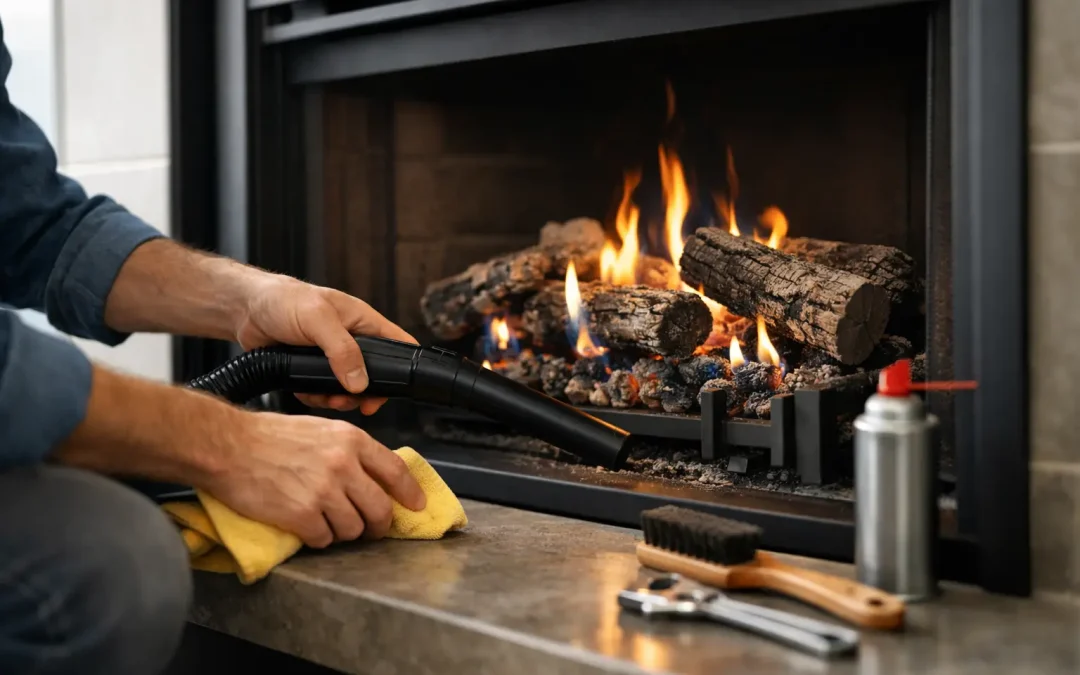
The outer surfaces, louvers, and control access area tend to collect household dust, pet hair, and lint. A soft brush attachment on a vacuum can help keep these areas clean. This improves airflow around the unit and helps prevent debris from finding its way into burner and pilot components.
Be gentle around switches, controls, and trim finishes. A premium fireplace deserves careful handling, especially if it is part of a custom surround or design-focused living space.
Check the flame appearance
A healthy gas fireplace flame should generally look steady and well-distributed across the burner. Depending on the model, flames may be blue at the base with yellow or orange movement above. If flames appear unusually small, excessively blue, overly aggressive, or are not reaching the expected pattern through the logs, the unit should be inspected.
The key is to look for changes, not perfection. A flame pattern that has always looked a certain way and suddenly shifts is worth attention.
Inspect logs and decorative media without rearranging them
Ceramic logs, stones, or glass media are placed in specific positions to support proper flame behavior. If they are bumped out of place during cleaning or decorating, the fireplace may start producing soot or burning unevenly. You can visually check for obvious shifting, but do not guess at placement. Improper arrangement is one of the easiest ways to create performance problems in an otherwise sound fireplace.
Test the wall switch or remote
If ignition becomes inconsistent, the issue may be as simple as weak batteries in the remote or receiver. Replace batteries seasonally if your unit uses them, and make sure the controls respond consistently. If the fireplace still struggles to start, the cause may lie deeper in the ignition system.
What professional gas fireplace maintenance should include
When homeowners ask how to maintain a gas fireplace properly, this is where the answer becomes more specific. Professional service is the part that protects the appliance at a system level.
Professional gas fireplace maintenance checklist
A qualified gas technician should inspect and clean the burner assembly, pilot or ignition system, thermocouple or flame-sensing components, valve operation, gaskets, and accessible gas connections. The technician should also assess venting performance, examine the firebox and glass seal, and verify that the unit is burning correctly according to manufacturer standards.
This is also the right time to identify wear before it turns into a breakdown. A slightly weak igniter, a dirty pilot assembly, or a deteriorating seal may not shut the fireplace down today, but it can affect reliability and safety over the course of a heating season.
For direct vent units, vent pathways and termination points matter just as much as the fireplace itself. Outdoor blockages, nesting materials, moisture intrusion, or debris can all interfere with proper operation. That is one reason annual service is not just a luxury – it is part of responsible ownership.
Signs your gas fireplace needs attention sooner
Sometimes the calendar is not the best indicator. Your fireplace may need service now if you notice a sulfur-like gas smell, delayed ignition, unusual clicking, soot on the glass or surrounding surfaces, frequent shutdowns, or flames that look noticeably different than usual.
A brief odor when the fireplace is first used after a long break can happen as dust burns off. A persistent gas odor is different and should never be ignored. Turn the unit off, avoid trying to troubleshoot gas-related issues yourself, and arrange for professional service.
Glass that clouds up occasionally is normal. Thick black soot is not. That usually points to improper combustion, misplaced logs, or burner issues that need correction.
Common maintenance mistakes to avoid
The biggest mistake is assuming gas means no upkeep. The second is overstepping basic care and attempting to service gas components without proper training. Homeowners often mean well when they remove logs for cleaning, scrub components with the wrong products, or try to adjust flames on their own. Unfortunately, small changes can affect combustion quality quickly.
Another common issue is postponing service because the fireplace still works. Many gas appliance problems develop gradually. The unit lights, so it seems fine. But reduced efficiency, ignition strain, and component wear often show up before complete failure. Catching those issues early is part of maintaining a fireplace to a platinum standard.
Seasonal timing makes a difference
The best time to schedule maintenance is before peak cold weather arrives. Early fall is ideal because service calendars fill quickly once temperatures drop and homeowners begin using fireplaces daily. Pre-season maintenance gives you time to handle minor repairs before the fireplace becomes part of your regular comfort routine.
Spring can also be a smart time for service, especially if you want to clean the unit after a heavy winter of use. The right timing depends on how often you use the fireplace and whether you prefer preventative care before or after the heating season. Either way, consistency matters more than the month.
When expert service is the right call
If your fireplace is newer, custom-installed, or part of a high-end interior design, professional care is especially worthwhile. These systems are built to deliver both function and visual impact, and they deserve maintenance that matches that level of craftsmanship. In Bowmanville and surrounding areas, homeowners who value TSSA-certified precision and reliability often choose service that protects both safety and presentation.
A gas fireplace should feel effortless when it is maintained well. Clean glass, dependable ignition, balanced flames, and quiet confidence in the system – that is the standard worth keeping. A little attention each season, paired with expert service at the right intervals, goes a long way toward preserving the warmth and elegance you installed it for.
Excellent maintenance checklist. I like the point about flame appearance, because it is one of the easiest things for homeowners to notice. Changes in flame color, soot, delayed ignition, or cloudy glass should not be ignored.