
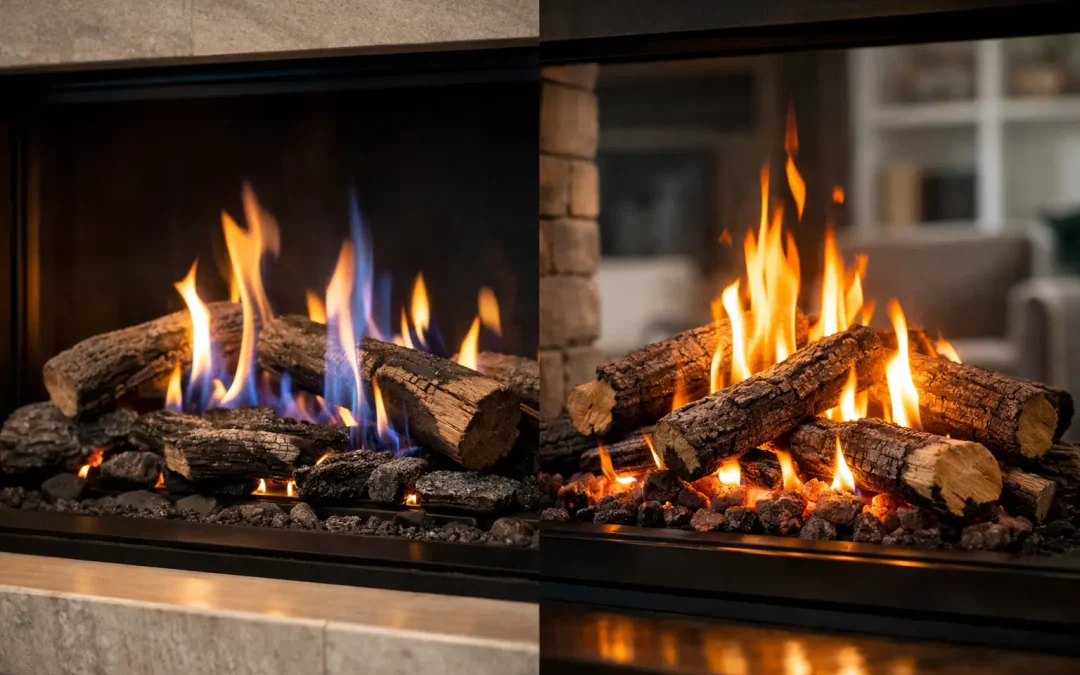
A fireplace should feel simple once it is in place – steady warmth, clean operation, and a finished look that suits the room. But when homeowners start comparing a natural gas vs propane fireplace, the choice quickly becomes more than a design decision. Fuel availability, operating cost, installation requirements, and long-term convenience all shape which option will feel right in daily life.
For some homes, the answer is obvious because natural gas service is already available. For others, propane opens the door to a fireplace where natural gas is not an option. The better question is not which fuel is universally best. It is which one fits your property, your priorities, and the level of performance you expect.
Natural gas vs propane fireplace: what changes in real life?
On the surface, these fireplaces can look nearly identical. The firebox, logs, trim, and wall finish may be the same. What changes is how the appliance is fueled and what that means for installation, service access, and monthly operating patterns.
A natural gas fireplace connects to a utility gas line. That gives homeowners a continuous fuel supply without having to schedule refills. If your property already has natural gas, this can make the fireplace feel especially convenient. You turn it on and use it as needed, with no concern about tank levels.
A propane fireplace uses fuel stored in a tank on the property. That makes propane an excellent solution for homes outside natural gas service areas, as well as for certain outdoor features or detached structures. Propane offers flexibility, but it also adds one more item to manage: fuel delivery and tank monitoring.
From a homeowner’s perspective, the difference often comes down to convenience versus access. Natural gas tends to win on ease where service exists. Propane wins on reach because it can serve properties that otherwise would not have a gas fireplace at all.
Cost depends on more than the fuel itself
When clients ask which is cheaper, they are usually asking two separate questions. One is the cost to install the fireplace. The other is the cost to operate it over time.
In many areas, natural gas is less expensive per unit than propane. That can make it more economical for frequent fireplace use, especially during colder months when the appliance becomes part of your regular heating routine. If you like to run your fireplace often for both comfort and ambiance, natural gas may offer a lower long-term fuel cost.
Propane typically costs more per unit, but that does not automatically make it the wrong choice. If propane is the only practical gas source for your property, it may still be the most efficient and appealing fireplace option compared with wood or electric alternatives. It also matters how often you plan to use the fireplace. For occasional evening use, seasonal entertaining, or a feature fireplace in a less-used room, the operating difference may not feel dramatic.
Installation cost can tilt the equation either way. If natural gas service is already at the house and the gas line can be extended easily, natural gas may be straightforward. If a new gas line, meter changes, trenching, or other infrastructure is required, the upfront cost can rise. Propane may be more practical if a tank is already serving the property or if the home is set up for propane appliances.
This is where a customized site assessment matters. The right answer is not found in a generic chart. It comes from understanding the property layout, utility access, appliance location, and how the fireplace will actually be used.
Heat output and performance
Many homeowners assume one fuel creates a dramatically better flame or stronger heat. In practice, both natural gas and propane fireplaces can deliver excellent comfort and visual appeal when properly specified and installed.
Propane contains more energy per cubic foot than natural gas, so propane fireplaces often produce higher BTU output with a smaller volume of fuel. That can make propane an attractive choice when stronger heat performance is a priority. In some settings, especially large rooms or outdoor applications, this added intensity can be useful.
Natural gas fireplaces still provide dependable, comfortable heat and are often more than sufficient for residential living spaces, bedrooms, basements, and open-concept areas. The better comparison is not simply which burns hotter. It is whether the appliance is sized correctly for the room and venting configuration.
Flame appearance can also vary slightly because the fuels burn differently. Some homeowners notice propane flames can appear a bit richer or more intense, while natural gas may present a softer look depending on the burner design. These differences are real, but they are often secondary to the quality of the fireplace itself. A premium unit, installed with precision, usually matters more than the fuel when it comes to the finished aesthetic.
Installation requirements are where the decision gets real
This is the point where broad advice stops being useful. A fireplace installation is not just about the appliance. It is about gas supply, venting, clearances, code compliance, finishing work, and overall safety.
With natural gas, the installation depends on access to a utility connection and the ability to run an approved gas line to the fireplace location. In an existing home, that may be simple or it may involve careful planning through finished spaces. In a new build or renovation, the process is usually easier to integrate.
With propane, the key factors include tank placement, fuel line routing, regulator setup, and making sure the fireplace is correctly configured for propane use. Not every gas fireplace can run on either fuel without proper conversion components and manufacturer approval. That detail matters. A fireplace should never be treated as interchangeable between fuels unless it is specifically designed and adjusted for that purpose.
Indoor and outdoor installations bring different demands as well. An outdoor fire feature, poolside fireplace, or covered patio installation may make propane especially attractive in some properties, while a main-floor indoor fireplace connected to existing utility service may point naturally toward natural gas.
This is why premium installation matters. The best fireplace experience starts long before the first ignition. It starts with licensed, insured, and TSSA-certified planning that treats design, safety, and performance as one package.
Maintenance, service, and long-term reliability
A well-installed gas fireplace is low maintenance compared with wood-burning alternatives, but low maintenance does not mean no maintenance. Both natural gas and propane fireplaces benefit from regular inspection, cleaning, and burner adjustment.
Natural gas systems tend to be appreciated for their day-to-day simplicity. There is no refill schedule, and homeowners do not need to think about tank levels during heavy-use periods. That can make service planning feel more predictable.
Propane systems add another layer of management because fuel supply must be maintained. If the tank runs low during peak winter use, that can interrupt performance until delivery is arranged. For organized homeowners, this is not a major drawback. It is simply part of propane ownership. Still, it is worth considering if convenience is one of your top priorities.
In both cases, professional service protects reliability. A fireplace that has delayed ignition, soot issues, unusual flame patterns, or inconsistent heat output needs attention. These are not details to ignore. Gas appliances perform best when installed correctly and maintained by qualified specialists who understand code requirements, manufacturer standards, and fuel-specific adjustments.
Which fireplace fuel is better for your home?
If your home already has natural gas service and you want a convenient, cost-conscious fireplace for regular use, natural gas is often the stronger fit. It offers steady access, lower fuel cost in many markets, and an easy ownership experience.
If your property does not have natural gas, or if propane already supports other appliances on-site, a propane fireplace can be an exceptional solution. It brings real flame, strong heat potential, and more location flexibility than many homeowners expect.
There is also a lifestyle piece to this decision. Some homeowners want a fireplace as a primary comfort feature they will use almost every day in cooler weather. Others want a striking focal point for holidays, evenings with guests, or a finished outdoor living area. The more central the fireplace is to your routine, the more fuel convenience and operating cost matter.
For homeowners who want the choice handled with care, a provider like Platinum Gas can make the process far more straightforward by matching the appliance, fuel source, and installation plan to the home rather than forcing a one-size-fits-all recommendation.
The best fireplace is not just the one with the right flame. It is the one that fits your home so well that warmth, comfort, and reliability feel effortless every time you turn it on.