
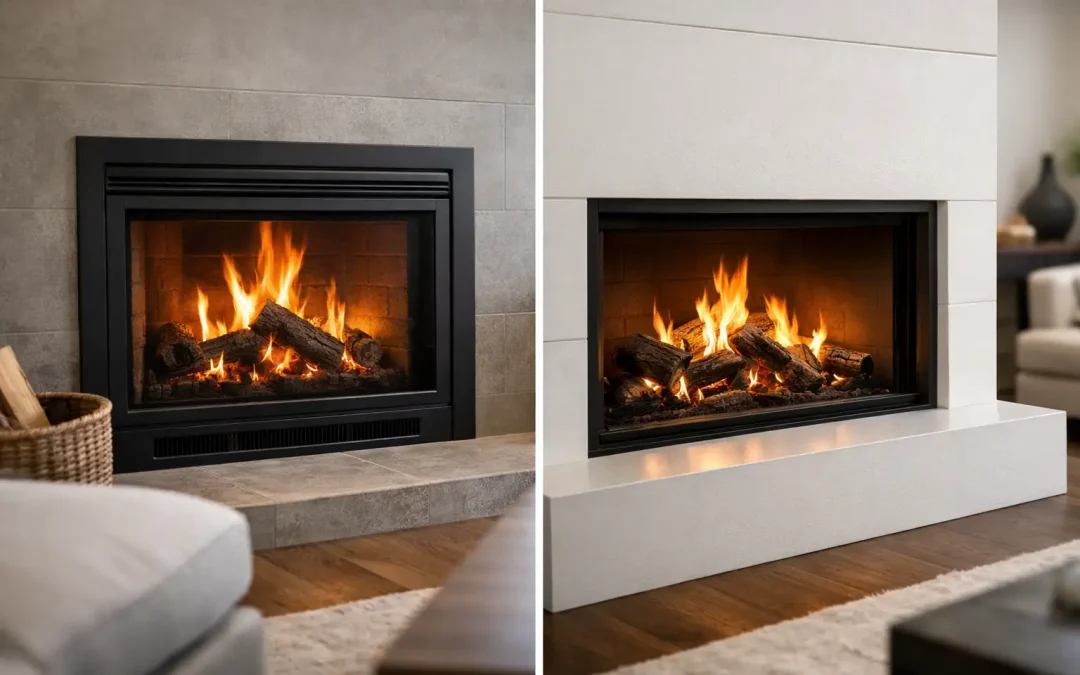
A fireplace can change the way a room feels in a matter of minutes. It adds warmth, draws people in, and often becomes the feature everyone notices first. But when homeowners start comparing a fireplace insert vs built-in fireplace, the right choice is not just about appearance. It comes down to your home’s layout, your heating goals, your budget, and the level of customization you want.
For some homes, an insert is the practical upgrade that delivers efficient heat without a full redesign. For others, a built-in fireplace offers the tailored look and design freedom that makes a space feel finished at a higher level. Both can be excellent options when they are installed with expert planning and TSSA-certified precision.
Fireplace insert vs built-in fireplace: the core difference
The simplest way to understand a fireplace insert vs built-in fireplace is this: an insert is designed to fit into an existing fireplace opening, while a built-in fireplace is installed as a new unit into a wall, bump-out, or custom framing.
An insert is usually the better fit when you already have a wood-burning masonry fireplace or an outdated zero-clearance unit and want to improve efficiency, convenience, or appearance. The existing fireplace structure does part of the work for you, which can make the project more straightforward.
A built-in fireplace starts with a cleaner slate. It can be placed where it best suits the room, integrated into a renovation, or designed as part of a new home. That flexibility opens the door to a more customized result, especially for homeowners who care just as much about visual impact as heating performance.
When a fireplace insert makes the most sense
If you already have a fireplace that is underperforming, drafty, or simply dated, an insert can be a smart solution. Many older fireplaces lose more heat than they provide. A gas insert improves efficiency while giving you much easier operation and more consistent performance.
This option tends to work well for homeowners who want to upgrade an existing feature rather than rework the entire room. Because the insert uses the original fireplace opening, the installation path is often less disruptive than a full built-in project. That does not mean it is simple or casual work. Gas line sizing, venting, appliance selection, and code compliance still require expert attention.
A well-chosen insert can also refresh the look of a room without turning the project into a major remodel. New surrounds, media options, and trim details can give the fireplace a cleaner and more current presence while keeping the overall scope under control.
When a built-in fireplace is worth it
A built-in fireplace is often the better investment when design is a top priority. If you are remodeling a main living area, finishing a basement, updating a primary suite, or planning a new build, a built-in allows you to create the fireplace exactly where and how it belongs.
This matters more than many homeowners expect. Placement affects furniture layout, sightlines, TV integration, and the overall balance of the room. With a built-in fireplace, you are not limited by the location and proportions of an old firebox. You can create a linear statement wall, a more traditional centered focal point, or a sleek contemporary installation that sits low and wide.
There is also more freedom around finishing materials. Stone, tile, millwork, built-ins, recessed niches, and architectural details can all be planned around the appliance. The result often feels less like an upgrade and more like a fully integrated part of the home.
Cost is not just about the unit
Homeowners often assume an insert is always much cheaper and a built-in is always much more expensive. Sometimes that is true, but not always.
An insert can cost less because it uses an existing fireplace structure. If the chimney, venting path, and surrounding materials are in good condition, the installation may be relatively efficient. But older fireplaces can come with hidden complications. You may need venting updates, repairs, gas line work, or finishing improvements to get the result you actually want.
A built-in fireplace usually has a higher project cost because it involves framing, finishing, venting, and often more extensive planning. But if you are already renovating the space, the cost difference may feel more reasonable in context. In some cases, a built-in also delivers more value because it solves both a heating goal and a design goal at the same time.
That is why a true comparison should look at total project scope, not just the appliance price.
Heat output and efficiency
Both inserts and built-in gas fireplaces can provide excellent heat, but performance depends on the model, the room size, and how you plan to use it.
Inserts are often chosen to turn an inefficient existing fireplace into a dependable heat source. That alone can be a major improvement in comfort. If your current fireplace looks attractive but contributes little usable warmth, an insert can change that quickly.
Built-in fireplaces vary more widely. Some are selected primarily for ambiance, while others are designed to provide meaningful supplemental heat. A larger viewing area does not always mean higher heat output, so this is one area where professional guidance matters. The best-looking option is not always the best-performing one for your space.
For homeowners who want both elegant design and practical warmth, the appliance should be matched carefully to the room and the intended use. That level of customization is part of what separates a basic install from a premium result.
Design flexibility and finished appearance
This is where the gap between a fireplace insert vs built-in fireplace becomes more obvious.
An insert works within an existing opening, so your design choices are partly shaped by what is already there. You can absolutely achieve a polished, elevated result, especially with updated surrounds and clean finishing details. But you are still adapting to the dimensions and placement of the original fireplace.
A built-in gives you more control over proportion, height, width, and style. If you want a dramatic linear fireplace under a media wall, a corner installation, or a feature with custom cabinetry on both sides, built-in options are much better suited to that level of design intent.
For many homeowners, that difference is what decides the project. If the goal is simply to improve an existing fireplace, an insert is often ideal. If the goal is to shape the room around the fireplace, built-in is usually the stronger choice.
Installation complexity and timeline
An insert is generally faster to install than a built-in fireplace, especially when the existing fireplace and venting path are in usable condition. There is less structural work, fewer finishing trades, and typically less disruption to the home.
A built-in installation is more involved because it often includes framing, vent routing, gas line planning, finishing materials, and coordination with other parts of the room design. That added complexity is not a drawback on its own. It is simply the reality of creating a more customized architectural feature.
This is also where working with a specialized gas professional makes a real difference. Safety, code compliance, venting performance, and clean finishing all need to align. Homeowners who want a smooth, high-touch experience usually benefit from expert planning early, before product and placement decisions get locked in.
Which option adds more value?
Value depends on what your home needs.
If you have an old fireplace that is visually tired or functionally weak, an insert can add value by improving efficiency, comfort, and appearance without requiring a major rebuild. It is often a strong return on investment because it upgrades something you already have.
If your room lacks a focal point or your renovation calls for a more refined design statement, a built-in fireplace may create more visible impact. In the right setting, it can elevate the entire space and make the home feel more thoughtfully finished.
Neither choice is automatically better. The better choice is the one that fits the room, supports your heating goals, and aligns with the level of customization you want.
How to decide with confidence
If you are weighing a fireplace insert vs built-in fireplace, start with the home you actually have, not just the photos you like. Ask whether you are upgrading an existing feature or creating a new one. Think about whether heat, design, or both matter most. Be honest about how much construction you want to take on and whether this project is happening on its own or as part of a larger renovation.
From there, the best next step is a professional assessment. A quality installation should account for gas supply, venting, clearances, room layout, and finish details from the beginning. That is how you avoid compromises that show up later in performance or appearance.
At Platinum Gas, this is where the bespoke experience matters. The right fireplace should not feel like a generic appliance placed in a wall. It should feel intentional, safe, and exceptionally well suited to the way you live in your home.
If you choose carefully, your fireplace will do more than heat the room. It will make the entire space feel more complete every time you turn it on.