
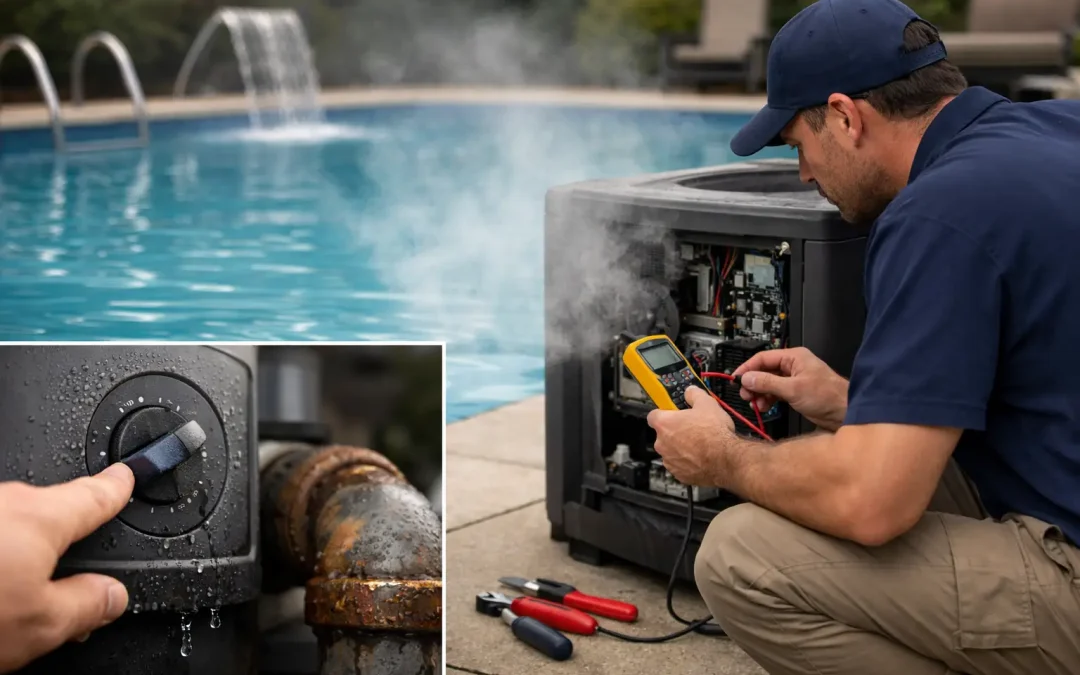
That first cold swim of the season usually tells you something is wrong before the control panel does. If your pool should be warming up and the water still feels sharp and uncomfortable, pool heater repair moves from a minor chore to a priority. For homeowners who invested in a heated pool for comfort, entertaining, and a longer season, a heater that underperforms is more than inconvenient – it disrupts the experience you planned for your home.
A pool heater is one of those systems that tends to be ignored when it is working well. Then one day it struggles to ignite, cycles on and off, or stops heating altogether. The issue may be simple, or it may point to wear that should be addressed before it affects safety, efficiency, or the life of the unit.
What pool heater repair usually starts with
Most service calls begin with a symptom, not a diagnosis. The heater will not turn on. It turns on but does not heat. It heats slowly, shuts down too early, or displays an error code that means little to the average homeowner. In gas pool heaters, these symptoms can be tied to ignition problems, restricted gas flow, dirty burners, venting issues, sensor failures, or internal components that have aged past reliable performance.
The challenge is that different problems can look almost identical from the outside. A heater that fails to fire could have a thermostat issue, a pressure switch problem, or a gas supply concern. A unit that runs but does not heat well might have scale buildup, airflow restrictions, or a failing exchanger. This is where a precise inspection matters. Guesswork often leads to wasted time, unnecessary parts, and repeat breakdowns.
Common signs you need pool heater repair
The heater runs but the water stays cool
This is one of the most common complaints, and it does not always mean the heater has completely failed. Sometimes the unit is producing heat, but not enough to keep up with pool size, weather conditions, or heat loss from wind and cool nights. Other times, the heater is clearly underperforming because something inside is restricting proper operation.
If your system suddenly takes much longer to heat than it did in previous seasons, that change matters. A gradual drop in performance is often missed until the unit becomes unreliable.
The system will not ignite consistently
Gas pool heaters depend on a clean, dependable ignition sequence. If the heater clicks repeatedly, starts and stops, or fails to light at all, the issue may involve the igniter, flame sensor, gas valve, or a control-related fault. Moisture, debris, corrosion, and age can all interfere with proper ignition.
This is not an area for casual trial and error. With gas-fired equipment, proper diagnosis is part of protecting both performance and safety.
Strange noises, odors, or soot
A pool heater should not sound rough, smell unusual, or leave visible soot around the unit. Rumbling, popping, delayed ignition sounds, or signs of incomplete combustion should be addressed promptly. These symptoms can point to burner issues, venting problems, or combustion conditions that need professional attention.
For homeowners who value reliable, well-maintained outdoor systems, these are not cosmetic concerns. They are signs that the heater is not operating at its intended standard.
Short cycling or unexpected shutdowns
If the heater starts normally and then shuts off before reaching temperature, a safety switch or sensor may be doing its job in response to another fault. Water flow issues, pressure switch problems, overheating, and control board errors can all cause this pattern. The important detail is that repeated shutdowns are not normal, even if the unit eventually starts again.
Why pool heaters fail over time
Environmental exposure adds up
Pool heaters live outdoors, often exposed to weather, debris, insects, and fluctuating temperatures. Even well-built systems deal with a steady mix of moisture and seasonal wear. Over time, that environment affects electrical connections, burners, cabinet integrity, and internal components.
If your heater sits idle for part of the year, startup issues can be especially common in spring. Components that were borderline at shutdown can become more obvious at the next startup.
Water chemistry plays a bigger role than many owners expect
Improper water balance can shorten heater life, especially when it contributes to scale or corrosion. Heat exchangers are particularly vulnerable. Water that is too aggressive or too mineral-heavy can quietly damage internal parts long before a complete breakdown happens.
This is one reason repair is not always just about replacing a failed part. A quality service visit should also consider what may have caused the failure in the first place.
Deferred maintenance turns small issues into larger repairs
A dirty burner tray, blocked airflow, worn sensor, or minor ignition problem may not stop the heater immediately. But over time, strain on the system grows. What could have been a straightforward service call becomes a more involved repair. Premium equipment still needs regular care if you expect premium performance.
Pool heater repair or replacement?
This is where the right answer depends on age, condition, and repair history. If the unit is relatively new and the issue is isolated, repair is often the sensible choice. If the heater has multiple failing components, visible corrosion, reduced efficiency, and a pattern of repeat service calls, replacement may offer better long-term value.
Cost matters, but so does reliability. Many homeowners focus on the immediate repair price without considering the frustration of another failure in the middle of swim season. A thoughtful recommendation should weigh present cost against future performance, expected lifespan, and whether the system still fits the property’s needs.
There is also the question of efficiency. Older heaters can continue running while quietly costing more to operate. In some cases, repairing an aging unit is still worthwhile. In others, it is simply delaying an upgrade that would deliver better comfort and more dependable operation.
Why professional pool heater repair matters
Gas systems require trained handling
Pool heaters are not just appliances. They are gas-fired systems that involve combustion, venting, ignition, controls, and safety devices. A surface-level fix can miss the real issue, and an incorrect repair can create more serious problems. Professional service brings the benefit of proper testing, code-aware workmanship, and attention to safe operation.
For homeowners and property owners who expect a higher standard, this is not about taking the cheapest route. It is about protecting the investment in your pool, your property, and the systems that support both.
Accurate diagnosis saves time
A skilled technician does more than swap parts. The goal is to identify the fault, confirm the cause, and verify that the heater is operating correctly once the repair is complete. That process matters because symptoms often overlap. Replacing an igniter will not solve a gas supply issue. Cleaning burners will not fix a failed control board.
Precision is what turns a repair from temporary relief into a dependable solution.
How to reduce future repair calls
The best time to care for a pool heater is before peak season, not after the first breakdown. A professional inspection before regular use can catch wear, contamination, and startup issues early. It also gives you a clearer picture of the heater’s condition before you are relying on it every day.
Homeowners can help by keeping the area around the unit clear, paying attention to changes in heating performance, and avoiding the temptation to ignore intermittent problems. A heater that works only sometimes is already telling you something. Waiting rarely improves the outcome.
Routine maintenance also supports cleaner combustion, steadier heating, and better efficiency. For a system that is meant to add comfort and extend your outdoor season, that kind of consistency is worth protecting.
Choosing a service provider for pool heater repair
Not every contractor approaches this work with the same level of care. Pool heater repair should be handled by professionals who understand gas systems, follow proper safety standards, and communicate clearly about what they find. You want more than a quick fix. You want confidence that the repair was done properly and that the heater is operating as it should.
That is where a premium service experience stands apart. Platinum Gas serves homeowners and property owners with the kind of TSSA-certified precision, customized attention, and polished workmanship that reflects a true platinum standard. When your pool heater is central to comfort, entertaining, and seasonal enjoyment, the service behind it should match that value.
A well-repaired pool heater does not just make the water warmer. It gives you back the ease of stepping outside, turning the system on, and knowing your pool is ready when you are.