
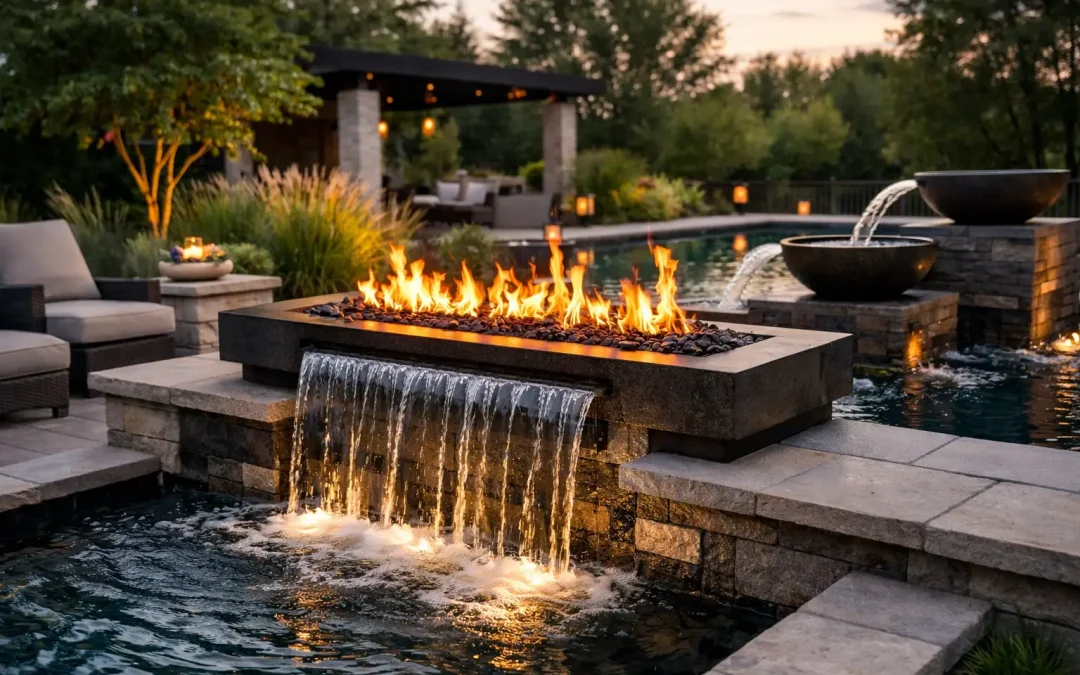
A quiet backyard changes fast when you add flame and flowing water in the same focal point. Outdoor fire water features do more than decorate a patio – they create atmosphere, extend evenings outside, and give a yard the kind of finished, high-end look that feels intentionally designed rather than pieced together.
For homeowners investing in an outdoor living space, these features sit at the intersection of comfort, design, and performance. They can frame a pool, anchor a seating area, or turn an underused corner of the yard into a place people naturally gather. The appeal is obvious, but the right result depends on more than choosing something that looks good in a photo.
Why outdoor fire water features stand out
Most outdoor upgrades do one job well. A fire pit adds warmth. A fountain adds movement and sound. Outdoor fire water features combine both, which is exactly why they feel more custom and architectural than a single-purpose element.
The contrast is what makes them memorable. Fire brings warmth, brightness, and visual energy. Water softens the space, adds ambient sound, and helps the feature feel calm rather than overpowering. Together, they create a balanced focal point that works especially well in upscale backyards where homeowners want a space that feels polished, welcoming, and built for entertaining.
There is also a practical side to their popularity. A well-placed feature can help define outdoor zones, making a patio feel more like an outdoor room. Around pools, it adds resort-style character. Near dining or lounge areas, it creates a natural gathering point that continues to perform after sunset.
Where these features work best
Not every yard needs a large statement piece. The best outdoor fire water features are scaled to the property and designed around how the space is actually used.
In poolscapes, raised water bowls with flame are a common choice because they add symmetry and drama without taking up deck space. On patios, a linear feature along a wall or built into an outdoor kitchen area can create a more contemporary look. In larger landscapes, a custom installation may become the central design feature, tying together seating, hardscaping, and lighting.
Smaller properties can still benefit, but restraint matters. If the feature is oversized, the yard starts to feel crowded. If it is undersized, it can disappear visually and fail to justify the investment. This is where customized planning makes a difference. The goal is not simply to add fire and water. It is to make both elements feel like they belong to the architecture of the home and the rhythm of the yard.
Choosing the right style
Outdoor fire water features come in a wide range of forms, and style should always follow the setting. A modern home typically suits clean lines, smooth stone, concrete, or metal finishes, and a linear flame presentation. A more traditional property may look better with curved basins, textured stone, or classic bowl forms.
The water effect matters as much as the material. A gentle spill offers a refined, understated look. A stronger cascade creates more sound and motion, which can be useful near busy roads or in neighborhoods where homeowners want more acoustic privacy. Flame height also changes the mood. Lower flames often feel sophisticated and controlled. Higher flames create more drama, but they need to be balanced carefully so the feature does not dominate the space.
This is one of those areas where personal taste matters, but so does restraint. A premium outdoor space usually feels cohesive, not crowded with competing design ideas.
Natural gas or propane for outdoor fire water features
Fuel choice is one of the most important decisions because it affects convenience, installation, and long-term use. For many homeowners, natural gas is the preferred option when a supply line is accessible. It offers consistent performance and eliminates the need to refill tanks, which makes it especially appealing for permanent outdoor fire water features that are meant to be used often.
Propane can also be an excellent solution, particularly where natural gas is not available or where site conditions make a permanent gas line less practical. It offers flexibility, but tank placement and access need to be considered early in the design process so the finished feature still looks clean and intentional.
The right answer depends on the property, local requirements, and how the feature will be used. A homeowner who entertains frequently may prioritize convenience and continuous fuel supply. Someone building in phases may choose a different path based on timing and budget. What should not be treated as optional is professional gas planning. Fire features demand exact installation, proper ventilation considerations, code compliance, and reliable ignition performance.
Design details that affect the finished result
The best-looking feature is not always the one with the most dramatic flame or the largest water output. Performance and proportion shape the experience just as much as appearance.
Placement is one of the biggest factors. If a feature sits where wind constantly disrupts the flame, the effect becomes frustrating rather than elegant. If water overspray reaches seating, walkways, or nearby finishes, the space can become less comfortable and harder to maintain. Sightlines matter too. A feature should be visible from key areas such as indoor living spaces, patios, or the pool deck, rather than hidden in a part of the yard people rarely use.
Material selection deserves careful thought. Some finishes look beautiful when first installed but demand more upkeep than homeowners expect. Others hold up better to weather, moisture, and temperature shifts while still delivering a premium appearance. If the goal is long-term value, durability should carry as much weight as style.
Lighting also plays a quiet but important role. Flame provides movement and warmth, but surrounding low-voltage lighting can help the feature feel integrated into the broader landscape rather than isolated at night.
Safety and installation are not the place to cut corners
Outdoor fire water features look effortless when they are done right. Behind that clean finish is a lot of technical coordination.
Gas lines, burner systems, ignition components, drainage, water circulation, and surrounding materials all need to work together safely. The combination of flame, water, and fuel means there is little room for guesswork. Proper clearances, certified installation practices, and equipment suited to outdoor exposure are essential.
This is especially true for custom builds. Homeowners may be focused on shape, stone, and flame presentation, but safe performance depends on details that are not visible after installation is complete. That is why experienced, TSSA-certified professionals matter. A premium feature should feel reassuring to use, not temperamental or risky.
Maintenance and long-term ownership
Like any high-quality outdoor system, these features benefit from regular care. The level of maintenance depends on the design, the fuel source, the water system, and the local environment.
Water components may require cleaning, treatment, or seasonal attention to prevent buildup and preserve flow. Burners and ignition systems should be inspected periodically to make sure they remain reliable and clean-burning. In colder climates, winterization planning is also important. A feature that is built beautifully but not maintained properly can lose both performance and visual appeal faster than expected.
That does not mean ownership is complicated. It means a thoughtful installation should include a realistic view of what upkeep looks like over time. Homeowners investing in premium outdoor spaces usually appreciate that approach. Clear expectations are part of an exceptional service experience.
Is a custom feature worth it?
For many properties, yes – but only when the design fits the home and the installation is done to a high standard. Outdoor fire water features are not bargain upgrades, and they should not be treated like off-the-shelf accessories. Their value comes from how well they integrate with the space, how reliably they perform, and how strongly they elevate the overall experience of the yard.
A generic unit may check the box visually, but a customized solution often creates a far better result. It can be tailored to the scale of the patio, matched to surrounding finishes, and engineered around the fuel source and site conditions. That level of planning is what makes the feature feel permanent, refined, and worth the investment.
For homeowners who want more than a standard backyard, this is often the upgrade that brings the entire design together. Platinum Gas approaches that process with the kind of expert planning, customized service, and safety-first precision that premium outdoor projects require.
The best outdoor spaces are not built around trends. They are built around how you want to live in the space when the sun goes down, the water is moving, and the fire comes on exactly as it should.