
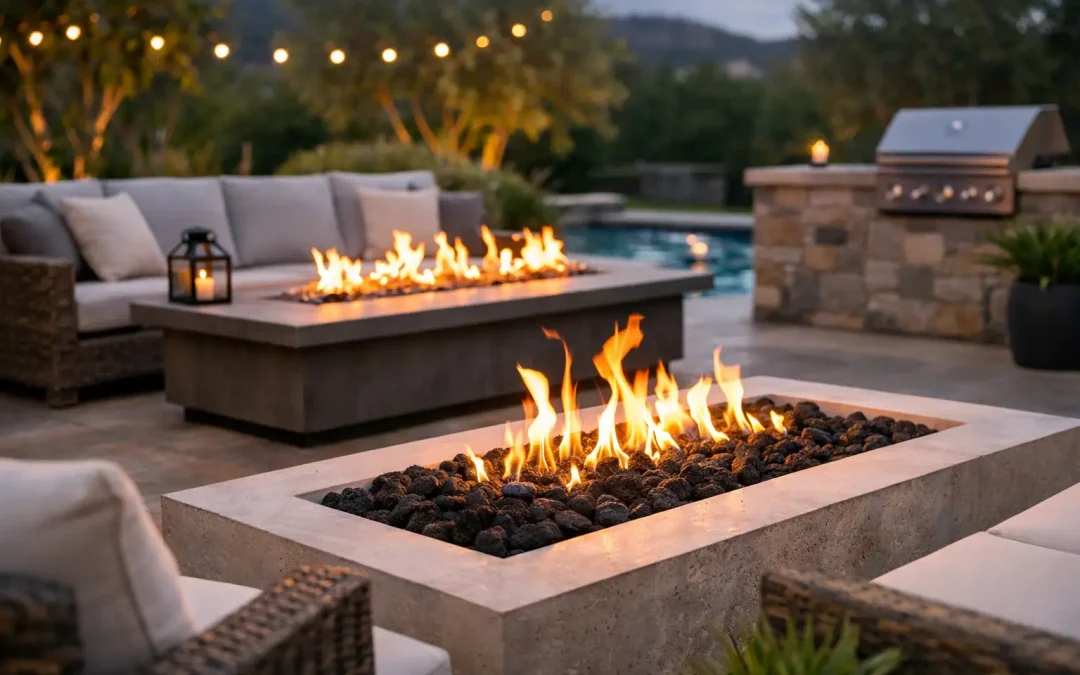
A backyard changes the moment a flame is added. What felt unfinished suddenly becomes a place people gather, linger, and actually use after sunset. That is the appeal of gas fire features – they bring warmth, atmosphere, and convenience without the smoke, ash, or unpredictability that often comes with wood-burning options.
For homeowners investing in outdoor living, the right fire feature is not just decorative. It affects how the space functions, how often it gets used, and how well it fits the architecture of the home. A well-planned installation can make a patio feel more refined, more comfortable, and more valuable year-round.
Why gas fire features stand out
The biggest advantage is control. With natural gas or propane, ignition is quick, flame height can often be adjusted, and there is no need to store wood or clean up debris afterward. If your goal is effortless comfort, gas is hard to beat.
There is also a design advantage. Gas systems allow for a cleaner, more tailored look, whether you want a linear fire table, a built-in fire pit, or a statement feature integrated into a seating wall. The flame becomes part of the overall design instead of feeling like a separate accessory.
That said, the best choice depends on how you plan to use the space. Some homeowners want a focal point for entertaining. Others want practical warmth beside a pool or on a covered patio. In both cases, the installation should be customized to the property rather than chosen from a catalog alone.
Choosing the right gas fire features for your space
A fire feature should match both the layout and the lifestyle of the property. Size matters, but so does placement. A large feature can anchor an expansive yard beautifully, while the same unit may overwhelm a smaller patio.
If your outdoor area is used for conversation and dining, a lower-profile fire table often makes sense. It keeps sightlines open and supports a relaxed, social layout. If the goal is visual impact, a larger fire pit or built-in linear feature may create the stronger architectural statement you want.
Fuel type also plays a role. Natural gas is ideal when a permanent line is available and you want consistent performance without refilling tanks. Propane can be the better fit where natural gas access is limited or where more flexibility is needed. Neither option is automatically better in every situation. It depends on the property, local code requirements, and how permanent you want the installation to be.
Design matters as much as heat
One of the most common mistakes with outdoor fire features is treating them as an afterthought. A beautiful patio with a poorly matched fire unit can feel disjointed. A more successful result comes from thinking about materials, proportions, and viewing angles from the start.
Stone, concrete, metal, and brick all create very different impressions. A modern home often pairs well with clean lines and minimalist finishes. A more traditional property may benefit from warmer textures and classic detailing. The flame media matters too. Fire glass gives a sleek, contemporary look, while lava rock or ceramic logs can create a more natural appearance.
The goal is not simply to add fire. It is to create a feature that feels intentionally built for the space. That is where professional planning makes a noticeable difference.
Safety and code compliance are not optional
Gas systems should never be approached as a casual DIY project. A fire feature may look simple on the surface, but the line sizing, ventilation, clearances, burner selection, and ignition components all need to be handled correctly.
This is especially true when the feature is installed near structures, under overhead coverings, or as part of a custom-built outdoor kitchen or lounge area. Improper installation can affect performance, damage materials, and create serious safety risks.
Working with licensed, insured, and TSSA-certified professionals helps protect both the property and the investment. It also helps ensure the finished feature performs the way it should – with stable flame, dependable ignition, and safe operation over time. For homeowners who expect a premium result, precision behind the scenes is just as important as appearance on the surface.
Built-in vs. portable options
There is a clear difference between a permanent fire feature and a portable unit, and the right choice depends on your priorities.
Portable options can be useful for flexibility and lower upfront cost. They may suit smaller spaces or homeowners who are still experimenting with layout. The trade-off is that they typically offer less visual integration, less heating power, and a less custom feel.
Built-in gas fire features create a more polished and lasting result. They can be sized to the space, finished to match the surrounding hardscape, and connected directly to the property’s gas system. They usually require more planning and investment, but they also tend to deliver the stronger long-term return in both usability and visual appeal.
For many higher-end outdoor spaces, built-in is the option that truly elevates the experience. It feels intentional, permanent, and aligned with the rest of the property.
Where gas fire features work best
Backyards are the obvious setting, but there are several ways to use fire effectively depending on the property.
A central fire pit works well for gathering areas where conversation is the priority. A linear burner can define the edge of a patio or create a striking transition between zones. Fire bowls are often used near pools or entry points to add drama and symmetry. On covered porches, a compact fireplace or contained fire table may provide ambiance without dominating the space.
The key is to think about function first. Where do people naturally sit? How does traffic move through the area? Where will the flame be most visible without becoming an obstacle? The best installations answer these questions early, before materials are selected and construction begins.
Maintenance is simple, but it still matters
One reason homeowners prefer gas is the easier upkeep. There is no ash to remove, no soot staining from regular wood burning, and no ongoing wood handling. That does not mean maintenance should be ignored.
Burners should be checked periodically, ignition systems should be tested, and the surrounding materials should be inspected for wear or movement. Outdoor conditions can affect performance over time, especially after harsh winters or heavy use during entertaining season.
Routine service helps keep the feature reliable and safe. It also protects the quality of the flame, which is a big part of why these systems are chosen in the first place. A premium installation deserves ongoing care, not just a one-time setup.
The real value is in how the space gets used
A fire feature rarely earns its value from heat output alone. Its real impact is in how it changes behavior. People stay outside longer. Evenings feel more relaxed. Entertaining becomes easier because the space has a natural focal point.
This is why customized planning matters so much. The right feature does not just fill an empty corner. It supports the way you live, host, and enjoy your home. It can make a patio feel finished, a pool area feel more inviting, or a commercial property feel more welcoming to guests.
For homeowners who care about craftsmanship, reliability, and a polished final result, gas fire features are one of the most effective upgrades available. When designed well and installed with expert care, they bring together comfort, elegance, and performance in a way few outdoor additions can.
At Platinum Gas, that kind of result starts with a tailored approach, careful planning, and certified workmanship that puts safety and service first.
The best fire feature is not the biggest one or the trendiest one. It is the one that fits your property so naturally that it feels like it should have been there all along.