
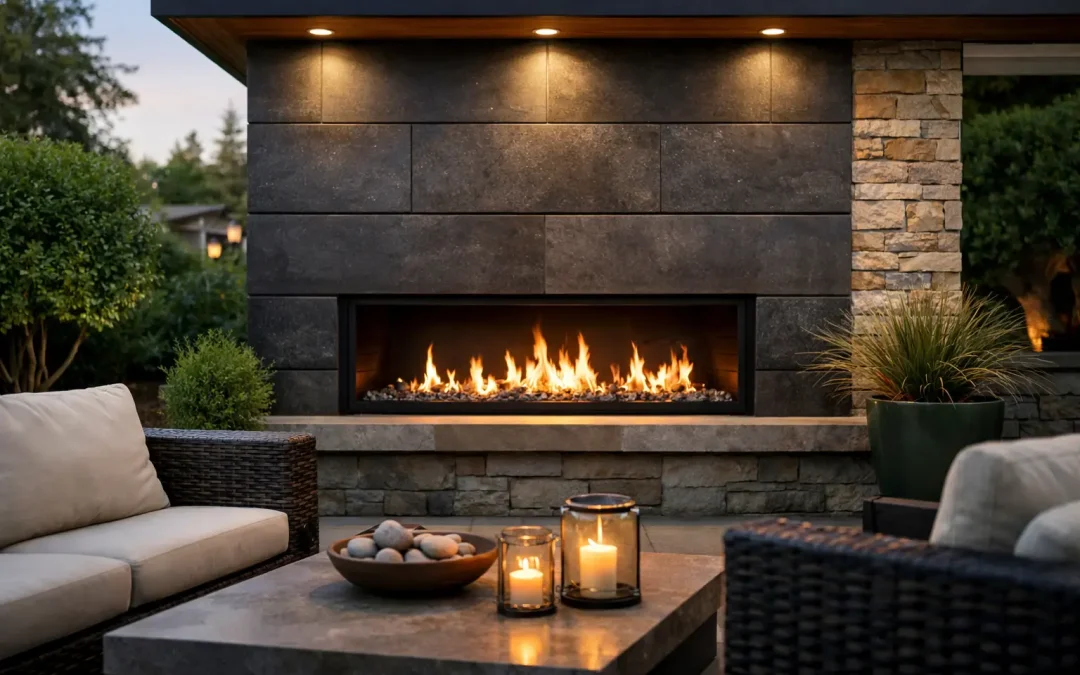
A cold evening changes fast when the fire is built into the architecture instead of sitting off to the side. An outdoor fire feature wall does more than add heat – it anchors the patio, frames the gathering space, and gives the backyard a finished, intentional look.
For homeowners investing in a higher-end outdoor living area, that distinction matters. A freestanding fire pit can be a great fit in the right setting, but a fire wall tends to feel more custom, more permanent, and more connected to the overall design of the property. It becomes part of how the space functions, not just one more accessory placed in it.
Why an outdoor fire feature wall changes the space
The biggest advantage of an outdoor fire feature wall is visual structure. It gives the eye a focal point and helps define where people gather, whether that is around a lounge set, an outdoor dining area, or a poolside seating zone. In larger backyards, it can also make open space feel more cohesive.
There is a practical side to that beauty. A wall can offer a degree of wind buffering, hide gas lines and controls more cleanly, and create room for integrated finishes such as stone, tile, concrete, or architectural block. If you want a result that feels built for the home rather than added after the fact, this approach usually delivers.
That said, the right design depends on how you plan to use the space. Some homeowners want a dramatic flame presentation that becomes the centerpiece of outdoor entertaining. Others want a quieter feature that adds warmth without dominating the patio. Neither approach is wrong. The best result comes from matching the scale of the wall, the fire opening, and the finish materials to the size and style of the property.
Design choices that make an outdoor fire feature wall feel custom
A premium fire wall starts with proportion. If the wall is too small, it can look underwhelming. If it is too large for the patio, it can overwhelm the space and make seating feel cramped. This is one reason custom planning matters. The wall should relate to nearby furniture, door openings, sightlines, and any surrounding hardscape.
Material selection also does a lot of the heavy lifting. Natural stone creates texture and a more timeless appearance. Large-format porcelain or tile can feel clean and contemporary. Poured concrete and smooth masonry often suit modern homes especially well. If your home already has a strong exterior palette, repeating those materials in the fire wall helps the whole yard feel more refined.
Flame style is another major decision. A linear burner gives a sleek, modern profile and works well in longer walls. A more traditional rectangular opening can feel warmer and more architectural. The right choice often comes down to the tone of the project. Sharp lines and minimalist finishes usually pair well with linear fire. More classic homes may benefit from a design with a bit more visual depth.
You can also think beyond the flame itself. Some fire walls include integrated bench seating, wood storage for visual effect, low-voltage lighting, or a mounted television above the fire feature. Those additions can look exceptional when they are planned from the start. They can also look forced when added later without enough thought to spacing, heat management, and overall balance.
Gas or propane? The answer depends on the property
For many homeowners, natural gas is the preferred fuel source because it offers steady performance and eliminates the need to refill tanks. If the home already has gas service and capacity to support the feature, natural gas can be a very convenient long-term option.
Propane can be an excellent solution as well, especially where natural gas is not available or where site conditions make propane more practical. It gives flexibility, but it also requires proper tank planning and a clean approach to concealment and access. A premium installation should never leave those details feeling like an afterthought.
This is where expert guidance matters. The fuel choice is not only about convenience. It affects line sizing, appliance selection, placement, controls, and service access. A fire feature that looks beautiful on day one still needs to perform reliably year after year.
Safety is not a detail – it is the project
Outdoor fire features should feel effortless to use, but the work behind them is anything but casual. Clearance requirements, ventilation, ignition systems, shutoff access, and the relationship between the fire feature and surrounding construction all need to be handled correctly.
That is especially true when the wall is close to a home, covered structure, pergola, outdoor kitchen, or seating area. The materials surrounding the fire opening must be suitable for heat exposure, and the assembly needs to be installed to code and manufacturer requirements. A design can be beautiful on paper and still be wrong for the application if those factors are ignored.
For homeowners, the simplest takeaway is this: the fire feature should be designed as a gas installation, not just a masonry project. You want licensed, insured, TSSA-certified professionals involved early enough to shape the plan before construction decisions create limitations. That is how you protect both the design and the long-term safety of the space.
Performance matters just as much as appearance
A fire wall should not only look good in photos. It should light reliably, burn consistently, and produce the kind of flame presentation you expected when you made the investment. That comes down to more than the burner itself.
Gas pressure, line sizing, venting requirements where applicable, weather exposure, and control system quality all influence performance. So does the placement of the feature within the yard. If the wall sits in a heavily exposed area, wind can affect flame stability and comfort. Sometimes a minor shift in orientation solves the issue. Other times the design needs to account for the environment in more intentional ways.
Maintenance should be part of the conversation too. Outdoor systems face moisture, debris, freeze-thaw cycles, and seasonal wear. Choosing quality components and making sure service access is built in can save frustration later. Premium projects hold up better because they are designed for real use, not just first impressions.
Planning the right location for comfort and impact
Placement shapes the experience more than many homeowners expect. A fire wall that faces directly into the main seating area can create a strong social focal point. A side-positioned wall can add warmth and ambiance without interrupting views of a pool, garden, or open landscape.
The best location often depends on traffic flow. You do not want guests walking through the main heat zone to move around the patio, and you do not want the wall to make the area feel closed off. If the fire feature is meant to support entertaining, there should be enough room for circulation, furniture spacing, and safe separation from flame.
Sightlines from inside the home can also influence placement. In many well-designed projects, the outdoor fire wall is positioned so it adds visual appeal even when viewed from the kitchen, great room, or rear windows. That kind of integration is what makes the feature feel truly custom.
What to expect from a premium installation process
A higher-end outdoor fire feature wall should begin with consultation, not a quick price quote. The right installer will want to understand how you use the space, what fuel options are available, what aesthetic you prefer, and what conditions the property presents.
From there, the project should move into clear planning around appliance selection, gas requirements, safe clearances, finish coordination, and site-specific constraints. Good communication matters here. Homeowners should know what is being proposed, why it is being recommended, and how the installation will support both appearance and performance.
That level of care is what separates a bespoke experience from a basic install. At Platinum Gas, that means approaching every outdoor fire project with expert attention to safety, craftsmanship, and lasting reliability. For homeowners who want the space to feel polished from every angle, that standard makes a visible difference.
An outdoor fire feature wall is one of those upgrades that can elevate the whole property when it is done well. Not because it is trendy, but because it brings together comfort, architecture, and outdoor living in a way few features can. If you are considering one, start with the part that matters most: a design and installation plan that respects both the beauty of the space and the precision required behind it.