
Safety and Maintenance
Propane Fireplace Won't Light? Safe Owner Checks Before Service
When a propane fireplace will not light, the safest first step is to rule out an emergency and use only the non-invasive checks allowed by the exact owner manual.
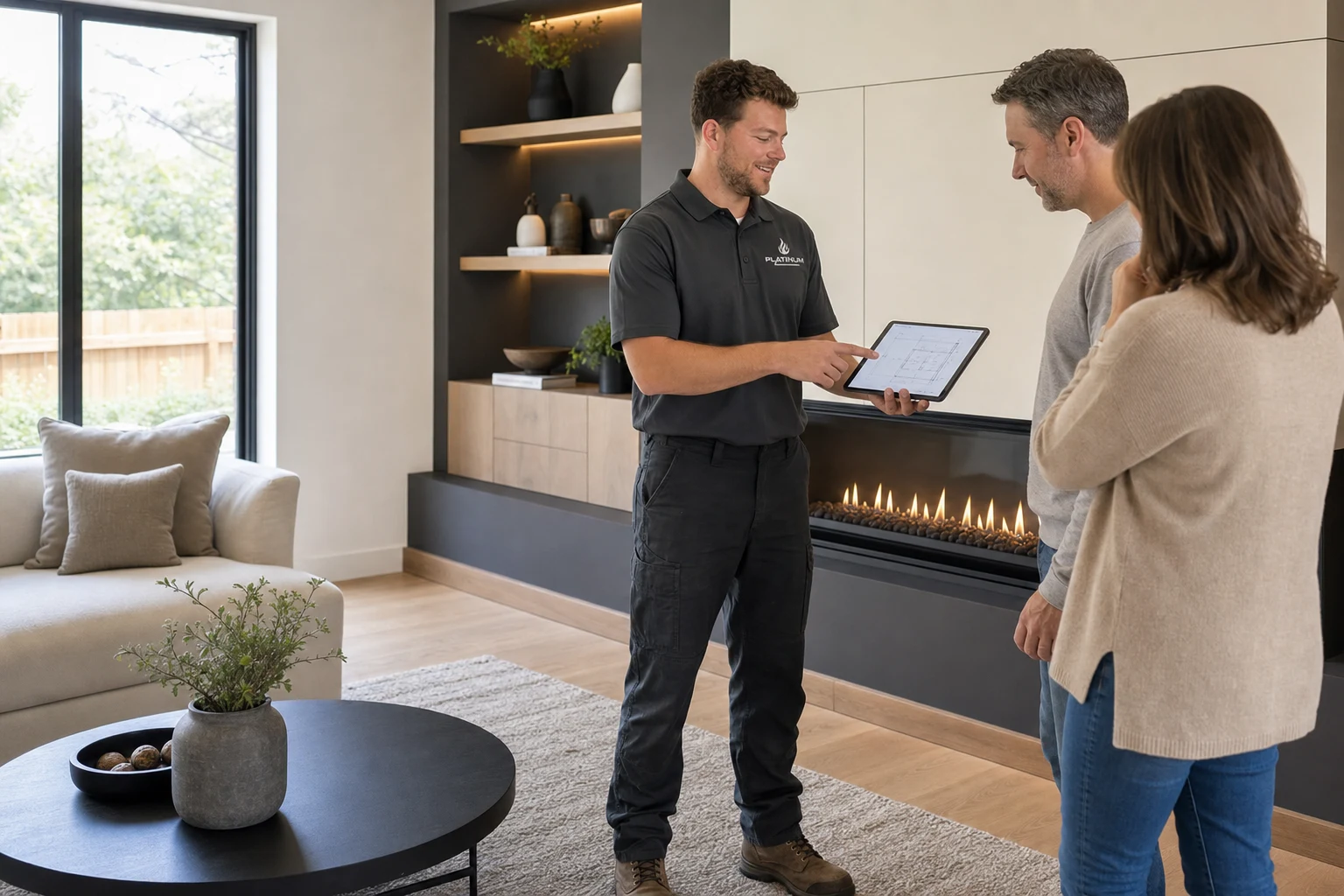
Safe checks
Start with what you can observe
If there is propane odour, hissing, an alarm or suspected leak, leave immediately and call 911 and the propane supplier's emergency number from a safe distance. Otherwise, confirm only ordinary owner-facing items described in the exact manual: appliance switch or remote mode, thermostat setting, household power or approved battery status, displayed code and whether the property propane supply is known to be available. Do not open panels, relight a pilot generically, adjust a regulator or repeatedly reset the unit.
Stop immediately for odour, hissing or alarms
Propane is odorized to help people notice a release. If the smell is present, a hissing sound suggests escaping gas, or a carbon-monoxide alarm activates, do not attempt to restore the fireplace. Move everyone away, avoid ignition sources and call emergency services and the propane supplier from a safe location.
Do not use a phone beside the appliance, operate a light switch, start a vehicle or turn a valve in the suspected area. Do not re-enter until emergency responders or the fuel supplier say it is safe. A no-light complaint becomes secondary once a possible leak or exposure exists.
- Evacuate people and pets.
- Call 911 and the propane supplier from a safe distance.
- Avoid switches, flames, tools and vehicles nearby.
- Do not re-enter to collect model information.
Find the exact owner manual
Use the rating information visible without removing service panels, previous records or the manufacturer manual library to identify the exact model. Fireplace controls differ: standing pilot, intermittent pilot, electronic ignition, wall switch, remote receiver and battery backup can behave differently. Instructions for one model can be unsafe or ineffective on another.
Read the troubleshooting and shutdown sections before touching any owner control. If the manual says a qualified service person is required, stop there. Keep the model and manual revision for the service request instead of trying a procedure from a video with a similar-looking fireplace.
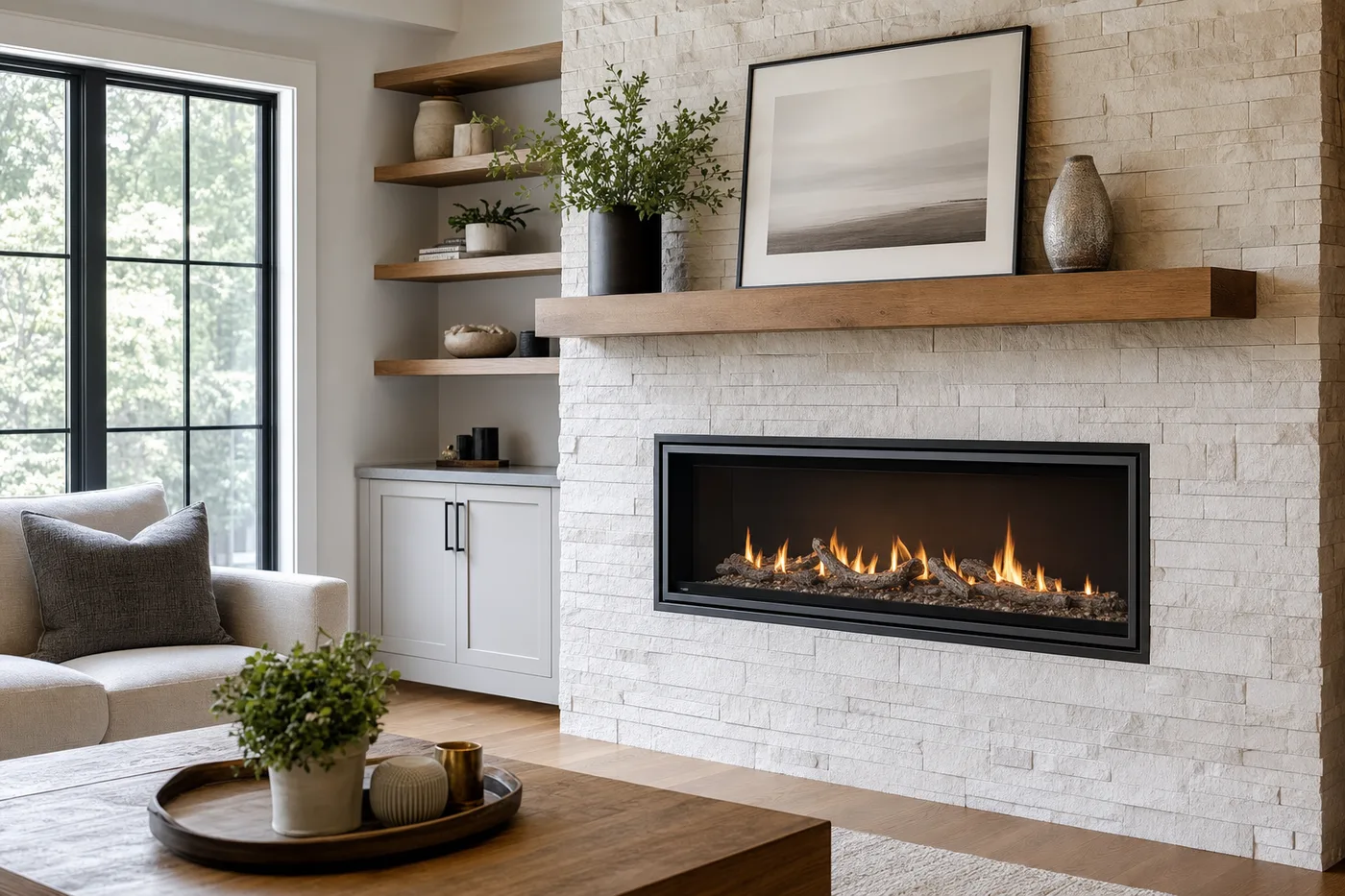
Check only normal owner-facing controls
When there is no emergency condition, confirm that the fireplace is in its normal operating mode, the thermostat requests heat, the remote is communicating and the wall switch has not been unintentionally turned off. Replace remote or backup batteries only when the owner manual describes how and where to do so without entering a service compartment.
Check whether household power is available to other ordinary devices on the circuit, but do not open electrical covers or reset a breaker repeatedly. Record indicator lights or displayed codes exactly. A photo can prevent a code from being lost when the unit is later powered down.
- Switch, remote and thermostat mode.
- Approved owner-replaceable battery condition.
- Household outage or obvious tripped control.
- Exact code, light pattern and time of failure.
Need help with a problem?
Tell us what is happening
Note what you can see, hear or read from the normal controls. Do not remove panels, alter gas fittings or perform regulated tests yourself.
Check supply information, not valves or regulators
A propane delivery record or supplier account can help establish whether the tank is expected to contain fuel, and other propane appliances may provide context. Do not use another appliance as a leak test, strike the tank, adjust the regulator or try to bleed a line. A gauge reading is not permission to work on the supply.
Tell service whether the tank was recently filled, the property ran out of fuel, a regulator or appliance was changed, or other propane equipment is also affected. Loss of supply can require supplier and technician procedures before appliances return to service; repeated ignition attempts are not a substitute.
Only follow lighting instructions for your model
Older standing-pilot appliances and current electronic-ignition fireplaces do not share one relighting method. The valve positions, purge rules, waiting times, control sequences and stop conditions belong to the exact manufacturer documentation. Some tasks are intended only for trained service personnel.
Do not remove glass, move logs or media, clean the pilot, insert tools, adjust air shutters or bypass sensors. If owner instructions do permit a defined reset or lighting sequence, follow them exactly once and stop if the expected result does not occur. Never continue when propane odour appears.
- No generic pilot-lighting steps.
- No glass, burner or media removal.
- No regulator, valve or pressure adjustment.
- No repeated resets after failed ignition.
Tell us what is happening
Provide the model, fuel, control type, exact symptom, displayed code, when it last operated normally and any recent propane delivery, outage, renovation or service. Explain whether the unit clicks, sparks, lights briefly, shuts down or remains completely inactive. Mention odour or alarms first.
Wide photos of the fireplace and accessible exterior termination can help with preparation, but they do not replace on-site testing. A qualified technician can follow the manufacturer sequence, verify ignition and safety controls, assess approved media and glass condition, and coordinate supply questions with the propane supplier where needed.
Questions we hear
Frequently asked questions
No. Use only the exact manufacturer instructions for the model, and stop when they require professional service. Ignition systems and valve controls are not universal.
Tell the propane supplier and service company. Supply restoration can require specific safety procedures before appliances are returned to operation. Do not repeatedly attempt ignition.
They can affect some control systems. Replace only owner-accessible batteries in the manner described by the exact manual, after ruling out odour or other emergency conditions.
No. The glass and media are parts of the listed appliance system. Leave internal inspection, cleaning and ignition diagnosis to qualified service.
References
Sources and further reading
Ask about your project
Tell us about the property and equipment
Send the service address, timing, appliance model and safe photos that show the work area.