
Fireplace Guides
Gas vs Electric Fireplace: Installation, Heat and Upkeep Compared
Gas and electric fireplaces can both create a strong focal point, but they differ in fuel, venting, heat delivery, outage behaviour and service requirements.

Before you compare
Start with the property and equipment
Choose gas when realistic flame, useful room heat and a vented fuel-burning appliance fit the room and property infrastructure. Choose electric when a simpler non-combustion installation, lower heat output or primarily visual feature better matches the project and the electrical system can support the exact unit. Compare the full installation cost and what each model does. Neither type is best for every home.
Compare what each appliance actually does
A gas fireplace burns natural gas or propane in a listed firebox and vents combustion products outdoors through its approved system. Many current units provide both visible flame and supplemental room heat across a control range. An electric fireplace uses lighting or display effects to simulate flame and may include resistance heat with a fan.
The categories contain substantial variation. Some electric products are visual media features with modest heaters; others are designed for recessed installation. Gas products vary by format, heat output, vent arrangement and controls. Compare exact models rather than the best demonstration from one category with the most basic unit from the other.
The installation work is the biggest difference
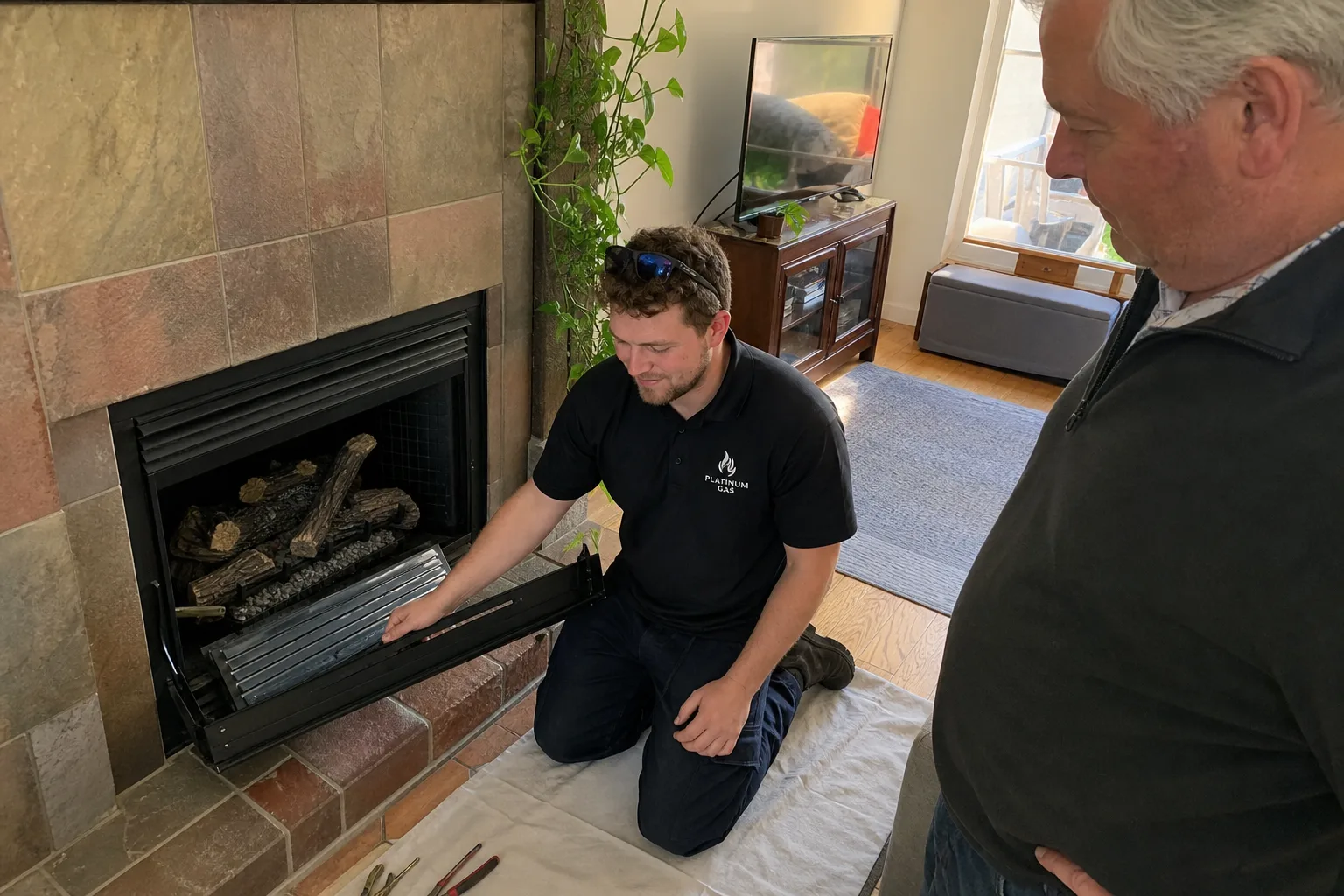
A gas fireplace needs a suitable gas supply, vent route and outside outlet, the right opening or enclosure, room around it, electrical connections and professional installation and startup checks. Construction and finishing must preserve service access and manual-defined non-combustible zones.
Electric planning avoids a fuel line and combustion vent, but still requires an approved location, electrical capacity and circuit arrangement, heat clearances, airflow and access. A recessed unit can require framing and finish coordination. Compare the full job, including demolition, electrical, framing and finishes, not just the appliance prices.
- Fuel supply and venting for gas.
- Circuit and electrical capacity for electric.
- Framing, finish and heat clearances for both.
- Access for removal, service and controls.
Heat experience varies by model and room
Gas fireplaces can offer substantial supplemental heat, but output must fit the room. Electric resistance heaters often have lower output constrained by their electrical supply. That can suit a small room or a feature used mainly for ambience, while it may not meet a larger heating goal.
Compare minimum and maximum heat output, distribution, fan noise, thermostat behaviour and room conditions. A homeowner who dislikes fan sound may experience each category differently. Do not infer performance from viewing width: a broad electric display can have modest heat, while a compact gas insert may deliver meaningful output.
Before you choose equipment
Find the right fit for your home
Tell us which models you like and where you want the appliance. We can help check the fuel supply, venting, space and access before you buy.
Flame realism and design are personal decisions
Gas provides a physical flame interacting with logs, glass or other approved media. Electric products use lighting, video or reflective effects and can offer colours or visual modes without heat. Neither experience can be ranked for every household. View candidate products in person when the visual result is central.
Consider daytime visibility, viewing angle, media style, sound, glass reflection and how the unit looks when off. Then check that the preferred design can be installed in the intended wall. A dramatic showroom layout should not override clearances, vent feasibility or access.
Power outages need model-specific answers
An electric fireplace does not operate without household electricity. Gas-fireplace outage behaviour varies by ignition, controls, fan, lighting and backup arrangement. Some flame functions may operate while powered accessories do not; other models require line power. The answer must come from the exact manual.
Do not purchase a gas fireplace as emergency heat without verifying what works during an outage, how controls are used and whether the appliance is approved for unattended or primary-heating use. Keep required carbon-monoxide alarms and broader household emergency planning in place.
- Electric flame and heat require power.
- Gas outage capability varies by control system.
- Fans and lighting may stop even if flame can operate.
- Manual instructions govern every backup arrangement.
Maintenance and ownership differ
Gas appliances require care and service according to their manual, including attention to burner, ignition, glass, media, venting and fuel-system conditions by qualified personnel where required. Electric products avoid combustion maintenance but still need clear airflow, intact electrical components, clean accessible surfaces and manufacturer-directed service.
Compare warranty terms, parts availability, local service, expected controls and the ease of accessing the unit after finishes. A balanced decision sheet includes project cost, desired heat, visual preference, fuel or electrical work, outage needs and maintenance expectations. That is more durable than assuming gas is always premium or electric is always simple.
Compare the room after installation, not only the appliance
A gas termination can affect the exterior elevation, while an electric fireplace can affect receptacle, circuit and wall-depth planning. Either option can change cabinetry, television placement, seating and finish material. Ask for a drawing of the wall and a quote for all the work before deciding which installation is simpler.
Also compare removal and future replacement. A tightly framed unit with inaccessible wiring or blocked service panels can create cost later regardless of technology. Preserving documented access and model information is part of a good design, even when the fireplace is primarily decorative.
Questions we hear
Frequently asked questions
It depends on the exact model, power draw and installation. Follow the manufacturer electrical requirements and have the available circuit and panel capacity assessed.
Many gas models offer higher useful room output than common electric resistance units, but compare the exact products and room. Viewing size does not establish heating capacity.
No. The product must be approved for the proposed installation, physically fit, have required electrical supply, airflow and clearances, and remain serviceable.
Some models support limited operation and others do not. Controls, ignition, fan and lighting vary. Check the exact current manual before making outage capability a purchase criterion.
References
Sources and further reading
Ask about your project
Tell us about the property and equipment
Send the service address, timing, appliance model and safe photos that show the work area.