
Pool Heating
Pool Heater Selection Checklist for Inground Pools: 7 Questions
The best heater is not a universal brand or largest BTU number. It is the current approved model that fits the pool goal, site services and operating pattern.
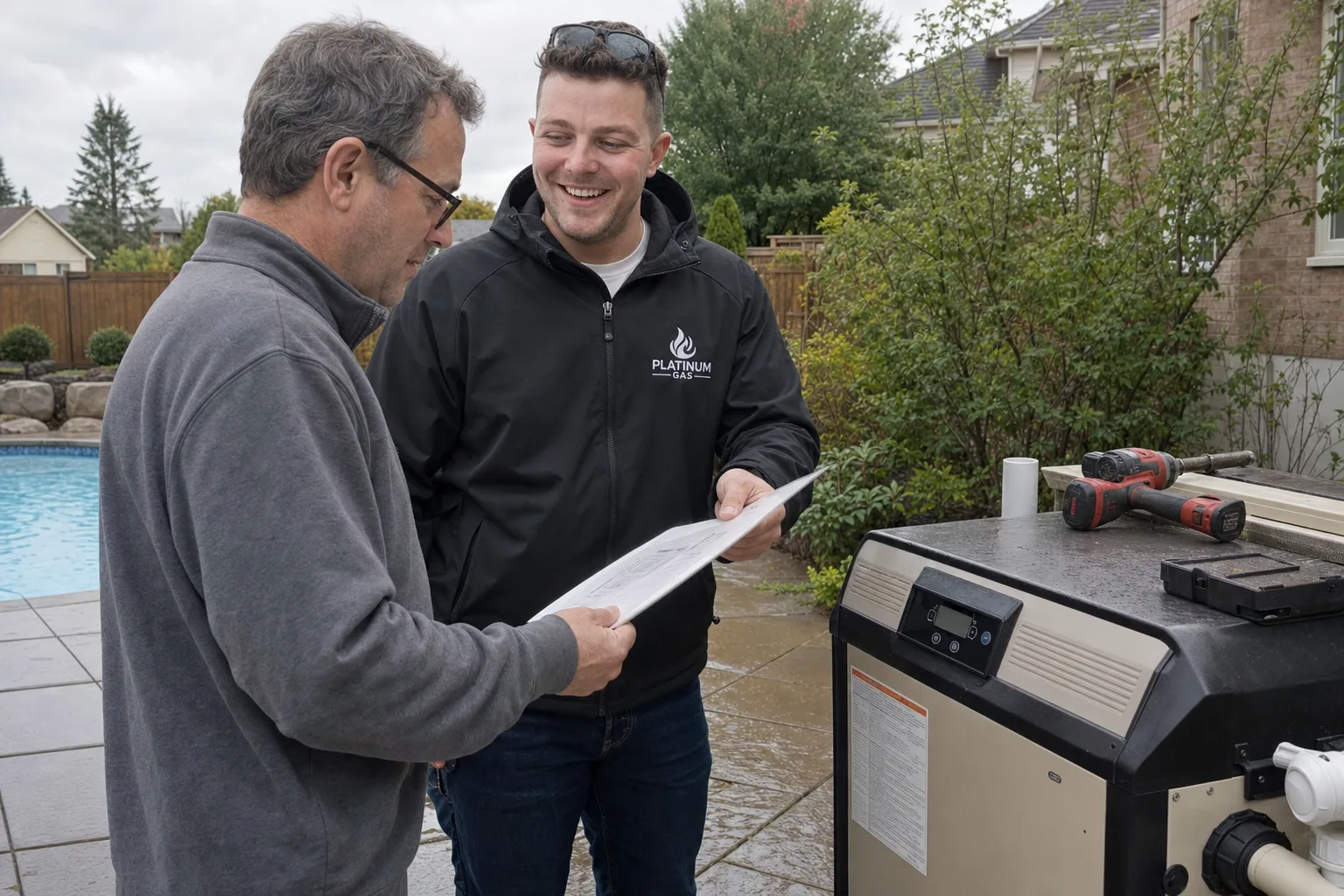
Safe checks
Start with what you can observe
Choose an inground-pool heater by answering seven questions: when will the pool be used, what temperature and recovery time are expected, how consistently will it be covered, what gas and electrical capacity are available, what can the equipment pad support, how does each candidate perform in the planned conditions, and who can service it locally. Use those answers to compare exact models, not an unsupported "best" ranking.
Question 1: When and how will the pool be used?
Define the real swim season, not an abstract goal of "longer." Midsummer daily use, occasional weekends, evening swimming and shoulder-season operation create different recovery and maintenance patterns. Note whether the pool is allowed to cool between uses and how much notice the household has before swimming.
A gas heater can suit higher-output, intermittent recovery. A heat pump can suit steady maintenance when ambient conditions and electrical service are favourable. Other technologies may fit specialized loads. The shortlist begins with behaviour, then tests equipment against the property.
Question 2: How warm, and how quickly?
Write a starting water temperature, desired temperature and acceptable number of hours. Pool volume helps estimate water-mass energy, while surface area, wind, air conditions and cover use affect ongoing losses. Avoid vague promises such as "heats fast."
Use the same scenario for every candidate and distinguish appliance input from delivered heat. For heat pumps, compare output at air, humidity and water conditions relevant to the intended season. For gas equipment, compare output and efficiency rather than input alone.
- Pool dimensions, surface area and volume.
- Starting and target water temperatures.
- Acceptable recovery window.
- Weather and cover assumptions.
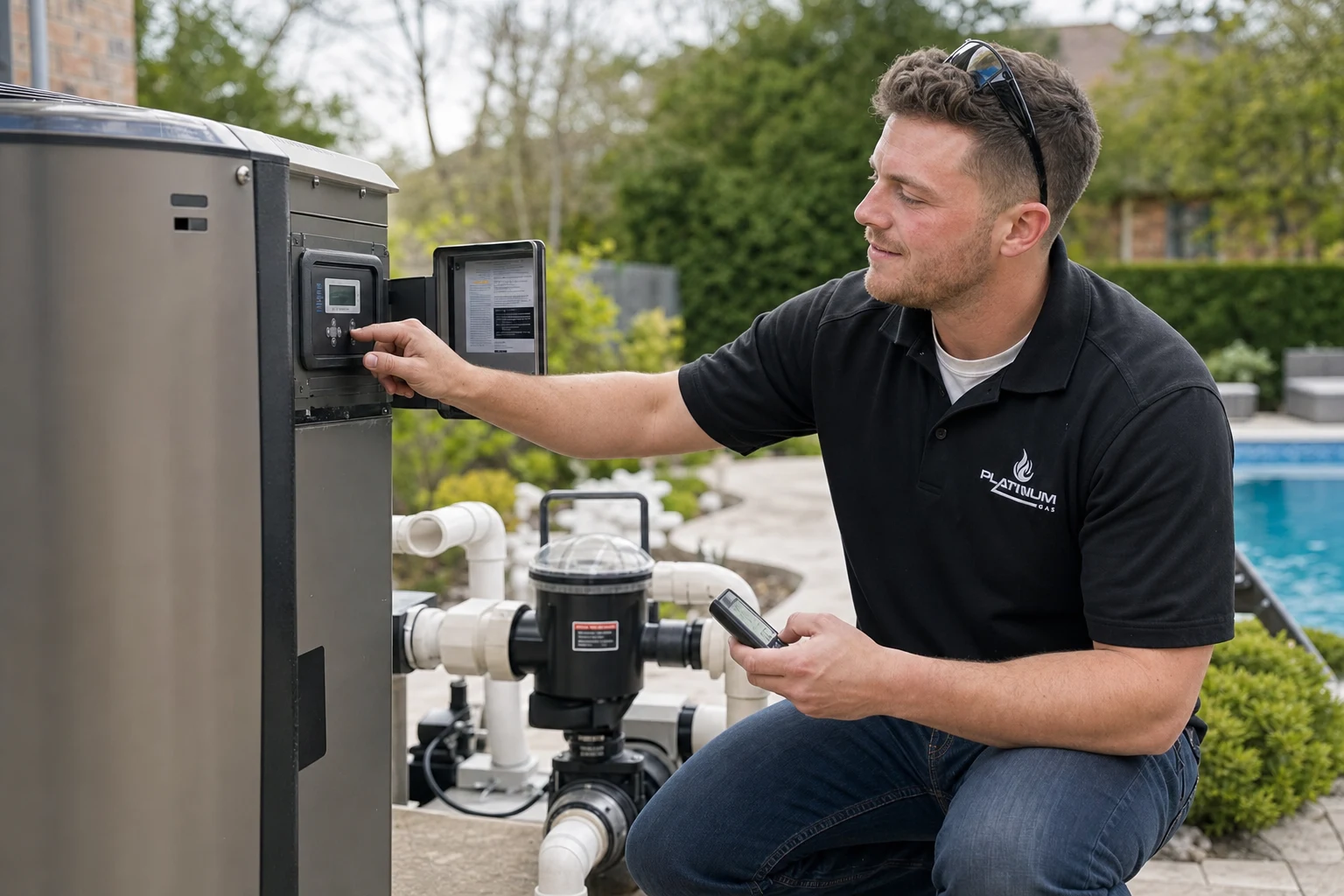
Question 3: Will the pool actually be covered?
Evaporation at the water surface is a major source of outdoor-pool heat loss. A fitted cover used consistently can change the operating scenario, while a cover that is difficult to handle may remain unused. Size and cost discussions should reflect actual household habits.
Record whether the cover is used overnight, between swims or only during vacations. Note wind exposure and shade. The heater cannot compensate economically for every avoidable loss, and a larger unit does not make cover behaviour irrelevant.
Before you request installation
Tell us about your installation plans
Tell us what you'd like installed, where it will go and your ideal timing. Add a model or photo if you have one. Leave gas connections and venting to a qualified installer.
Question 4: Is the gas or electrical supply ready?
For gas, review fuel type, meter or propane system, regulator context, total connected load, route and other appliances. For a heat pump or resistance system, review electrical service, panel capacity, circuit route, disconnect and model requirements. Existing connections are clues, not proof.
Ask for the infrastructure work as part of the comparison. A seemingly affordable heater can require a major gas or electrical change. The best-fit model may be one step down or a different technology once the entire property system is considered.
- Current gas and propane infrastructure.
- Electrical service and panel capacity.
- Other existing and planned loads.
- Route, access and related-trade scope.
Question 5: What fits with your pool equipment?
Document pad dimensions, clearances, airflow, drainage, water-flow path, filter and pump, automation, service access and neighbouring openings or property features. Equipment that technically fits the footprint may still lack required airflow or maintenance space.
Replacement plumbing positions can affect labour, but they should not force an unsuitable selection. Confirm minimum and maximum flow requirements and how controls communicate. Preserve space to remove panels and major components without dismantling the whole pad.
Question 6: What do current performance tables show?
Read the specification and manual for the exact Canadian model. Check rated output, efficiency or coefficient of performance, test conditions, water-flow requirements, operating limits, sound information, controls and warranty conditions. A brand reputation does not replace model data.
For heat pumps, output can fall as ambient conditions change. For gas, high input requires adequate supply. Compare candidates at the same stated scenario and preserve the document revision. This prevents a favourable number from a different model or climate being carried into the recommendation.
Question 7: Who will install and service it?
Verify qualified local support before purchase. Ask who will handle the gas, electrical and pool-plumbing work, how warranty service is arranged, which parts are available and whether there will be room to service the equipment. Imported or discontinued equipment can create a difficult ownership experience even when the purchase price is attractive.
Finish with a written decision sheet: goals, assumptions, candidate models, infrastructure work, expected operating pattern, service support and exclusions. That is a defensible answer to "best pool heater" because it is tied to the actual inground pool and current equipment.
- Qualified installation responsibilities.
- Local warranty and parts path.
- Clear commissioning and owner orientation.
- Documented model, assumptions and tradeoffs.
Questions we hear
Frequently asked questions
There is no one size. Surface area, volume, target rise, recovery time, weather, cover use and utility capacity all matter. Use current manufacturer data and a site assessment.
No. A larger model may exceed gas, electrical, water-flow or pad capacity and may not solve excessive heat loss. Select within the complete system constraints.
Brand can inform service support, but compare the exact model, Canadian documentation, operating conditions, warranty path and local parts availability.
Provide the entire equipment pad, current heater label, pool and cover context, utility areas and the proposed route. Include dimensions and current equipment models where accessible.
References
Sources and further reading
Ask about your project
Tell us about the property and equipment
Send the service address, timing, appliance model and safe photos that show the work area.