
Outdoor Living
Outdoor Kitchen Gas Planning Checklist: Grill, Side Burner and Future Loads
The gas plan belongs at the start of an outdoor-kitchen design, while appliance models, cabinet openings, utility routes and finish details can still change.
Safe checks
Start with what you can observe
Plan an outdoor-kitchen gas line from a complete appliance schedule: exact grill, side burner and any approved future gas loads, each with its fuel and input from the current manual. A qualified assessment then considers total demand, supply capacity, route, protection, accessible shutoffs, clearances, ventilation and construction sequence. Do not size the line from the grill alone or assume a stub left for a barbecue can serve a larger kitchen.
Choose the appliances before sizing the gas line
Write down the exact Canadian model, fuel and rated input for every gas appliance planned now. A built-in grill, side burner, pizza oven or patio heater may have different supply and enclosure requirements. Marketing categories are not design values, and two products with similar widths can place their connections in different locations.
Add realistic future loads instead of leaving an undefined extra connection. The technician can consider the complete demand and decide whether a capped future branch is appropriate. If models are not selected, identify the range of approved equipment being considered and keep the cabinet and gas plan provisional until current manuals are available.
- Exact make, model, fuel and rated input.
- Manufacturer connection location and approved connector details.
- Required cabinet openings, ventilation and clearances.
- Future appliances described by a real planning allowance.
Check the gas supply for the whole home
The outdoor kitchen shares the property fuel system with furnaces, water heaters, fireplaces, ranges, pool heaters and other loads. A nearby pipe or old barbecue outlet does not prove adequate capacity. The assessment considers fuel source, meter or propane arrangement, pressure, connected demand, pipe route and the requirements of the proposed appliances.
Bring a full appliance list and photos of accessible mechanical areas. If a pool heater or fireplace is planned later, mention it now. Coordinating the larger system can prevent a finished patio from being reopened because a future load was ignored. Any utility or propane-supplier review should be identified before construction dates are promised.
Plan the route before paving and cabinets
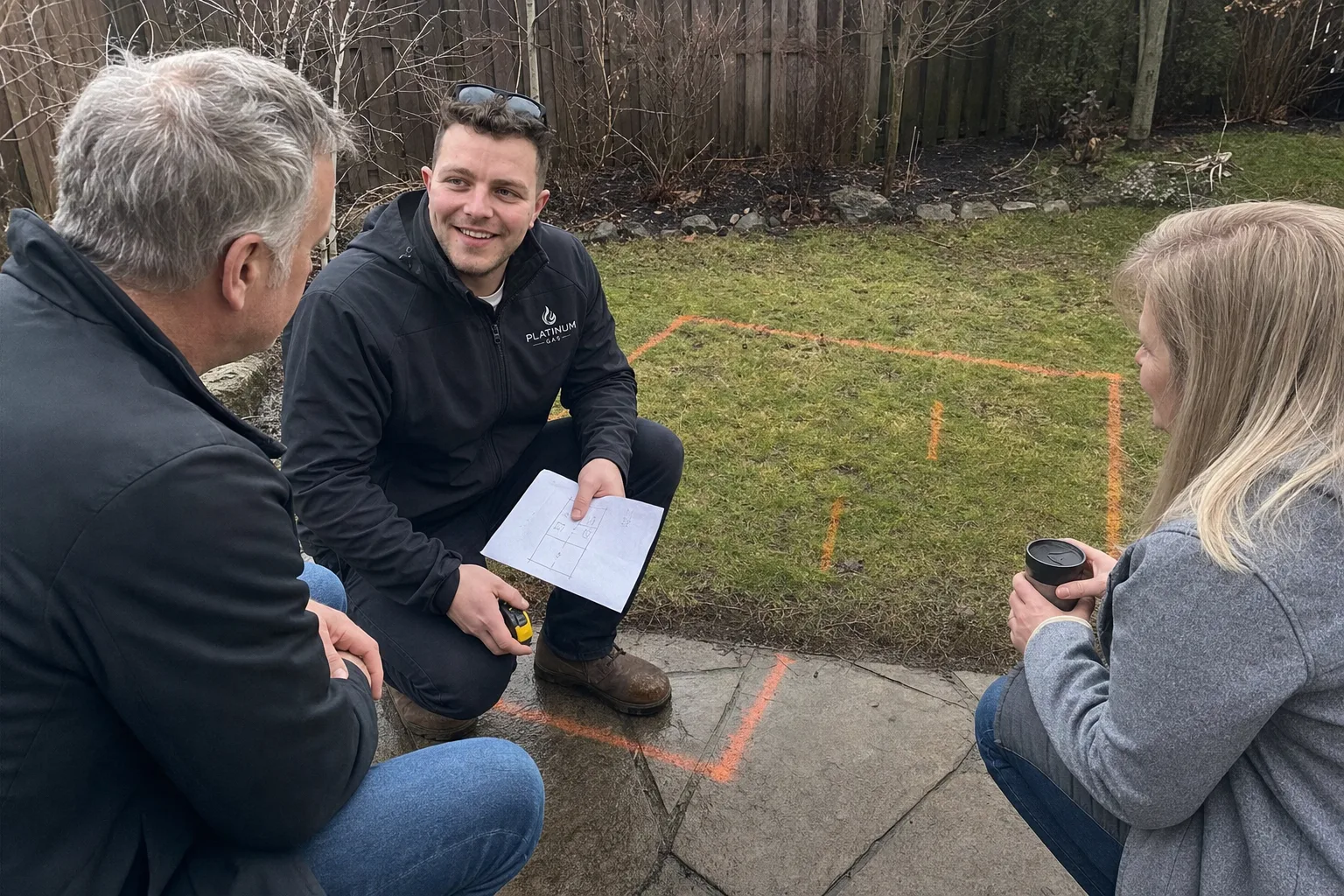
Routing affects excavation, sleeves, wall penetrations, protection from physical damage, drainage context, access for testing and where connections emerge in the kitchen. The shortest visible line is not necessarily an approved or buildable route. Existing utilities must be located before digging, and private lines may require separate locating arrangements beyond the public locate service.
Show the technician the complete site, not just the island. Mark planned footings, retaining walls, stairs, gates, trees, drainage, electrical runs and finished elevations. The route should be coordinated while dimensions can change, then preserved on drawings so another trade does not build over access or damage the installed line.
- Request Ontario One Call locates before excavation.
- Identify private utilities and irrigation separately.
- Coordinate footings, sleeves, drainage and final grade.
- Preserve access to connections and testing points.
Before you request installation
Tell us about your installation plans
Tell us what you'd like installed, where it will go and your ideal timing. Add a model or photo if you have one. Leave gas connections and venting to a qualified installer.
Keep shutoffs and service points usable
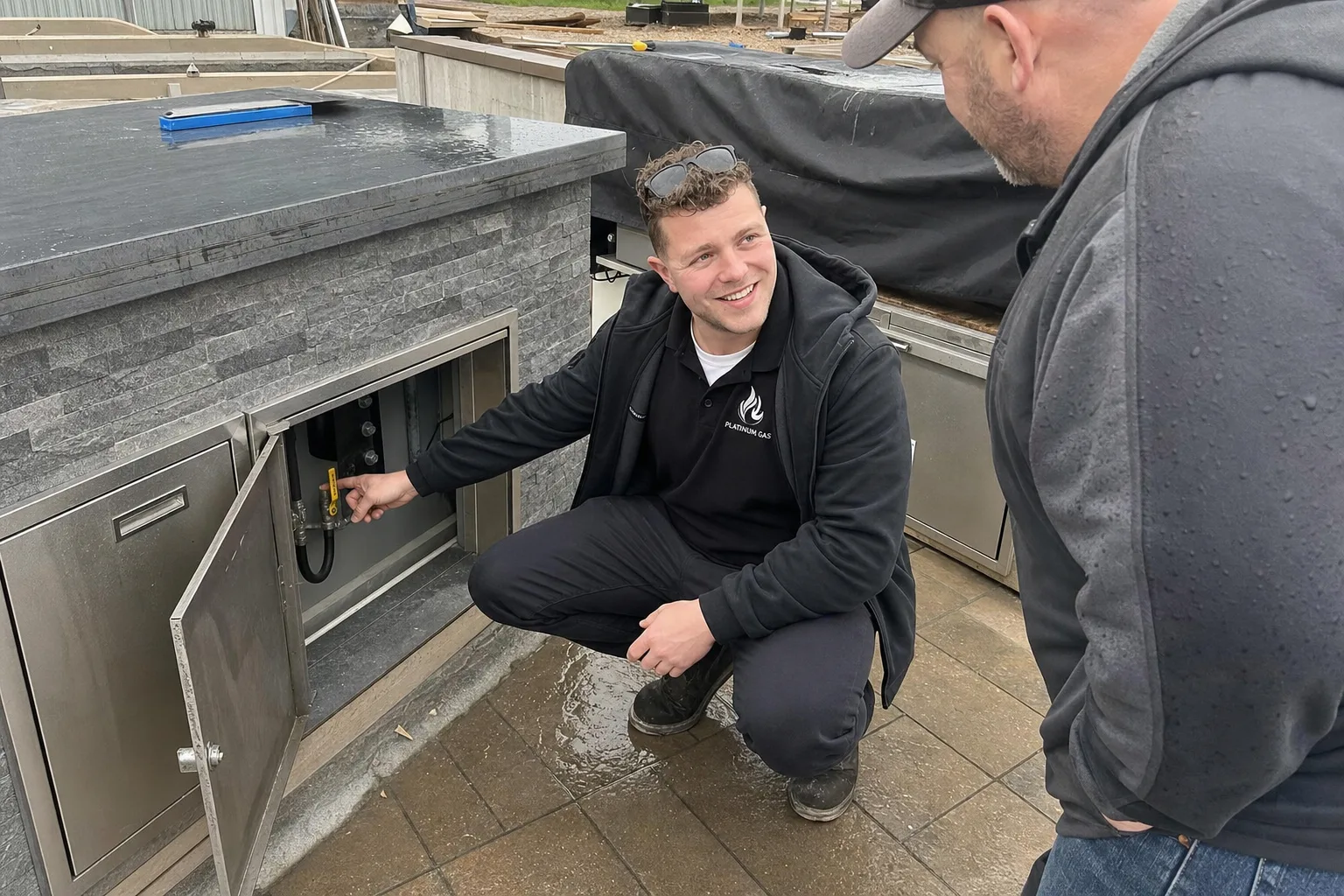
Each appliance and the larger installation need accessible controls as required by applicable rules and the manufacturer. A shutoff hidden behind a fixed drawer, stone panel or hot appliance is not useful in normal service. Connection spaces also need to respect heat, movement, sharp edges and manufacturer restrictions.
Review access with cabinet doors, appliance trays and finishes shown in their final positions. Ask how the grill will be removed for service and what must remain visible. The cleanest design integrates access deliberately rather than trying to disguise every component after the island is built.
Build the cabinets to suit the appliance manual
Built-in outdoor appliances have exact requirements for combustible construction, ventilation openings, supports, protective liners, overhead surfaces and adjacent equipment. Propane cylinders and regulators have their own location requirements. A generic cabinet cutout copied from another grill can conflict with the selected model.
Give the fabricator and landscape contractor the current installation manual and approved submittal information. Resolve conflicts before slabs, stone and countertops are finalized. The gas technician should not be expected to authorize a cabinet design that blocks ventilation, violates clearances or prevents the appliance from being serviced.
- Use the manual revision for the exact appliance.
- Confirm combustible and non-combustible construction details.
- Preserve required ventilation openings.
- Check overhead structures, doors and traffic paths.
Plan when to test, finish and start up
Plan when to install the line, leave it accessible for required testing or inspection, bring in the cabinets and finish connecting and checking the appliances. Concealing work too early can create demolition and schedule delays. Conversely, leaving exposed components unprotected during landscaping can create damage.
Before the installers leave, ask for a walkthrough and keep the appliance models, fuel type, shutoff locations, test records and manuals. Ask who will handle the electrical work, appliance assembly, ventilation, stonework and winter care. A useful quote explains what is included, what is not and the order of the work.
Questions we hear
Frequently asked questions
It might, but only after capacity, pressure, route, connected loads and exact appliance inputs are assessed. A convenient outlet does not establish that it can serve a grill plus side burner or future equipment.
Not as a final, unchangeable design. Select appliances and coordinate connection locations, ventilation, clearances, shutoff access and route before cabinet and countertop dimensions are frozen.
A qualified designer can consider a defined future load and whether provision is appropriate. The future appliance still requires approval, connection and commissioning when installed.
The excavator must ensure required locates are in place before digging. Ontario One Call covers participating buried infrastructure; private lines such as owner-installed utilities may require separate locating.
References
Sources and further reading
Ask about your project
Tell us about the property and equipment
Send the service address, timing, appliance model and safe photos that show the work area.