
Pool Heating
How Long Does It Take to Heat a Pool? The Factors That Change the Answer
Your pool size, starting temperature, heater and weather all affect the wait. Here is how to make a useful estimate.
Before you plan
Start with the appliance and site details
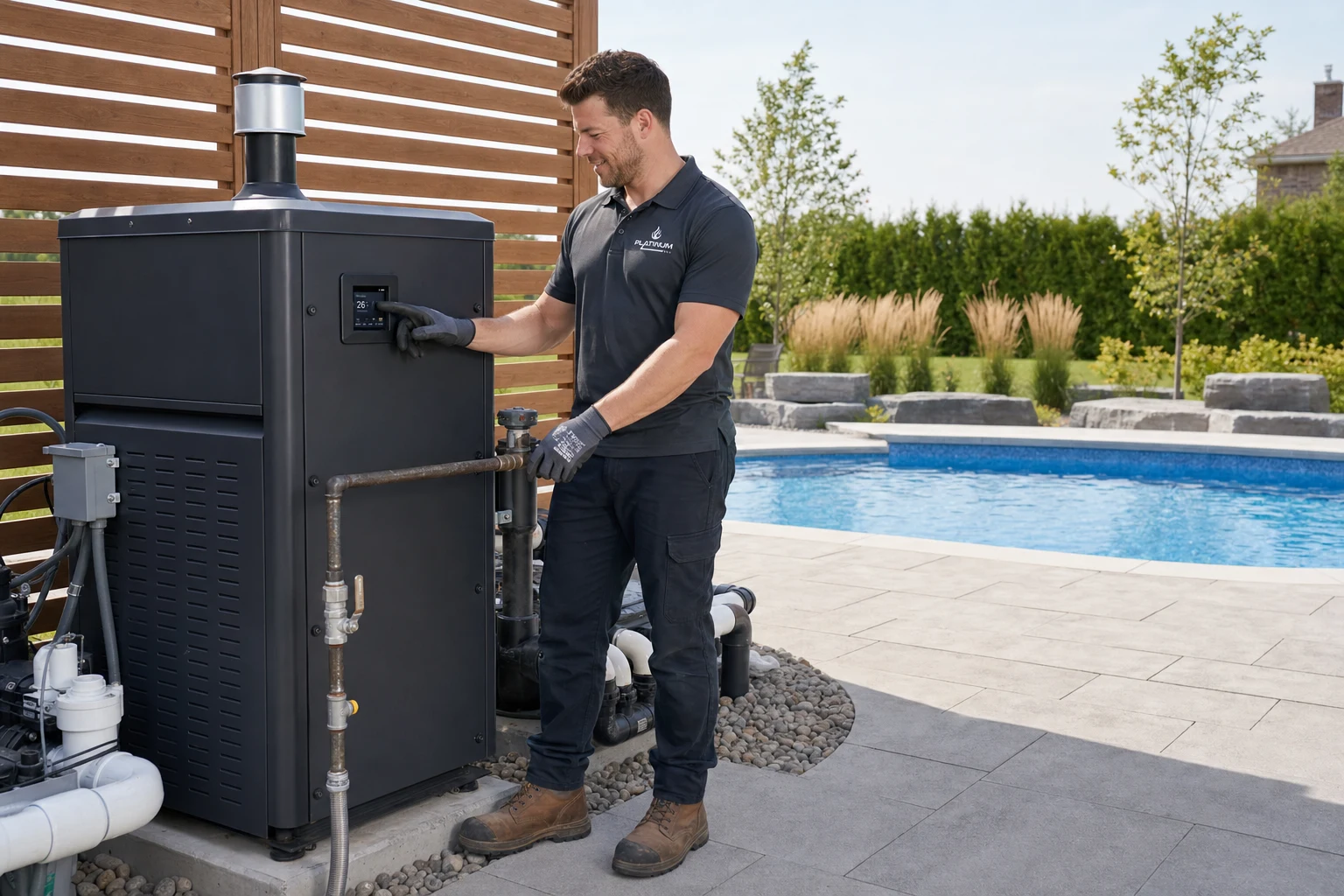
Pool heat-up time depends on the mass of water, desired temperature rise, useful heater output, starting conditions, air temperature, wind, evaporation, cover use, sun, circulation and whether heat is being added while the pool is used. A larger gas heater can add heat faster only when the fuel supply, pad and system support it. Use a transparent estimate for planning, then confirm selection with current manufacturer data and site conditions rather than promising a fixed number of hours.
Step
Start with pool size and how much warmer you want it
A pool with more water requires more energy for the same temperature increase. The desired rise matters just as much: moving from cool spring water to swimming temperature is a different task from recovering a small overnight loss. Record pool dimensions, volume if reliably known, starting temperature and target. Separate pool and spa scenarios because their volumes and use patterns differ.
Use accurate units and state assumptions in any calculation. An online result is educational until the pool, equipment and site are verified. Irregular shapes, varying depth and connected water features can make rough volume estimates misleading.
- Pool volume or measured dimensions.
- Starting and target water temperatures.
- Deadline for swimming or normal maintenance goal.
- Pool versus spa operating scenario.
Step
Use delivered output, not input alone
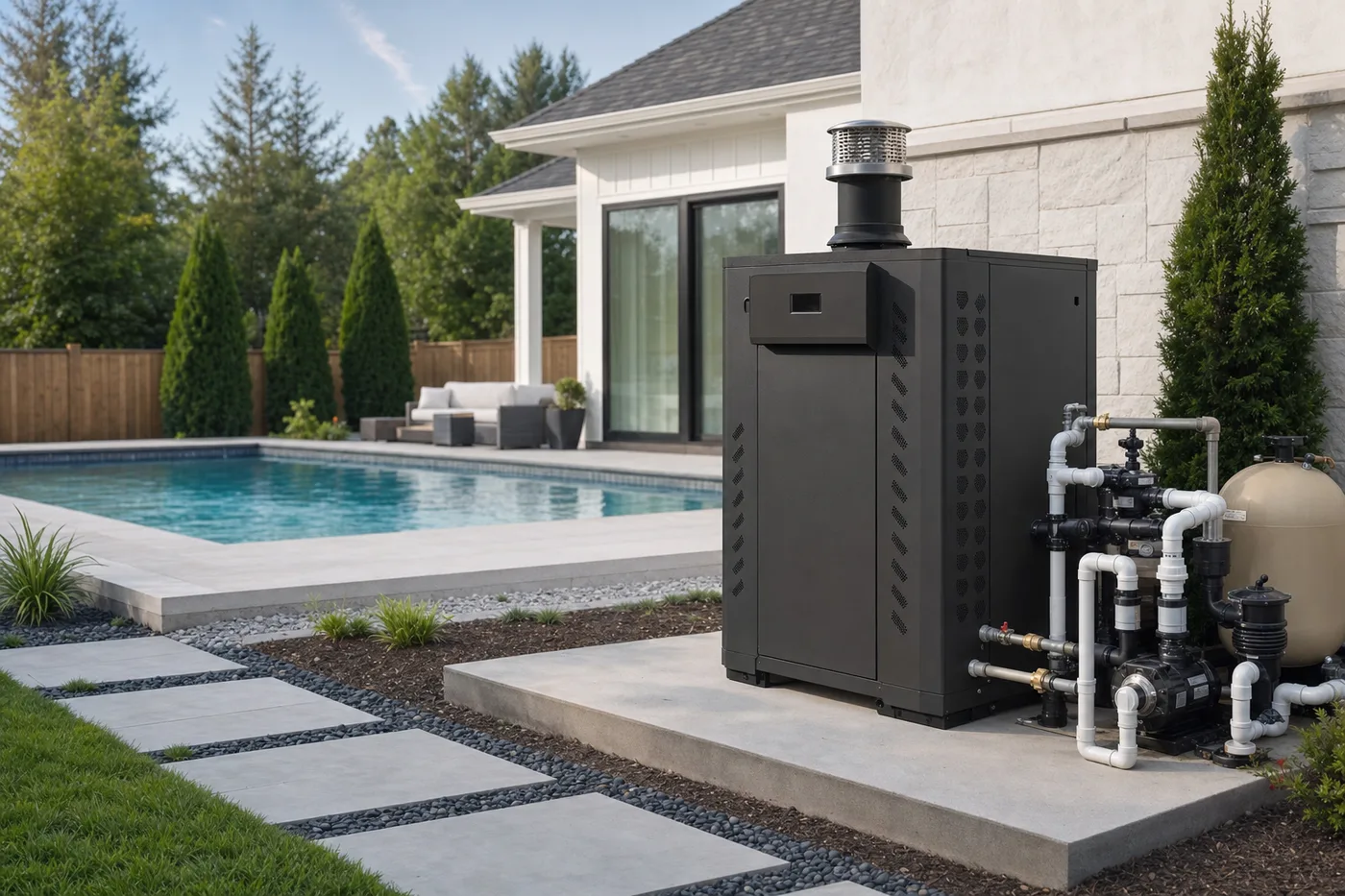
The heater's input is not identical to heat delivered to the water. Use current manufacturer performance and efficiency information for the exact model and fuel. System conditions and maintenance also affect real operation. A larger nominal input does not help if the property gas supply cannot support it or the pool circulation and pad are unsuitable.
Compare a shortlist against the same calculation and desired recovery window. Do not select solely by the fastest theoretical result. Installation feasibility, controls, serviceability and how the pool is actually used matter.
Step
Account for evaporation, wind and covers
Evaporation can remove substantial heat, and wind increases it by sweeping humid air away from the water surface. An uncovered exposed pool may warm more slowly or lose much of the gain overnight. A properly used pool cover can reduce evaporation, so cover habits belong in the estimate rather than being treated as a minor accessory.
Observe local exposure, fences, landscaping and seasonal wind. Do not promise the same recovery time in calm summer weather and a cold shoulder-season event. Record whether the cover remains on during warm-up only when permitted by the pool and heater operating guidance.
Step
Include air temperature, sun and circulation
Cool air, cloud cover and cold rain increase losses, while sun and warmer conditions can assist. The time of day and desired season therefore matter. Circulation must move water through the system as designed; dirty filters, incorrect valves or flow issues can limit operation or cause shutdowns. Owner observations should stay within the pool and heater manuals.
Automation can schedule circulation and heat demand, but settings do not override equipment limits. Coordinate pool controls with the exact heater. If the unit cycles, faults or cannot maintain operation, diagnose the cause rather than extending the schedule indefinitely.
What to include with your request
What would you like to install, fix or improve?
Tell us what you need and where the job is. Add the appliance model, fuel type and a photo if you have them.
Step
Turn the estimate into an operating plan
Define a real use case: for example, maintaining a stable temperature through a weekend or recovering from a lower weekday setting before guests arrive. Compare the energy and timing implications without inventing operating-cost savings. Current fuel rates, actual weather and use must be dated if cost is discussed.
For a Whitby assessment, share dimensions, photos, target temperature, use calendar, cover, equipment-pad conditions and existing appliances. The gas contractor evaluates supply and the pool professional verifies circulation. After installation, track starting conditions and actual heat-up over several comparable days to refine scheduling.
Record the measurement method as well as the result. Use the same water-temperature location or reliable system reading, note when circulation and heat began, and record cover and weather conditions. A single unusually warm or windy day is not a dependable baseline. Compare several similar events and discuss large differences with the service professionals. This simple log can separate realistic weather variation from a heater that is cycling, a cover that is not being used consistently or a pool-system condition that deserves assessment.
Use that history to schedule earlier rather than forcing a more aggressive setting at the last minute. Target temperature, maximum settings and automation behaviour must remain within the owner instructions. If actual warm-up suddenly changes under comparable conditions, record the difference and request service instead of increasing reset frequency.
- State weather, cover and starting conditions with every estimate.
- Compare equipment using current useful-output data.
- Confirm gas capacity, circulation and pad conditions.
- Measure real performance before changing schedules.
Questions we hear
Frequently asked questions
There is no honest universal rate. Pool water mass, useful heater output, losses, weather, cover and circulation determine the result. Calculate a scenario and verify it against actual operation.
Potentially, but only when the fuel supply, circulation, pad, controls and manufacturer requirements support it. Oversizing also needs a full system and use review.
Reducing evaporation can materially improve heat retention. Actual effect depends on conditions and proper cover use, so include it in the scenario rather than promising a fixed result.
That depends on use pattern, equipment, weather, cover and energy priorities. Compare maintaining temperature with scheduled recovery using current data and manufacturer guidance.
References
Sources and further reading
Ask about your project
Tell us about the property and equipment
Send the service address, timing, appliance model and safe photos that show the work area.